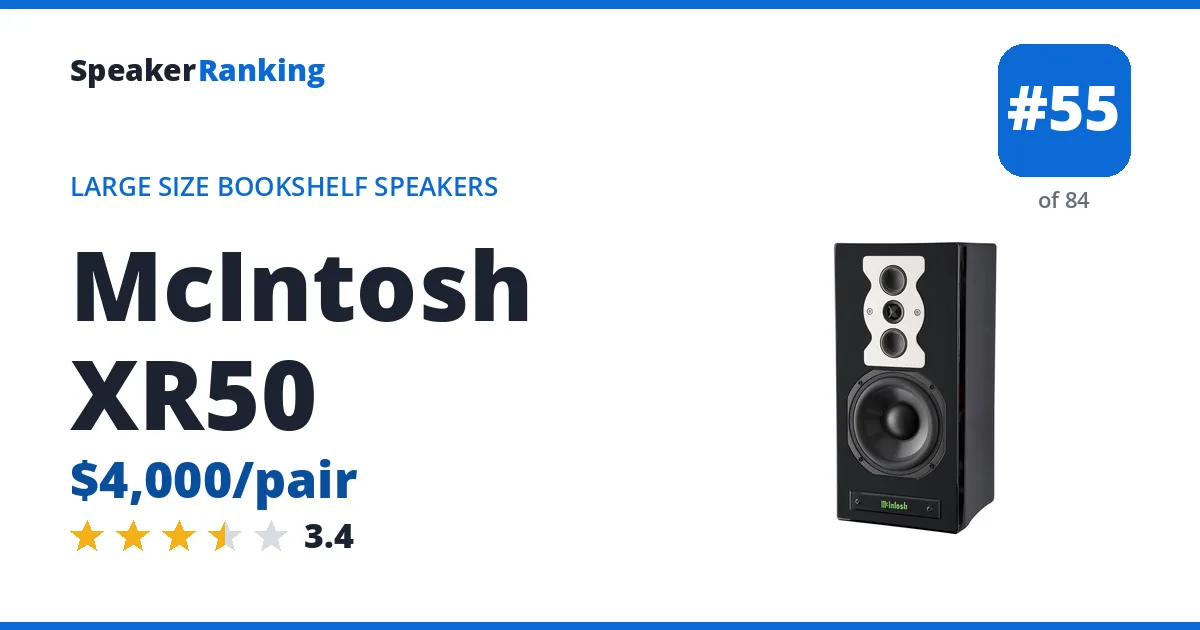
Short answer: the McIntosh XR50. It ranks #88 of 131 bookshelf speakers by sound quality, rated 3.4/5, at $4,000; the Audio Craftsmen Victoria ranks #102, rated 3.1/5, at $4,000. The price gap is small enough that the sound-quality ranking should decide it.
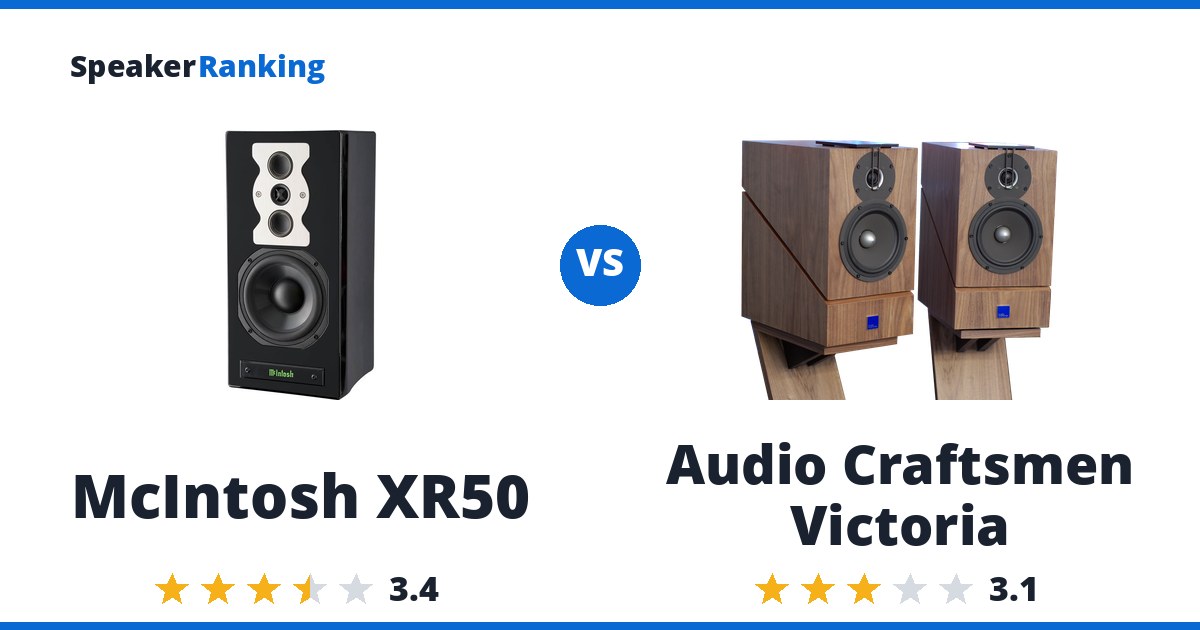
Why pick the McIntosh XR50: The compact XR50 produces unexpectedly authoritative bass: Erin measured F3 at 43Hz and praised its low-end weight. The catch: Erin measured roughly 80-81dB sensitivity, making the XR50 exceptionally power hungry despite its nominal eight-ohm rating.
What the Audio Craftsmen Victoria does well: Two-way bass-reflex design with a 180mm mid-base driver and 29mm tweeter in a distinctive slit-pattern cabinet, well-built overall. Watch for: A notably thin, hollow midrange (a dip roughly 1-2 octaves wide) reduces vocal fullness and “thump,” seemingly from a baffle-step compensation shortfall in the crossover design.
Worth knowing: the Audio Craftsmen Victoria has been discontinued and is hard to find new at this point.
Buy the McIntosh XR50. It is rated higher for sound quality than the Audio Craftsmen Victoria at the same price, so only choose the other one for a particular feature it does better.
Looking for alternatives? See the complete Passive Home rankings.
Specifications Side By Side
| McIntosh XR50 | Audio Craftsmen Victoria | |
|---|---|---|
| Price | $4,000 per pair | $4000 per pair Discontinued |
| Ranked | #88 of 131 in Large Size Bookshelf Speakers | #102 of 131 in Large Size Bookshelf Speakers |
| Bass Extension (-3dB) | 43Hz (measured, Erin’s Audio Corner) | 65Hz (measured, Erin’s Audio Corner) |
| Bass Extension (-10dB) | 35.6Hz (measured, Erin’s Audio Corner) | 45Hz (measured, Erin’s Audio Corner) |
| Sensitivity | ~81dB/2.83V/1m (measured, Erin’s Audio Corner) | 83.7dB (measured, Erin’s Audio Corner) |
| Impedance | 8 ohms nominal | 8 ohms nominal, 7.3 ohms minimum (measured, Erin’s Audio Corner) |
| Drivers | 6-inch woofer; dual 2-inch inverted-dome mids; 0.75-inch titanium dome | 1” tweeter + 4” woofer |
| Dimensions | 17H x 8W x 11.75D inches | 15.9”H x 9.1”W x 14”D (405.0 x 230.0 x 355.0 mm) |
| Weight | 19.4 lbs (8.8 kg) each | 37 lbs (16.8 kg) |
| Spinorama Preference Score | 4.99 | 4.87 |
| Spinorama Preference Score with Perfect Sub | 6.80 | 7.34 |
| DIY Kit | No | No |
| Woofer Cabinet | - | ported, rear |
Related Speaker Comparisons
More worthwhile head-to-heads for McIntosh XR50:
- KEF R3 Meta vs McIntosh XR50
- KEF Q Concerto Meta vs McIntosh XR50
- KEF R3 vs McIntosh XR50
- JTR Noesis 210HT vs McIntosh XR50
- ELAC Debut 3.0 DB63 vs McIntosh XR50
Prices on this page were last checked September 30, 2026 at 2:57 PM UTC. Product prices and availability are accurate as of that date/time and are subject to change; the price and availability shown on Amazon at the time of purchase will apply to the purchase of this product.
As an eBay Partner, we may be compensated if you make a purchase.
The Two Speakers In Full
 McIntosh XR50: $4,000 per pair Crutchfield eBay
Pros: The compact XR50 produces unexpectedly authoritative bass: Erin measured F3 at 43Hz and praised its low-end weight. Horizontal radiation is exceptionally wide, and the four-driver three-way layout holds distortion and compression together reasonably well through the midband. The sealed-back 2-inch inverted-dome midranges isolate vocals from woofer pressure, while the heavily braced nonparallel cabinet, premium terminals and five-year warranty are genuinely high-grade. Measured bass extension of 43Hz (-3dB), with a measured sensitivity of 81dB.
Cons: Erin measured roughly 80-81dB sensitivity, making the XR50 exceptionally power hungry despite its nominal eight-ohm rating. A broad treble excess sounds bright and sibilant on-axis; at least 20° toe-out or EQ is needed, but toe-out increases reflected energy and trades away image focus. Direct and reflected responses diverge through parts of the treble, limiting perfect EQ correction. At $2000/pair, its tonal flaws and low efficiency are hard to excuse as merely the cost of premium construction.
Full McIntosh XR50 review and specifications →
| Bass Extension (-10dB) | 35.6Hz (measured, Erin’s Audio Corner) |
|---|---|
| Bass Extension (-3dB) | 43Hz (measured, Erin’s Audio Corner) |
| DIY Kit | No |
| Dimensions | 17H x 8W x 11.75D inches |
| Drivers | 6-inch woofer; dual 2-inch inverted-dome mids; 0.75-inch titanium dome |
| Impedance | 8 ohms nominal |
| Sensitivity | ~81dB/2.83V/1m (measured, Erin’s Audio Corner) |
| Spinorama Preference Score | 4.99 |
| Spinorama Preference Score with Perfect Sub | 6.80 |
| Weight | 19.4 lbs (8.8 kg) each |
- Links
- Reviews, Comparisons and Sound Samples
- Head-to-Head Comparisons
 Audio Craftsmen Victoria: $4000 per pair Discontinued eBay
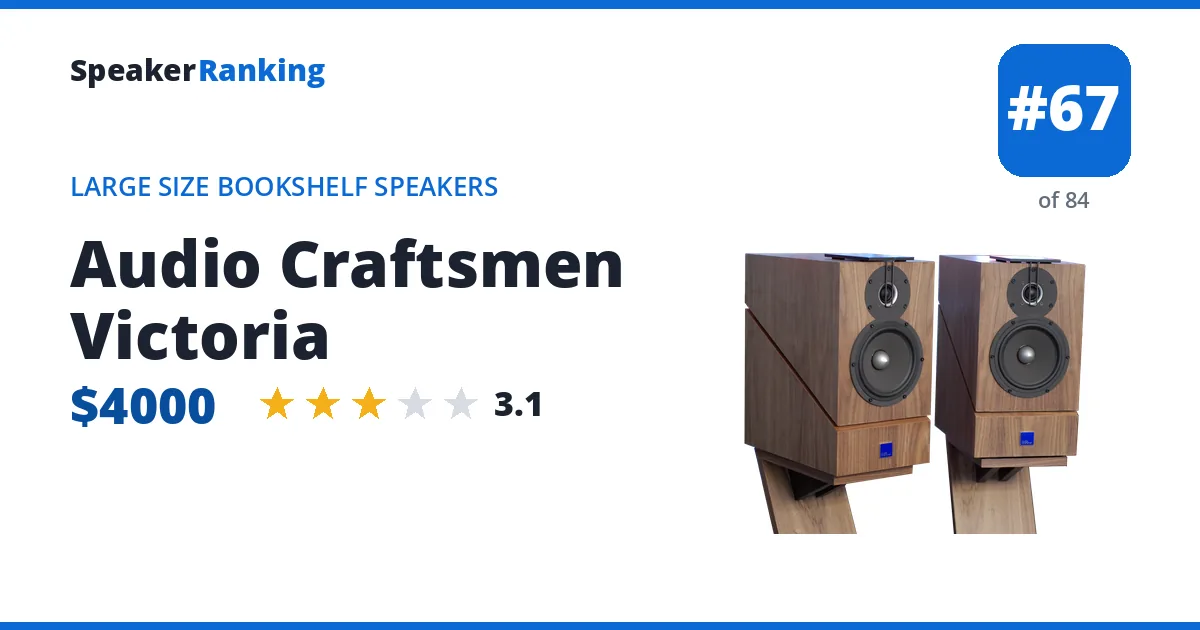
Pros: Two-way bass-reflex design with a 180mm mid-base driver and 29mm tweeter in a distinctive slit-pattern cabinet, well-built overall. Wide, enveloping horizontal radiation of about ±70° through the midrange and lower treble. Low, well-controlled distortion overall, staying below about 1% up to roughly 100Hz at both 86dB and 96dB. Easy to drive electrically (minimum impedance about 7.3 ohms, minimum EPDR 4.4 ohms), fine for most Class AB amplifiers. Best placed closer to the rear wall (about 6 inches to a foot) rather than the typical 1-meter recommendation, reducing a mid-range cancellation dip that worsens with more wall clearance. Measured bass extension of 65Hz (-3dB), with a measured sensitivity of 83.7dB.
Cons: A notably thin, hollow midrange (a dip roughly 1-2 octaves wide) reduces vocal fullness and “thump,” seemingly from a baffle-step compensation shortfall in the crossover design. Very light bass overall; a subwoofer is recommended for both deep bass (30-40Hz) and even basic mid-bass kick (50-80Hz). Highly aiming-dependent in the treble: toeing the speaker away from the listener (about 30°) causes a significant loss of high-frequency shimmer and detail. A crossover handoff mismatch between the mid-woofer and tweeter shows up in directivity measurements, correlating with the midrange dip. Multitone distortion becomes elevated around 1kHz at higher output levels, confirmed through careful band-pass diagnostic testing and independently corroborated by another reviewer’s similar impression. Limited dynamic range below about 100Hz at higher volumes: driver excursion appears suspension-limited, causing real compression above roughly 90dB for a pair at typical listening distances. Below-average sensitivity (about 84dB versus a typical 85-86dB for bookshelf speakers) partly offsets its easy-to-drive impedance. Not well suited to listening beyond about 10 feet or much above 85-90dB. Discontinued.
Full Audio Craftsmen Victoria review and specifications →
| Bass Extension (-10dB) | 45Hz (measured, Erin’s Audio Corner) |
|---|---|
| Bass Extension (-3dB) | 65Hz (measured, Erin’s Audio Corner) |
| DIY Kit | No |
| Dimensions | 15.9”H x 9.1”W x 14”D (405.0 x 230.0 x 355.0 mm) |
| Drivers | 1” tweeter + 4” woofer |
| Impedance | 8 ohms nominal, 7.3 ohms minimum (measured, Erin’s Audio Corner) |
| Sensitivity | 83.7dB (measured, Erin’s Audio Corner) |
| Spinorama Preference Score | 4.87 |
| Spinorama Preference Score with Perfect Sub | 7.34 |
| Weight | 37 lbs (16.8 kg) |
| Woofer Cabinet | ported, rear |
- Links
- Reviews, Comparisons and Sound Samples
- Head-to-Head Comparisons