Short answer: the Edifier M60 has been measured and ranked; the Kanto ORA4 has not been measured in a way we can rank yet, so until it is, this comes down to features and price.
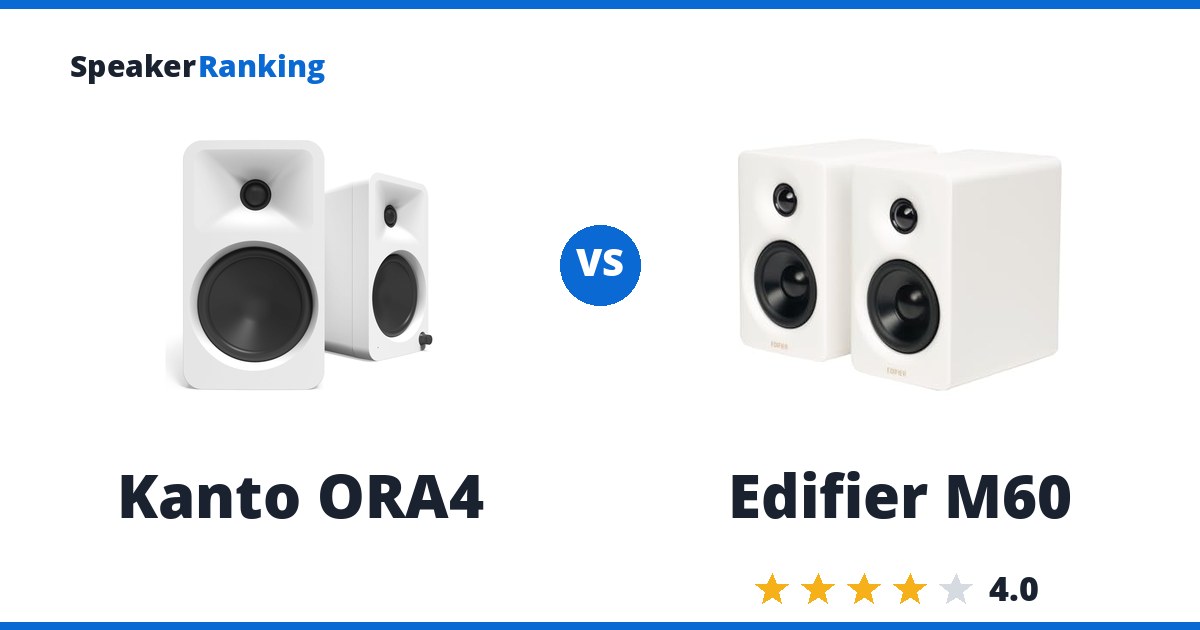
What the Kanto ORA4 offers: Compact powered desktop speakers with 4-inch aluminum-cone woofers and 3/4-inch silk-dome tweeters in waveguides, bi-amplified with 70W RMS in total.
On the Edifier M60 side: Erin’s Klippel data shows a reasonably even midrange, spanning 2.8dB from 300Hz to 5kHz, with broad horizontal coverage for desktop listening.
Price: the Kanto ORA4 lists at $349.99 and the Edifier M60 at $199.99.
Buy the Edifier M60 if you want a speaker whose sound quality has been measured and ranked.
Buy the Kanto ORA4 if you prefer its design or features, and you can wait for measurements to confirm how it sounds.
Want more options? Browse the full Powered Home rankings.
Specifications Side By Side
| Kanto ORA4 | Edifier M60 | |
|---|---|---|
| Price | $349.99 per pair | $199.99 per pair |
| Ranked | - | #6 of 24 in Small Size Powered Bookshelf Speakers |
| Amplifier Power | 70W RMS total (140W peak) per pair | 66W total (33W per speaker) |
| Drivers | 3/4” silk dome tweeter, 4” aluminum cone woofer | 3” woofer, 1” silk dome tweeter |
| Frequency Response | 60Hz - 22kHz (Manufacturer specified) | 55Hz - 40kHz (Manufacturer specified) |
| Inputs | RCA, USB-C, Bluetooth | Bluetooth, Aux, USB-C |
| RCA Input | Yes | No |
| USB Input | Yes (USB-C) | Yes |
| Optical Input | No | No |
| Coaxial Input | No | No |
| HDMI Input | No | No |
| XLR Input | No | No |
| Aux Input | No | Yes |
| Bluetooth | Yes | Yes |
| Bluetooth Version | 5.0 | 5.3 |
| Bluetooth Codecs | SBC | SBC, LDAC |
| Subwoofer Output | Yes (automatic 80Hz crossover) | - |
| App | - | Yes |
| Bass Extension (-10dB) | - | 57Hz (measured, Erin’s Audio Corner) |
| Bass Extension (-3dB) | - | 67Hz (measured, Erin’s Audio Corner) |
| Dimensions | - | 6.6”H x 3.9”W x 5.8”D (167.6 x 99.1 x 147.3 mm) |
| EQ | - | Yes |
| Weight | - | 6.6 lbs (3 kg) |
| Sensitivity | - | 87.5dB (measured at 0.3V/1m, Erin’s Audio Corner) |
| Maximum SPL | - | 96dB @ 1m (manufacturer specified) |
| Spinorama Preference Score | - | 4.60 |
| Spinorama Preference Score with Perfect Sub | - | 7.33 |
| TRS Input | - | No |
| AES Input | - | No |
Prices on this page were last checked September 30, 2026 at 2:57 PM UTC. Product prices and availability are accurate as of that date/time and are subject to change; the price and availability shown on Amazon at the time of purchase will apply to the purchase of this product.
As an eBay Partner, we may be compensated if you make a purchase.
The Two Speakers In Full
 Kanto ORA4: $349.99 per pair Amazon eBay
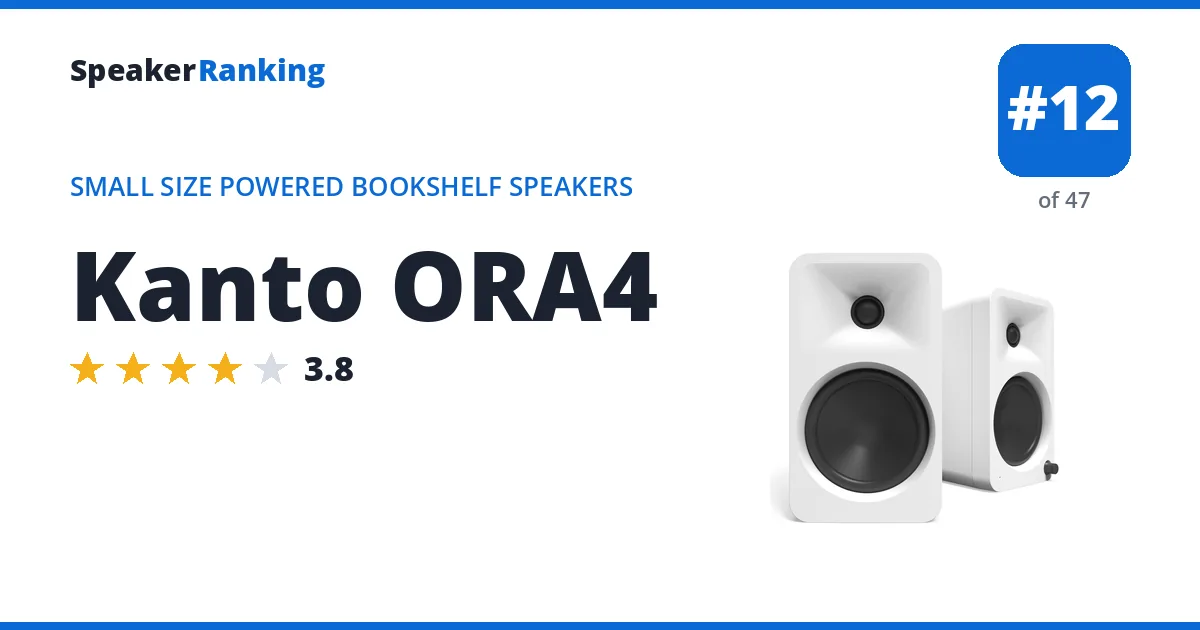
Pros: Compact powered desktop speakers with 4-inch aluminum-cone woofers and 3/4-inch silk-dome tweeters in waveguides, bi-amplified with 70W RMS in total. Inputs cover RCA, USB-C audio and Bluetooth 5.0, and a subwoofer output engages an automatic 80Hz crossover. Rear ports and a front volume knob that also switches inputs.
Cons: Kanto rates the response only down to 60Hz, so a subwoofer helps for deep bass, and there is no optical input. Erin’s Audio Corner has measured it, but the numbers the other speakers here are ranked on aren’t available yet, so it can’t be placed against them.
Full Kanto ORA4 review and specifications →
| Amplifier Power | 70W RMS total (140W peak) per pair |
|---|---|
| Aux Input | No |
| Bluetooth | Yes |
| Bluetooth Codecs | SBC |
| Bluetooth Version | 5.0 |
| Coaxial Input | No |
| Drivers | 3/4” silk dome tweeter, 4” aluminum cone woofer |
| Frequency Response | 60Hz - 22kHz (Manufacturer specified) |
| HDMI Input | No |
| Inputs | RCA, USB-C, Bluetooth |
| Optical Input | No |
| RCA Input | Yes |
| Subwoofer Output | Yes (automatic 80Hz crossover) |
| USB Input | Yes (USB-C) |
| XLR Input | No |
- Links
- Reviews, Comparisons and Sound Samples
- Head-to-Head Comparisons
 Edifier M60: $199.99 per pair Amazon eBay
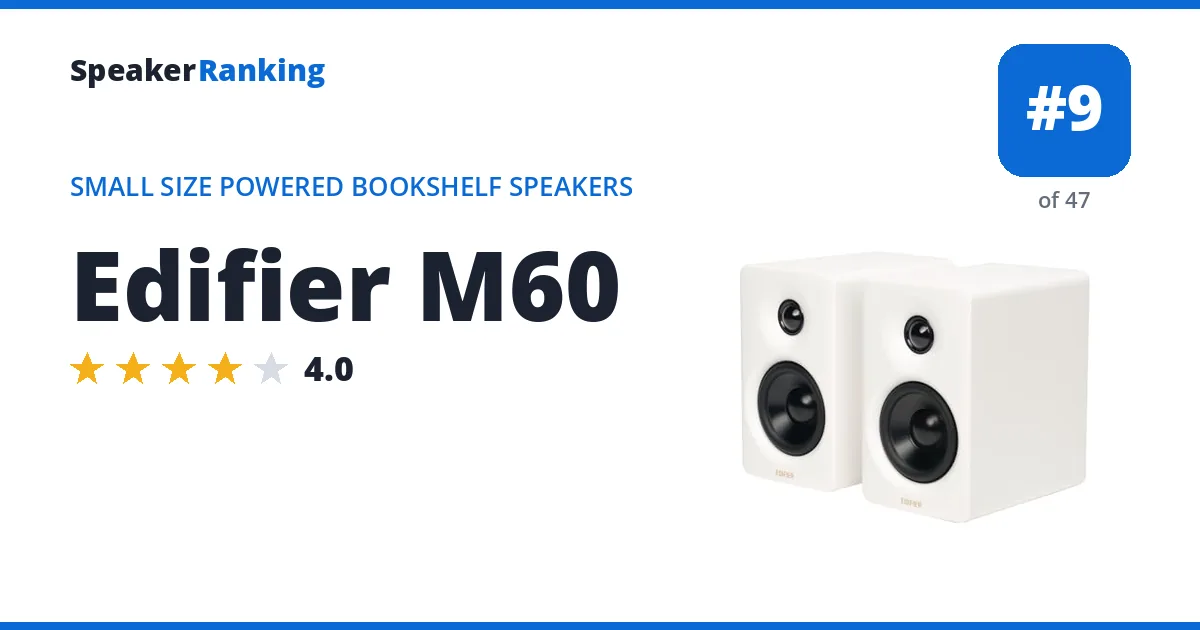
Pros: Erin’s Klippel data shows a reasonably even midrange, spanning 2.8dB from 300Hz to 5kHz, with broad horizontal coverage for desktop listening. Predicted preference scores are 4.60 standalone and 7.33 with an ideal subwoofer, a comparatively strong result in this compact category. USB-C, auxiliary input, Bluetooth and included angled stands make it easy to integrate into a small desk setup. LDAC Bluetooth support and illuminated touch controls round out the features. Measured bass extension of 67Hz (-3dB), with a measured sensitivity of 87.5dB.
Cons: The on-axis response rises by about 0.57dB per octave, so the tonal balance becomes brighter toward the treble. Measured -3dB bass extension is about 70Hz; it cannot reproduce deep bass at full level. Sitting below the tweeter axis worsens the crossover-region response. Limiting and compression constrain louder playback, so use it nearfield rather than expecting room-filling output.
Full Edifier M60 review and specifications →
| AES Input | No |
|---|---|
| Amplifier Power | 66W total (33W per speaker) |
| App | Yes |
| Aux Input | Yes |
| Bass Extension (-10dB) | 57Hz (measured, Erin’s Audio Corner) |
| Bass Extension (-3dB) | 67Hz (measured, Erin’s Audio Corner) |
| Bluetooth | Yes |
| Bluetooth Codecs | SBC, LDAC |
| Bluetooth Version | 5.3 |
| Coaxial Input | No |
| Dimensions | 6.6”H x 3.9”W x 5.8”D (167.6 x 99.1 x 147.3 mm) |
| Drivers | 3” woofer, 1” silk dome tweeter |
| EQ | Yes |
| Frequency Response | 55Hz - 40kHz (Manufacturer specified) |
| HDMI Input | No |
| Inputs | Bluetooth, Aux, USB-C |
| Maximum SPL | 96dB @ 1m (manufacturer specified) |
| Optical Input | No |
| RCA Input | No |
| Sensitivity | 87.5dB (measured at 0.3V/1m, Erin’s Audio Corner) |
| Spinorama Preference Score | 4.60 |
| Spinorama Preference Score with Perfect Sub | 7.33 |
| TRS Input | No |
| USB Input | Yes |
| Weight | 6.6 lbs (3 kg) |
| XLR Input | No |
- Links
- Reviews, Comparisons and Sound Samples
- Erin’s Audio Corner: Edifier M60 Desktop Speaker Delivers Big Fun! More from Erin’s Audio Corner →
- Erin’s Audio Corner: The Best Budget Desktop Speakers, Tested & Rated
- Erin’s Audio Corner Website: Edifier M60
- Erin’s Audio Corner Measurements (spinorama.org)
- Jasper Tech: Best Desktop Computer Speakers for Every Budget – 2026 More from Jasper Tech →
- Head-to-Head Comparisons
- Edifier M60 vs IK Multimedia iLoud Micro Monitor
- Edifier M60 vs HiVi Swan X3
- Edifier M60 vs Edifier MR3
- Edifier M60 vs Cambridge Audio L/R S
- Edifier M60 vs Adam Audio D3v
- Edifier M60 vs Sovox MiniMax3
- Edifier M60 vs Genelec 8010A
- Edifier M60 vs Audio Smile Little British Monitor
- See all 33 comparisons