Short answer: both are discontinued, so this only matters if you are buying used. Used, the JBL XPL-90 is the better pick: it ranks #104 of 134 bookshelf speakers by sound quality (rated 3.1/5), against #111 (rated 2.9/5) for the Klipsch RP-600M. If you want one new, the AsciLab C6B ranks #6 at $1,145.
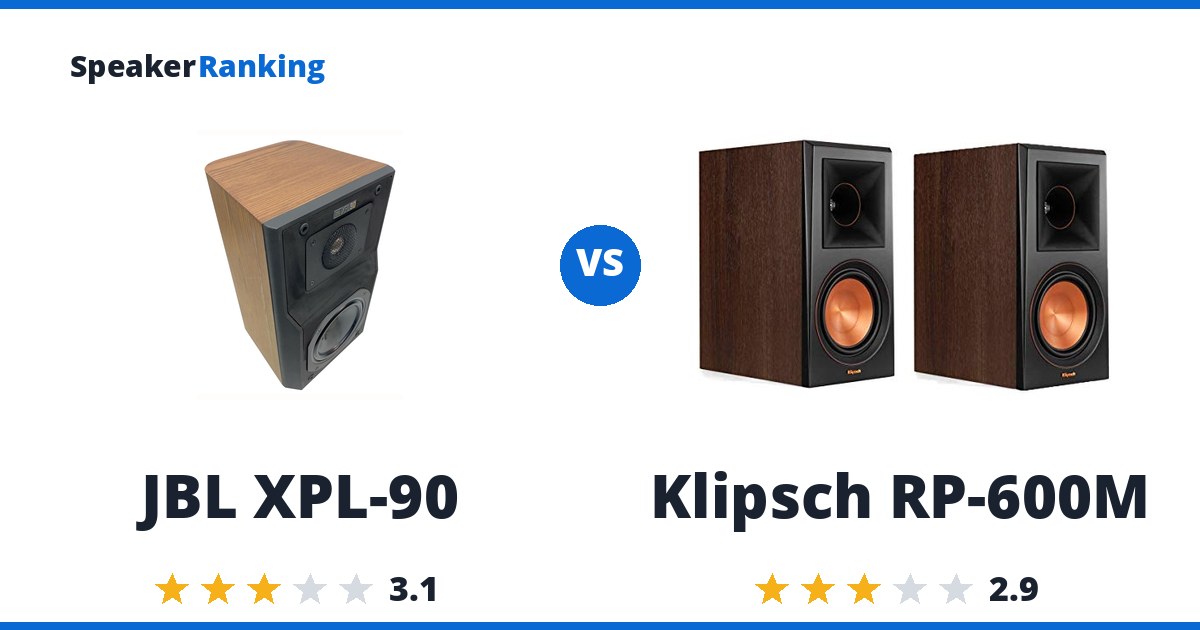
Buy the JBL XPL-90 only if you find one used in good condition; both are discontinued, and it is the better rated of the two. For a new speaker, start with the AsciLab C6B instead.
Looking for alternatives? See the complete Passive Home rankings.
Specifications Side By Side
| JBL XPL-90 | Klipsch RP-600M | |
|---|---|---|
| Price | $1,298 per pair used (vintage, late 1980s), Discontinued | $377.99 per pair Discontinued |
| Ranked | #104 of 134 in Large Size Bookshelf Speakers | #111 of 134 in Large Size Bookshelf Speakers |
| Drivers | 6.5” bass/mid driver, 1” titanium dome tweeter | 6.5” Cerametallic cone woofer, 1” titanium LTS vented tweeter with Tractrix horn |
| Dimensions | 15.5”H x 9.5”W x 9.8”D (394 x 241 x 248 mm) | 15.7”H x 8”W x 11.9”D (398.8 x 203.2 x 302.3 mm) |
| Weight | 20.1 lbs (9.1 kg) each | 16.1 lbs (7.3 kg) each |
| Sensitivity | 85dB (2.83V/1m, measured, Audio Science Review) | 85.2dB (measured, Erin’s Audio Corner) |
| Impedance | 6 ohms | 8 ohms nominal, 3.5 ohms minimum (measured, Erin’s Audio Corner) |
| Power Handling | 100W nominal, 400W max | - |
| Bass Extension (-3dB) | 77.6Hz (measured, Audio Science Review) | 73Hz (measured, Erin’s Audio Corner) |
| Bass Extension (-10dB) | 48.7Hz (measured, Audio Science Review) | 40Hz (measured, Erin’s Audio Corner) |
| Spinorama Preference Score | 3.7 (spinorama.org) | 3.66 |
| Spinorama Preference Score with Perfect Sub | 6.31 (spinorama.org) | 5.61 |
| DIY Kit | No | No |
| Woofer Cabinet | - | ported |
Related Speaker Comparisons
More worthwhile head-to-heads for JBL XPL-90:
- KEF R3 Meta vs JBL XPL-90
- KEF Q Concerto Meta vs JBL XPL-90
- MoFi SourcePoint 8 vs JBL XPL-90
- Wharfedale Linton 85 vs JBL XPL-90
- ELAC Debut 3.0 DB63 vs JBL XPL-90
Prices on this page were last checked October 2, 2026 at 10:18 PM UTC. Product prices and availability are accurate as of that date/time and are subject to change; the price and availability shown on Amazon at the time of purchase will apply to the purchase of this product.
As an eBay Partner, we may be compensated if you make a purchase.
The Two Speakers In Full
 JBL XPL-90: $1,298 per pair used (vintage, late 1980s) Discontinued eBay
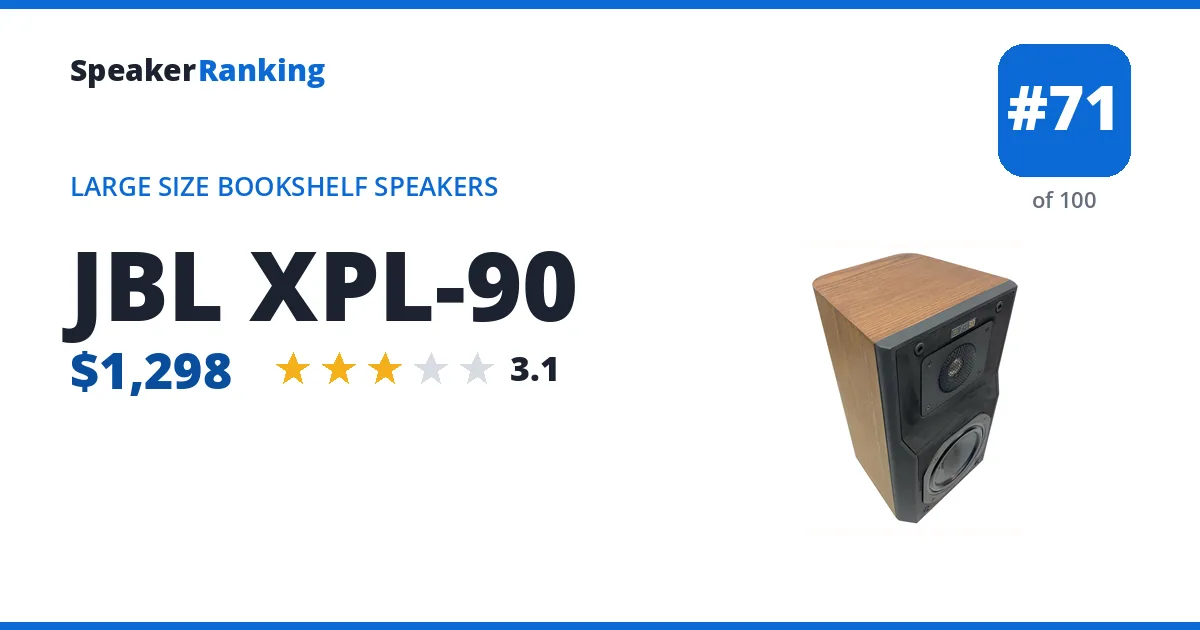
Pros: Nearly ruler-flat on-axis response up to 1kHz with even horizontal directivity until the tweeter beams above 10kHz. The reviewer found real strength with vocals and simpler instrumentation, calling it “the first speaker I have liked that has some clear response errors” and “an enjoyable speaker” despite the flaws. Titanium tweeter and internal Monster cable wiring reflect JBL’s higher-end late-1980s engineering. Measured bass extension of 77.6Hz (-3dB), with a measured sensitivity of 85dB.
Cons: Crossover region peaking around 3kHz and treble peaking above 10kHz color the top end, and poor vertical directivity means the tweeter needs to be at ear level. Distortion rises at 96dB SPL, especially around 3kHz. Long discontinued; only available on the used market.
Full JBL XPL-90 review and specifications →
| Bass Extension (-10dB) | 48.7Hz (measured, Audio Science Review) |
|---|---|
| Bass Extension (-3dB) | 77.6Hz (measured, Audio Science Review) |
| DIY Kit | No |
| Dimensions | 15.5”H x 9.5”W x 9.8”D (394 x 241 x 248 mm) |
| Drivers | 6.5” bass/mid driver, 1” titanium dome tweeter |
| Impedance | 6 ohms |
| Power Handling | 100W nominal, 400W max |
| Sensitivity | 85dB (2.83V/1m, measured, Audio Science Review) |
| Spinorama Preference Score | 3.7 (spinorama.org) |
| Spinorama Preference Score with Perfect Sub | 6.31 (spinorama.org) |
| Weight | 20.1 lbs (9.1 kg) each |
- Reviews, Comparisons and Sound Samples
- Head-to-Head Comparisons
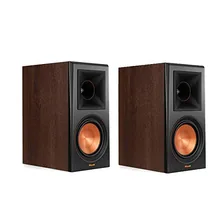 Klipsch RP-600M: $377.99 per pair Discontinued Amazon eBay
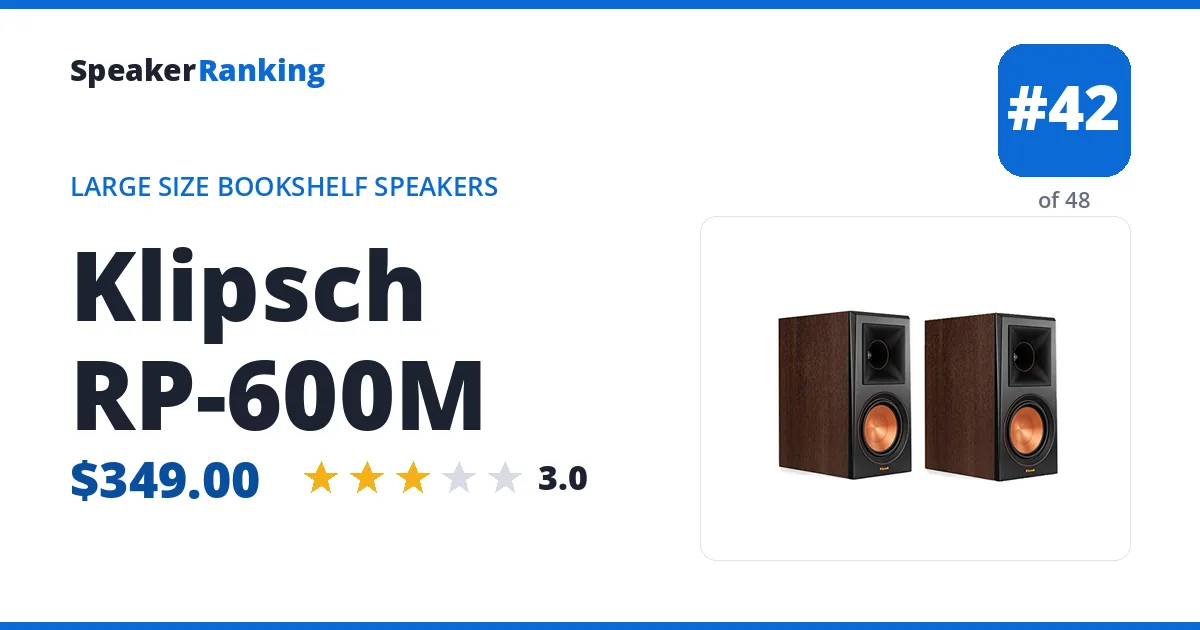
Newer model: the Klipsch RP-600M II, ranked higher, rated 3.7/5.
Pros: More linear horizontal dispersion than the updated RP-600M II: as you move side-to-side, the tonal character changes less, a genuine advantage for off-axis listening consistency. Takes exceptionally well to EQ correction (miniDSP or similar), letting a knowledgeable owner fix its tonal shortcomings without needing to upgrade. Standard 6.5” woofer/horn-tweeter two-way design with reasonably gradual bass rolloff (F3 ~70Hz, F10 ~40Hz) rather than a steep vented-enclosure cutoff. Measured bass extension of 73Hz (-3dB), with a measured sensitivity of 85.2dB.
Cons: A strong, annoying resonance in the lower vocal range around 300Hz stands out clearly (though it can be EQ’d out). Overall tonal balance is notably less neutral than the newer RP-600M II, with a roughly 3-4dB suckout in the estimated in-room response. The waveguide doesn’t extend flush to the baffle edge, increasing diffraction compared to the redesigned version. Klipsch’s marketed sensitivity spec (about 96dB) is a half-space, in-room-style rating roughly 9dB above the true anechoic figure (closer to 85-86dB), which can mislead buyers comparing spec sheets. Elevated treble on-axis, similar to its successor, benefits from toe-out or careful placement. Vertical listening tolerance is limited to about ±10° from the tweeter axis. Still needs a subwoofer for real bass weight; a boost around 120Hz gives kick drums their “tambour” without the underlying “meat.”. Discontinued.
Full Klipsch RP-600M review and specifications →
| Bass Extension (-10dB) | 40Hz (measured, Erin’s Audio Corner) |
|---|---|
| Bass Extension (-3dB) | 73Hz (measured, Erin’s Audio Corner) |
| DIY Kit | No |
| Dimensions | 15.7”H x 8”W x 11.9”D (398.8 x 203.2 x 302.3 mm) |
| Drivers | 6.5” Cerametallic cone woofer, 1” titanium LTS vented tweeter with Tractrix horn |
| Impedance | 8 ohms nominal, 3.5 ohms minimum (measured, Erin’s Audio Corner) |
| Sensitivity | 85.2dB (measured, Erin’s Audio Corner) |
| Spinorama Preference Score | 3.66 |
| Spinorama Preference Score with Perfect Sub | 5.61 |
| Weight | 16.1 lbs (7.3 kg) each |
| Woofer Cabinet | ported |
- Links
- Reviews, Comparisons and Sound Samples
- Erin’s Audio Corner: The Truth about Klipsch’s “NEW” Sound. RP-600M Update. More from Erin’s Audio Corner →
- Erin’s Audio Corner Website Klipsch RP-600M
- GR-Research: We Bought The "NEW" RP-600M II Is KLIPSCH Listening?! More from GR-Research →
- Audio Science Review Measurements More from Audio Science Review →
- Audio Science Review Measurements (spinorama.org)
- Head-to-Head Comparisons
- Klipsch RP-600M vs Sonus Faber Lumina II Amator
- Klipsch RP-600M vs Wharfedale Diamond 9.1
- Klipsch RP-600M vs Triangle Borea BR03
- Klipsch RP-600M vs KEF Q350
- Klipsch RP-600M vs B&W 805S
- Klipsch RP-600M vs Emotiva Airmotiv B2+
- Klipsch RP-600M vs Sonus Faber Sonetto II G2
- Klipsch RP-600M vs Aperion Audio Verus V8B
- See all 30 comparisons