Short answer: the HiVi Swans 3.1A Sehlin Sound Solutions mod is the more accurate starting point, while the Zu Audio Method trades tonal fidelity for high sensitivity. The modified HiVi kit has mostly smooth on-axis behavior for a DIY three-way.
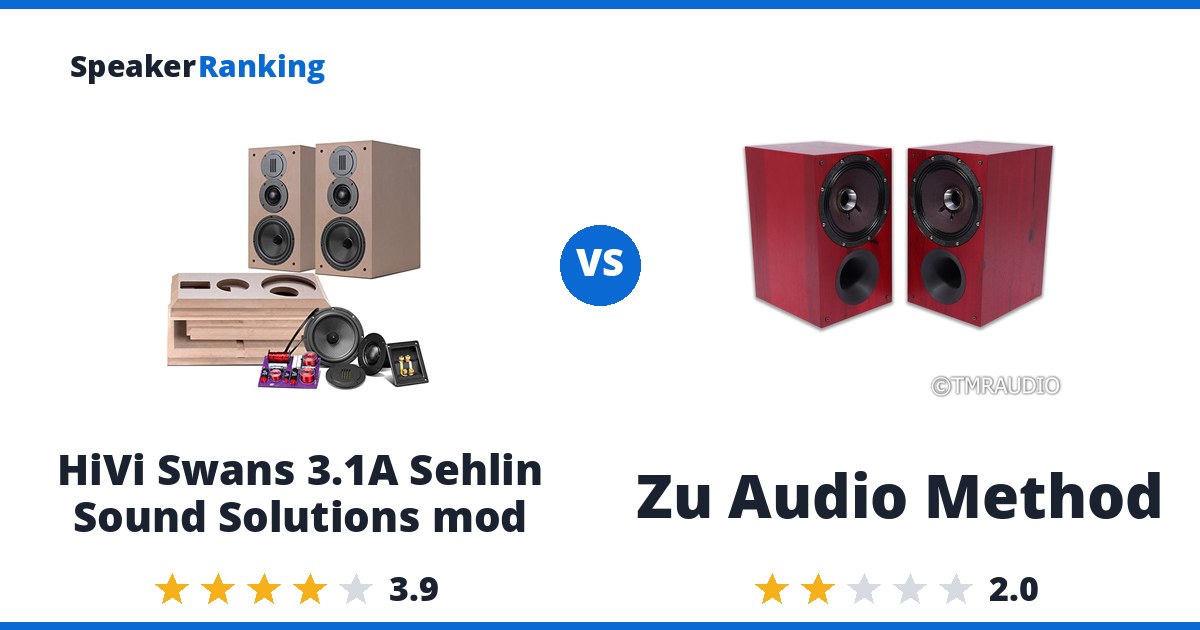
Its issue is a directivity error around 2.1kHz, which can make that transition sound different as you move off axis. That is a manageable flaw compared with a broad response hole.
The Method averages roughly 90 to 90.7dB through the vocal band, useful with low-powered amplification. But its 1.5 to 3kHz suckout can reach 19dB below the mean, removing presence and attack from voices, brass, and woodwinds.
Buy the HiVi Swans 3.1A Sehlin Sound Solutions mod if a smoother tonal balance is the objective.
Buy the Zu Audio Method if very high sensitivity is essential and you accept its unusually recessed presence region.
Want more options? Browse the full Passive Home rankings.
Specifications Side By Side
| HiVi Swans 3.1A Sehlin Sound Solutions mod | Zu Audio Method | |
|---|---|---|
| Price | $364.99 per pair for the kit (assembly required) | $700 per pair |
| Ranked | #61 of 130 in Large Size Bookshelf Speakers | #128 of 130 in Large Size Bookshelf Speakers |
| Bass Extension (-10dB) | 38Hz (measured, Audio Science Review) | 56Hz (measured, Erin's Audio Corner) |
| Bass Extension (-3dB) | 60Hz (measured, Audio Science Review) | 92Hz (measured, Erin's Audio Corner) |
| Impedance | 4 ohms nominal, 3.8 ohms minimum (measured, Audio Science Review) | 8 ohms |
| Drivers | 6.5" Kevlar woofer, 2" Dome midrange, 1" Soft Dome tweeter | 8" coax HE (Eminence/Zu) woofer, Eminence ASD-1001 tweeter |
| Sensitivity | 86.5dB (measured, Audio Science Review) | 91dB |
| Woofer Cabinet | ported, rear | ported, front |
| Weight | 13.7 lbs (6.2 kg) | 12.1 lbs (5.5 kg) |
| Dimensions | 16.5"H x 8.5"W x 13"D (420.0 x 215.0 x 330.0 mm) | 15"H x 8.7"W x 11"D (381.0 x 222.0 x 280.0 mm) |
| Spinorama Preference Score | 5.8 (derived from ASR thread measurement data) | -0.39 |
| Spinorama Preference Score with Perfect Sub | 7.6 (derived from ASR thread measurement data) | 2.40 |
| DIY Kit | Yes | No |
Related Speaker Comparisons
More top alternatives to HiVi Swans 3.1A Sehlin Sound Solutions mod:
- GR-Research NX-Studio vs HiVi Swans 3.1A Sehlin Sound Solutions mod
- AsciLab C6B vs HiVi Swans 3.1A Sehlin Sound Solutions mod
- KEF R3 Meta vs HiVi Swans 3.1A Sehlin Sound Solutions mod
- KEF Q Concerto Meta vs HiVi Swans 3.1A Sehlin Sound Solutions mod
- HiVi Swans 3.1A Sehlin Sound Solutions mod vs MoFi SourcePoint 10
Prices on this page were last checked September 23, 2026 at 11:24 PM UTC. Product prices and availability are accurate as of that date/time and are subject to change; the price and availability shown on Amazon at the time of purchase will apply to the purchase of this product.
As an eBay Partner, we may be compensated if you make a purchase.
The Two Speakers In Full
 HiVi Swans 3.1A Sehlin Sound Solutions mod: $364.99 per pair for the kit (assembly required) Amazon eBay
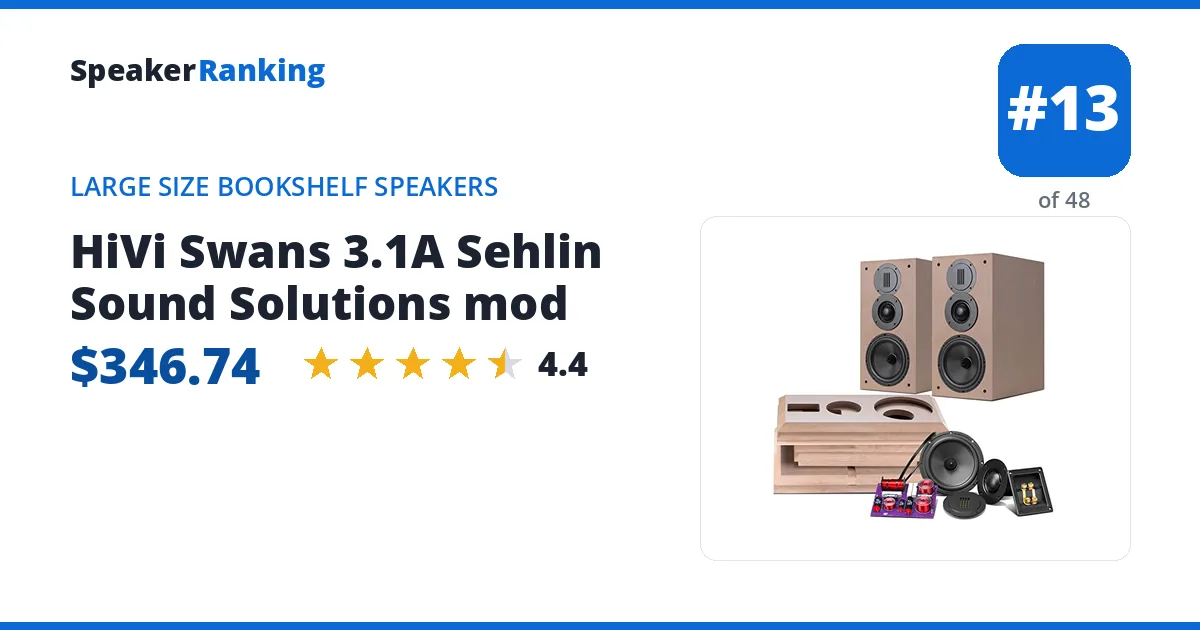
Pros: CEA2034 spinorama shows a mostly smooth on-axis response for a DIY three-way kit. Horizontal beamwidth of about ±70 degrees is wide and consistent. Distortion stays under control down to 40Hz at 96dB SPL/1m, a strong result for a 6.5” woofer in this class. Measured bass extension of 60Hz (-3dB), with a measured sensitivity of 86.5dB.
Cons: Some directivity error appears around 2.1kHz on-axis. Predicted in-room response needs about 1-2dB of correction to fit an ideal target curve. Vertical directivity is just okay, so listening height matters more than with a coincident design. Minimum impedance dips to 3.8 ohms with several peaks, a moderately demanding load. Requires DIY assembly (kit only), with additional Sehlin-mod parts and labor beyond the base kit price.
Full HiVi Swans 3.1A Sehlin Sound Solutions mod review and specifications →
| Bass Extension (-10dB) | 38Hz (measured, Audio Science Review) |
|---|---|
| Bass Extension (-3dB) | 60Hz (measured, Audio Science Review) |
| DIY Kit | Yes |
| Dimensions | 16.5"H x 8.5"W x 13"D (420.0 x 215.0 x 330.0 mm) |
| Drivers | 6.5" Kevlar woofer, 2" Dome midrange, 1" Soft Dome tweeter |
| Impedance | 4 ohms nominal, 3.8 ohms minimum (measured, Audio Science Review) |
| Sensitivity | 86.5dB (measured, Audio Science Review) |
| Spinorama Preference Score | 5.8 (derived from ASR thread measurement data) |
| Spinorama Preference Score with Perfect Sub | 7.6 (derived from ASR thread measurement data) |
| Weight | 13.7 lbs (6.2 kg) |
| Woofer Cabinet | ported, rear |
- Links
- Reviews, Comparisons and Sound Samples
- Head-to-Head Comparisons
- HiVi Swans 3.1A Sehlin Sound Solutions mod vs Klipsch RP-600M II
- HiVi Swans 3.1A Sehlin Sound Solutions mod vs ELAC Debut 3.0 DB63
- HiVi Swans 3.1A Sehlin Sound Solutions mod vs GR-Research X-LS Encore
- HiVi Swans 3.1A Sehlin Sound Solutions mod vs ELAC Debut 2.0 B6.2
- HiVi Swans 3.1A Sehlin Sound Solutions mod vs Polk Monitor XT20
- HiVi Swans 3.1A Sehlin Sound Solutions mod vs MoFi SourcePoint 10
- HiVi Swans 3.1A Sehlin Sound Solutions mod vs KEF Q Concerto Meta
- HiVi Swans 3.1A Sehlin Sound Solutions mod vs KEF R3 Meta
- See all 10 comparisons
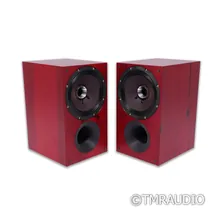 Zu Audio Method: $700 per pair Zuaudio eBay
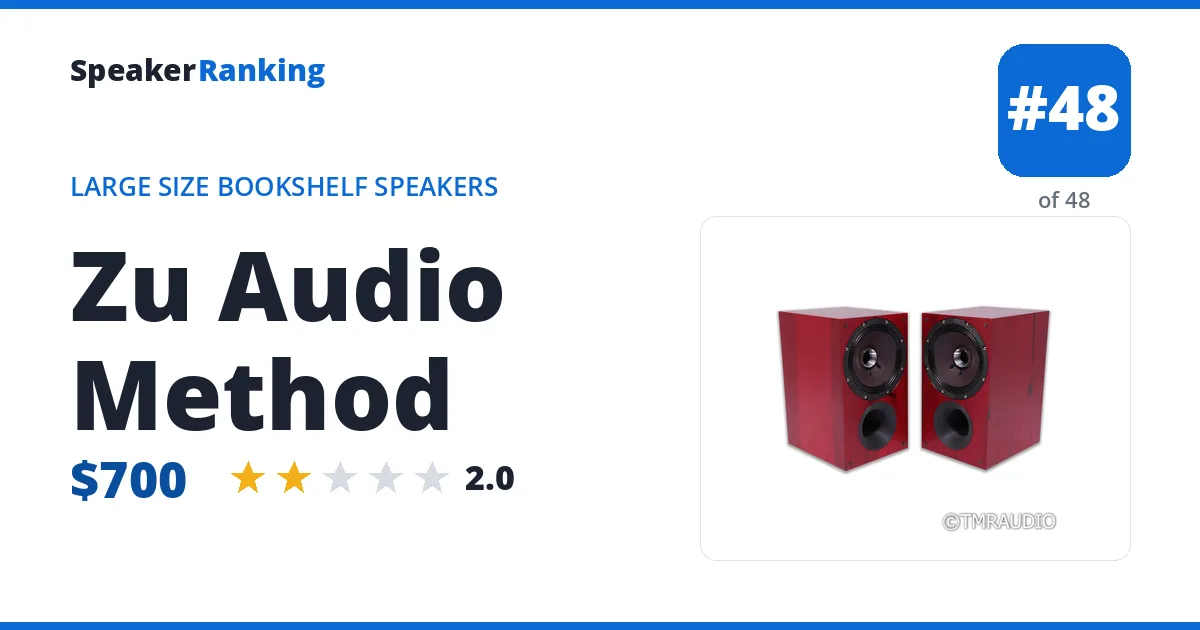
Pros: High-sensitivity design (measured about 90-90.7dB average through the 300Hz-3kHz vocal range), making it easy to drive to loud levels with modest amplifier power. Not a difficult electrical load - minimum impedance around 5.8 ohms, compatible with most 8-ohm-rated amplifiers, though Class A/AB amps should have good ventilation given a 3-ohm minimum EPDR. Verified not to be a defective unit: both speakers in the pair measured consistently with each other, and an independent reviewer’s own measurements of the same model matched the findings here. Measured bass extension of 92Hz (-3dB).
Cons: A severe suckout in the 1.5-3kHz range (down as much as 19dB below the mean at its worst) removes attack and clarity from brass, woodwinds, and snares, and gives an overall laid-back, unengaging character. Erratic, inconsistent high-frequency response - alternating between accentuated and subdued at different frequencies - makes cymbals, hi-hats, and sibilant vocal sounds behave unpredictably from track to track. Directivity is poor and inconsistent with frequency, meaning off-axis (sidewall-reflected) energy is actually louder than the direct sound in several bands - a problem that fundamentally cannot be corrected with EQ, since boosting the direct sound would boost the already-too-loud reflections even more. High sensitivity comes at the direct cost of bass extension: F3 of 92Hz and F10 of 56Hz mean essentially no meaningful bass. Despite the high sensitivity, dynamic headroom is poor rather than better as often assumed - distortion in the higher frequencies creates what the reviewer calls an “electronic glare.” Third-order harmonic distortion peaks sharply around 6-7kHz, contributing to an edgy, metallic quality on cymbals and hi-hats, and multitone distortion crosses the reviewer’s 3% threshold. Instantaneous compression testing shows serious dynamic-range issues specifically in the treble (a dip around 2kHz, a peak around 4kHz, and a large dip across 5-7kHz). Vertical radiation has an unusually narrow sweet spot, since the midrange driver beams while the tweeter stays wide, creating a mismatch. Switching to a high-output-impedance amplifier shifts the response by roughly 1-1.5dB in places but doesn’t come close to correcting the fundamental frequency-response problems. Toeing the speakers out reduces some of the on-axis dip’s severity but doesn’t restore a properly immersive soundstage, since off-axis and on-axis response remain too different from each other.
Full Zu Audio Method review and specifications →
| Bass Extension (-10dB) | 56Hz (measured, Erin's Audio Corner) |
|---|---|
| Bass Extension (-3dB) | 92Hz (measured, Erin's Audio Corner) |
| DIY Kit | No |
| Dimensions | 15"H x 8.7"W x 11"D (381.0 x 222.0 x 280.0 mm) |
| Drivers | 8" coax HE (Eminence/Zu) woofer, Eminence ASD-1001 tweeter |
| Impedance | 8 ohms |
| Sensitivity | 91dB |
| Spinorama Preference Score | -0.39 |
| Spinorama Preference Score with Perfect Sub | 2.40 |
| Weight | 12.1 lbs (5.5 kg) |
| Woofer Cabinet | ported, front |
- Links
- Reviews, Comparisons and Sound Samples
- Head-to-Head Comparisons
- Zu Audio Method vs Polk Monitor XT20
- Zu Audio Method vs ELAC Debut 2.0 B6.2
- Zu Audio Method vs GR-Research X-LS Encore
- Zu Audio Method vs Klipsch RP-600M II
- Zu Audio Method vs ELAC Debut 3.0 DB63
- Zu Audio Method vs MoFi SourcePoint 10
- Zu Audio Method vs KEF Q Concerto Meta
- Zu Audio Method vs KEF R3 Meta
- See all 10 comparisons