Short answer: the HIFIMAN Sundara. It ranks #87 of 429 over-ear headphones by sound quality, rated 4.0/5, at $179; the Monoprice M1060 ranks #201, rated 3.6/5, and costs $392.98, so there is little reason to consider the other one.
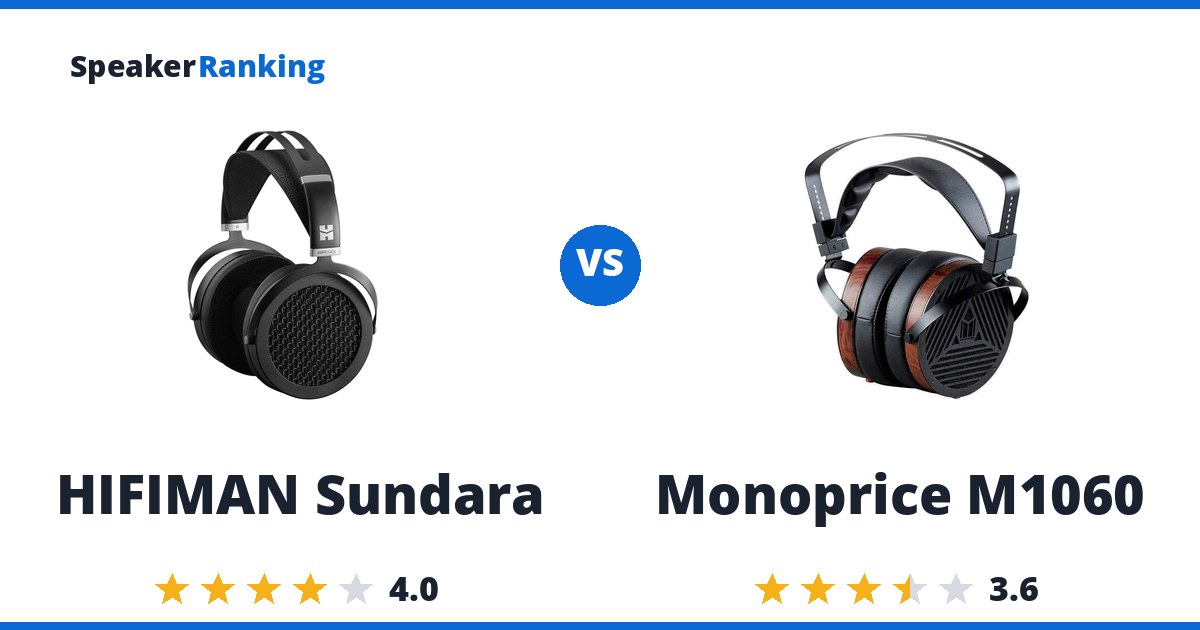
The HIFIMAN Sundara is the better-sounding choice. Crinacle’s measurement gives a preference score of 82, and the midrange and treble stay within about 1 dB of target in hobbyist measurements on squig.link, so voices and instruments sound natural with a neutral balance. Watch for: Sub-bass falls about 5 dB below target under 60 Hz and is 6.1 dB down at 30 Hz, so kick drums and synth bass lack deep rumble.
The case for the Monoprice M1060: Measured response gives it a solid Harman preference score of 72 with a 3.02 dB spread, and its mids sit within about 1.2 dB of target, so vocals and instruments sound natural. Watch for: A 5.6 dB peak near 4.4 kHz can make cymbals and sibilance sound sharp.
Buy the HIFIMAN Sundara. It is rated higher for sound quality than the Monoprice M1060 and costs less, so it is the default pick unless a specific strength of the other one matters more to you.
Looking for alternatives? See the complete Headphones rankings.
Specifications Side By Side
| HIFIMAN Sundara | Monoprice M1060 | |
|---|---|---|
| Price | $179.00 | $392.98 |
| Ranked | #87 of 429 in Over-Ear Headphones | #201 of 429 in Over-Ear Headphones |
| Form Factor | Over-ear | Over-ear |
| Back | Open | Open |
| Connection | Wired | Wired |
| Driver Type | Planar magnetic | Planar magnetic |
| Harman Preference Score | 82 (measured by crinacle, via AutoEQ) | 72 (measured by oratory1990, via AutoEQ) |
| Deviation From Target | 1.54 dB standard deviation | 3.02 dB standard deviation |
| Tonal Tilt | -0.01 (negative is warmer, positive brighter) | -0.28 (negative is warmer, positive brighter) |
| Drivers | 1 x planar magnetic | 1 x 106mm planar magnetic |
| Impedance | 37 ohms | 50 ohms |
| Sensitivity | 94 dB/mW | 96 dB/mW |
| Weight | 0.8 lbs (372 g) | 1.1 lbs (500g) |
| Frequency Response | 6Hz - 75kHz (Manufacturer specified) | 10Hz - 50kHz |
| Sub-bass Extension | Falls 6 dB below target at 30 Hz (-6.1 dB at 30 Hz) | Within 6 dB of target down to 20 Hz (-5.5 dB at 30 Hz) |
Related Headphone Comparisons
More worthwhile head-to-heads for HIFIMAN Sundara:
- AKG K371 vs HIFIMAN Sundara
- HIFIMAN Sundara vs Sennheiser HD 6XX
- Audio-Technica ATH-R50x vs HIFIMAN Sundara
- Beyerdynamic DT 770 Pro vs HIFIMAN Sundara
- Beyerdynamic DT 990 Pro vs HIFIMAN Sundara
Prices on this page were last checked October 13, 2026 at 3:17 PM UTC. Product prices and availability are accurate as of that date/time and are subject to change; the price and availability shown on Amazon at the time of purchase will apply to the purchase of this product.
As an eBay Partner, we may be compensated if you make a purchase.
The Two Headphones In Full
 HIFIMAN Sundara: $179.00 Amazon $179.00 eBay
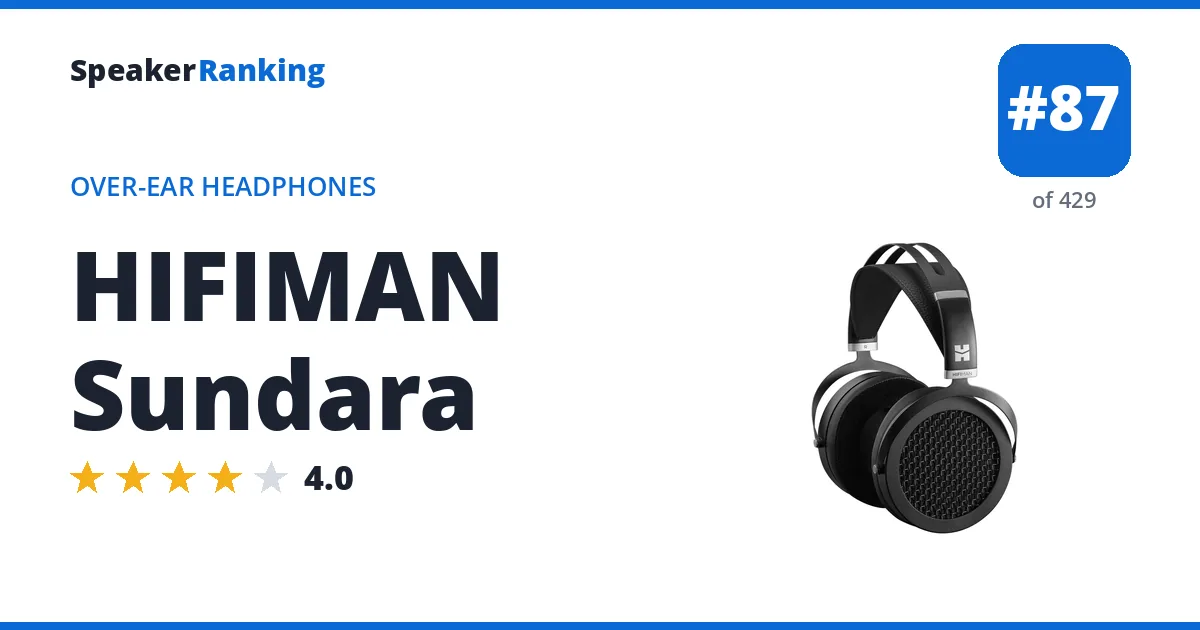
Pros: Crinacle’s measurement gives a preference score of 82, and the midrange and treble stay within about 1 dB of target in hobbyist measurements on squig.link, so voices and instruments sound natural with a neutral balance. The air band is lifted almost 4 dB above 10 kHz, adding openness and detail without a harsh peak. The open-back planar design gives a spacious presentation, and it is rated equal to the AKG K612 while costing less.
Cons: Sub-bass falls about 5 dB below target under 60 Hz and is 6.1 dB down at 30 Hz, so kick drums and synth bass lack deep rumble. At 94 dB/mW it needs more power than most over-ears and can run short of volume from a phone, and 372 g is heavy. The open back leaks sound and offers no isolation.
Full HIFIMAN Sundara review and specifications →
| Released | 2018 (8 years ago) |
|---|---|
| Back | Open |
| Connection | Wired |
| Deviation From Target | 1.54 dB standard deviation |
| Driver Type | Planar magnetic |
| Drivers | 1 x planar magnetic |
| Form Factor | Over-ear |
| Frequency Response | 6Hz - 75kHz (Manufacturer specified) |
| Harman Preference Score | 82 (measured by crinacle, via AutoEQ) |
| Impedance | 37 ohms |
| Sensitivity | 94 dB/mW |
| Sub-bass Extension | Falls 6 dB below target at 30 Hz (-6.1 dB at 30 Hz) |
| Tonal Tilt | -0.01 (negative is warmer, positive brighter) |
| Weight | 0.8 lbs (372 g) |
EQ preset to match the Harman target
Set a preamp of -6.1 dB, then add these filters in any parametric equalizer (Wavelet, Equalizer APO, Peace, or a player with parametric EQ). Calculated by AutoEQ from its measured frequency response.
| Filter | Frequency | Gain | Q |
|---|---|---|---|
| Low shelf | 105 Hz | +6.5 dB | 0.70 |
| Peak | 127 Hz | -2.0 dB | 0.29 |
| Peak | 2,009 Hz | +6.5 dB | 2.96 |
| Peak | 4,085 Hz | -4.4 dB | 1.19 |
| Peak | 7,580 Hz | +2.3 dB | 0.66 |
| High shelf | 10,000 Hz | -1.6 dB | 0.70 |
| Peak | 63 Hz | -1.2 dB | 2.40 |
| Peak | 38 Hz | +0.9 dB | 2.27 |
| Peak | 789 Hz | -1.6 dB | 4.10 |
| Peak | 5,821 Hz | +1.9 dB | 6.00 |
- Reviews, Comparisons and Sound Samples
- Head-to-Head Comparisons
 Monoprice M1060: $392.98 Amazon $392.98 eBay
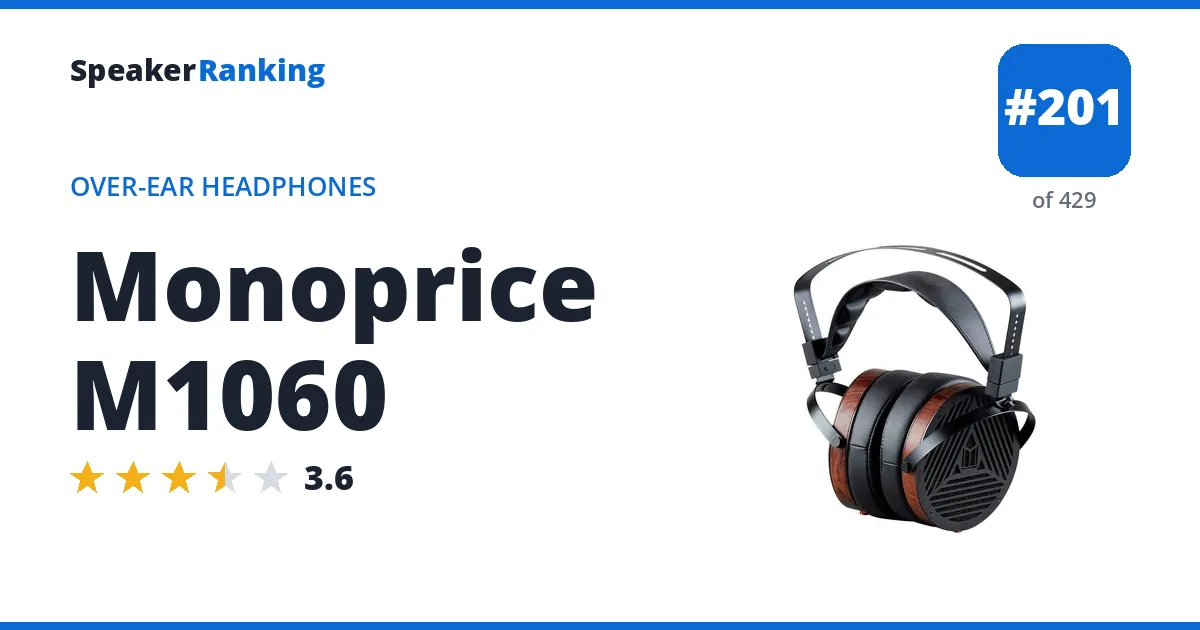
Pros: Measured response gives it a solid Harman preference score of 72 with a 3.02 dB spread, and its mids sit within about 1.2 dB of target, so vocals and instruments sound natural. It uses 1 x 106mm planar magnetic.
Cons: A 5.6 dB peak near 4.4 kHz can make cymbals and sibilance sound sharp. Sub-bass is 5.5 dB short at 30 Hz, so deep bass lacks rumble. Treble sits about 7.5 dB low, so it sounds a little dark.
Full Monoprice M1060 review and specifications →
| Released | 2017 (9 years ago) |
|---|---|
| Back | Open |
| Connection | Wired |
| Deviation From Target | 3.02 dB standard deviation |
| Driver Type | Planar magnetic |
| Drivers | 1 x 106mm planar magnetic |
| Form Factor | Over-ear |
| Frequency Response | 10Hz - 50kHz |
| Harman Preference Score | 72 (measured by oratory1990, via AutoEQ) |
| Impedance | 50 ohms |
| Sensitivity | 96 dB/mW |
| Sub-bass Extension | Within 6 dB of target down to 20 Hz (-5.5 dB at 30 Hz) |
| Tonal Tilt | -0.28 (negative is warmer, positive brighter) |
| Weight | 1.1 lbs (500g) |
EQ preset to match the Harman target
Set a preamp of -6.1 dB, then add these filters in any parametric equalizer (Wavelet, Equalizer APO, Peace, or a player with parametric EQ). Calculated by AutoEQ from its measured frequency response.
| Filter | Frequency | Gain | Q |
|---|---|---|---|
| Low shelf | 105 Hz | +7.8 dB | 0.70 |
| Peak | 9,146 Hz | +7.8 dB | 1.52 |
| Peak | 67 Hz | -3.7 dB | 0.37 |
| Peak | 5,158 Hz | -3.1 dB | 0.38 |
| Peak | 6,935 Hz | +4.5 dB | 2.94 |
| High shelf | 10,000 Hz | -5.4 dB | 0.70 |
| Peak | 394 Hz | +1.6 dB | 2.19 |
| Peak | 231 Hz | -1.0 dB | 2.25 |
| Peak | 669 Hz | -0.9 dB | 3.01 |
| Peak | 3,585 Hz | +1.4 dB | 4.90 |
- Reviews, Comparisons and Sound Samples