Short answer: the GR-Research NX-Studio for a clean waterfall, the X-LS Encore for value. The NX-Studio’s burst decay plot is ultra clean, though its sealed woofer enclosure gives very tight bass that will not go as deep as others. The X-LS Encore is called an amazing value, but its on-axis response shows a slight depression in the upper bass and some peaking in the lower bass.
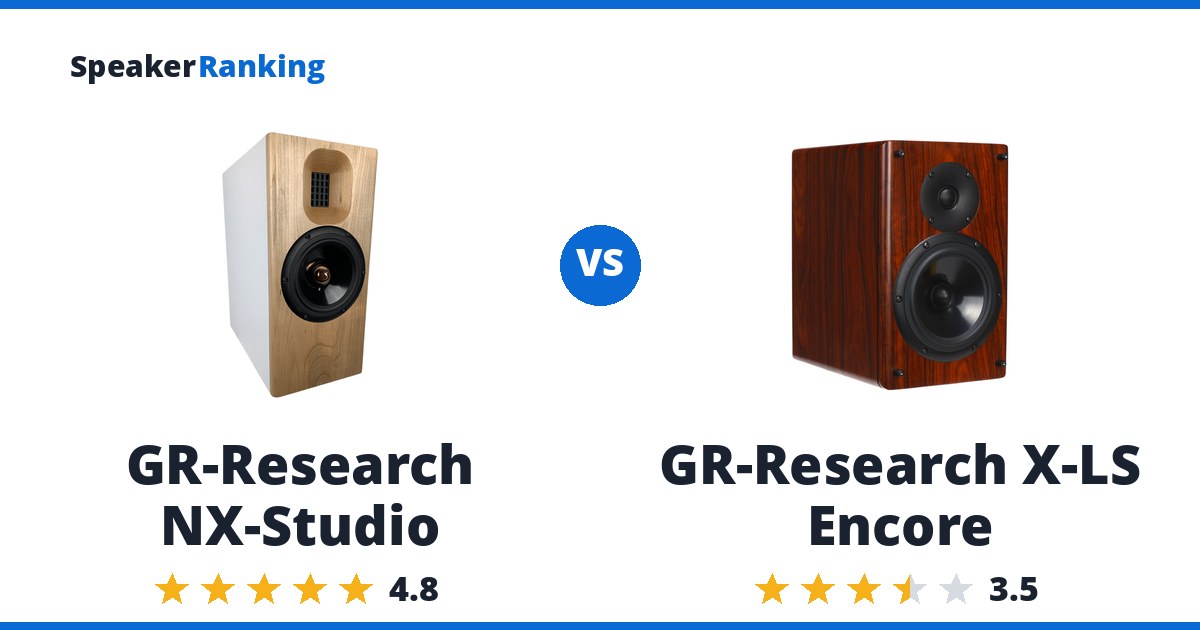
What the GR-Research NX-Studio gets right: Ultra clean burst decay/waterfall plot. Set against that: Bass will be very tight but won’t be quite as deep as others due to the sealed woofer enclosure.
On the GR-Research X-LS Encore side: An amazing value, especially if you managed to snag one of these built by AV123 in the early 2000s for $200-300. CEA2034 spinorama shows. Set against that: A slight depression in the upper bass and some peaking in the lower bass shows up on-axis.
Buy the GR-Research NX-Studio. It is rated higher for sound quality, and the $2330 you would save on the GR-Research X-LS Encore does not close the gap.
Want more options? Browse the full Passive Home rankings.
Specifications Side By Side
| GR-Research NX-Studio | GR-Research X-LS Encore | |
|---|---|---|
| Price | $3630 per pair | $1300 per pair |
| Ranked | #4 of 130 in Large Size Bookshelf Speakers | #83 of 130 in Large Size Bookshelf Speakers |
| Dimensions | 18"H x 8.5"W x 15.5"D (457.2 x 215.9 x 393.7 mm) | 13.5"H x 8.5"W x 12.1"D (342.9 x 215.9 x 308 mm) |
| Impedance | 8 ohms | 8 ohms |
| Sensitivity | 87dB | 84.4dB (measured by Audio Science Review; 87dB manufacturer specified) |
| Drivers | GR-Research M165NQ 6.5" paper cone, non-resonant polymer frame, copper shorting rings and aluminum phase plug sealed enclosure woofer, GR-Research Neo3 Planar Magnetic Ribbon open baffle tweeter | 6.5" Peerless M-165 paper composite cone, non-resonant polymer frame woofer, 1" Peerless India T26SG tweeter |
| Weight | 20.5 lbs (9.3 kg) each | 17 lbs (7.7 kg) each |
| Woofer Cabinet | sealed | ported |
| DIY Kit | Yes | Yes |
| Bass Extension (-10dB) | - | 44Hz (measured, Audio Science Review) |
| Bass Extension (-3dB) | - | 64Hz (measured, Audio Science Review) |
| Spinorama Preference Score | - | 5.05 (measured, spinorama.org) |
| Spinorama Preference Score with Perfect Sub | - | 7.42 (measured, spinorama.org) |
Related Speaker Comparisons
More worthwhile head-to-heads for GR-Research NX-Studio:
- GR-Research NX-Studio vs Perlisten S4b
- GR-Research NX-Studio vs KEF Reference 1 Meta
- GR-Research NX-Studio vs March Audio Sointuva AWG
- AsciLab C6B vs GR-Research NX-Studio
- Audio First Cadentia 3 vs GR-Research NX-Studio
Prices on this page were last checked September 23, 2026 at 11:24 PM UTC. Product prices and availability are accurate as of that date/time and are subject to change; the price and availability shown on Amazon at the time of purchase will apply to the purchase of this product.
As an eBay Partner, we may be compensated if you make a purchase.
The Two Speakers In Full
 GR-Research NX-Studio: $3630 per pair Gr-research eBay
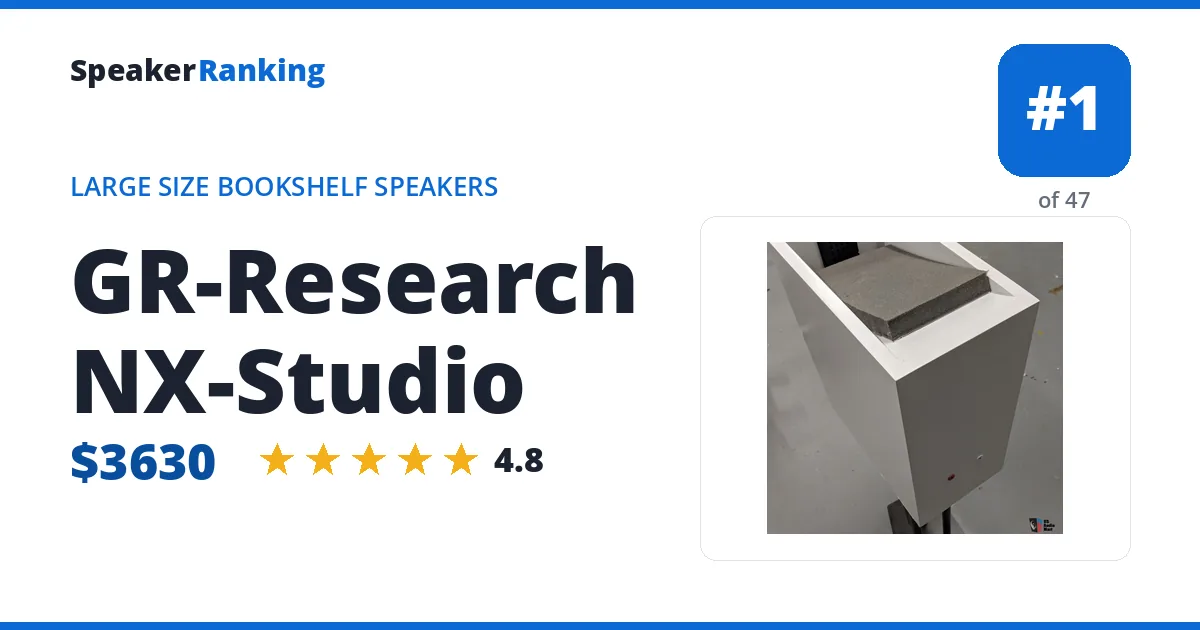
Pros: Ultra clean burst decay/waterfall plot. Amazingly open sounding due to the semi open baffle Neo3 ribbon tweeter, will image better than any other bookshelf speaker. Neo3 ribbon tweeter is one of the best ribbons around for detail. Bass will be very tight and fast due to the sealed enclosure, but may possibly need a sub.
Cons: Bass will be very tight but won’t be quite as deep as others due to the sealed woofer enclosure.
Full GR-Research NX-Studio review and specifications →
| DIY Kit | Yes |
|---|---|
| Dimensions | 18"H x 8.5"W x 15.5"D (457.2 x 215.9 x 393.7 mm) |
| Drivers | GR-Research M165NQ 6.5" paper cone, non-resonant polymer frame, copper shorting rings and aluminum phase plug sealed enclosure woofer, GR-Research Neo3 Planar Magnetic Ribbon open baffle tweeter |
| Impedance | 8 ohms |
| Sensitivity | 87dB |
| Weight | 20.5 lbs (9.3 kg) each |
| Woofer Cabinet | sealed |
- Links
- Reviews, Comparisons and Sound Samples
- Head-to-Head Comparisons
- GR-Research NX-Studio vs KEF Reference 1 Meta
- GR-Research NX-Studio vs March Audio Sointuva AWG
- GR-Research NX-Studio vs Perlisten S4b
- GR-Research NX-Studio vs AsciLab C6B
- GR-Research NX-Studio vs Audio First Cadentia 3
- GR-Research NX-Studio vs KEF R3 Meta
- GR-Research NX-Studio vs KEF Q Concerto Meta
- GR-Research NX-Studio vs Wharfedale Aura 2
- See all 48 comparisons
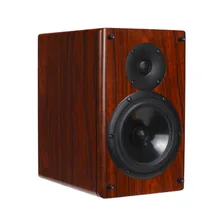 GR-Research X-LS Encore: $1300 per pair Gr-research eBay
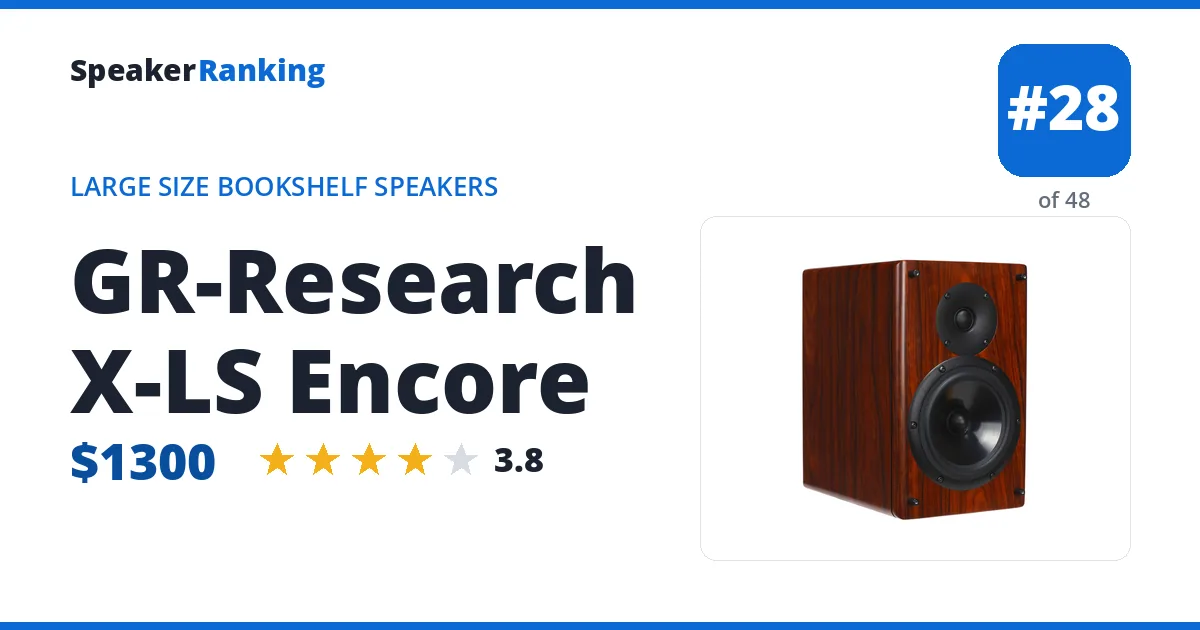
Pros: An amazing value, especially if you managed to snag one of these built by AV123 in the early 2000s for $200-300. CEA2034 spinorama shows a generally flat on-axis response, especially in the listening window. Predicted in-room response is generally smooth and on-target. Distortion at 86dB SPL/1m is pretty clean above 200Hz. Measured bass extension of 64Hz (-3dB), with a measured sensitivity of 84.4dB.
Cons: A slight depression in the upper bass and some peaking in the lower bass shows up on-axis, along with directivity error in the crossover region. Vertical directivity requires staying within about 20 degrees of the tweeter axis. At 96dB SPL/1m distortion becomes “rather unhappy,” with bass distortion, a possible woofer issue around 2kHz, and a tweeter problem above 7kHz. As a DIY kit, it requires building the cabinet and crossover yourself.
Full GR-Research X-LS Encore review and specifications →
| Bass Extension (-10dB) | 44Hz (measured, Audio Science Review) |
|---|---|
| Bass Extension (-3dB) | 64Hz (measured, Audio Science Review) |
| DIY Kit | Yes |
| Dimensions | 13.5"H x 8.5"W x 12.1"D (342.9 x 215.9 x 308 mm) |
| Drivers | 6.5" Peerless M-165 paper composite cone, non-resonant polymer frame woofer, 1" Peerless India T26SG tweeter |
| Impedance | 8 ohms |
| Sensitivity | 84.4dB (measured by Audio Science Review; 87dB manufacturer specified) |
| Spinorama Preference Score | 5.05 (measured, spinorama.org) |
| Spinorama Preference Score with Perfect Sub | 7.42 (measured, spinorama.org) |
| Weight | 17 lbs (7.7 kg) each |
| Woofer Cabinet | ported |
- Links
- Reviews, Comparisons and Sound Samples
- Head-to-Head Comparisons
- GR-Research X-LS Encore vs Dynaudio Special Forty
- GR-Research X-LS Encore vs Mission LX-3 MKII
- GR-Research X-LS Encore vs ELAC Debut 2.0 B6.2
- GR-Research X-LS Encore vs SVS Prime Bookshelf
- GR-Research X-LS Encore vs KEF Q3 Meta
- GR-Research X-LS Encore vs Polk Monitor XT20
- GR-Research X-LS Encore vs Philharmonic BMR Monitor
- GR-Research X-LS Encore vs Sonus Faber Lumina II
- See all 47 comparisons