These sit in different size classes, so this is not a straight ranking comparison. The Earfun Uboom L ranks #1 of 144 medium speakers by sound quality at $49.79; the Tribit PocketGo ranks #27 of 47 small speakers by sound quality at $22.99.
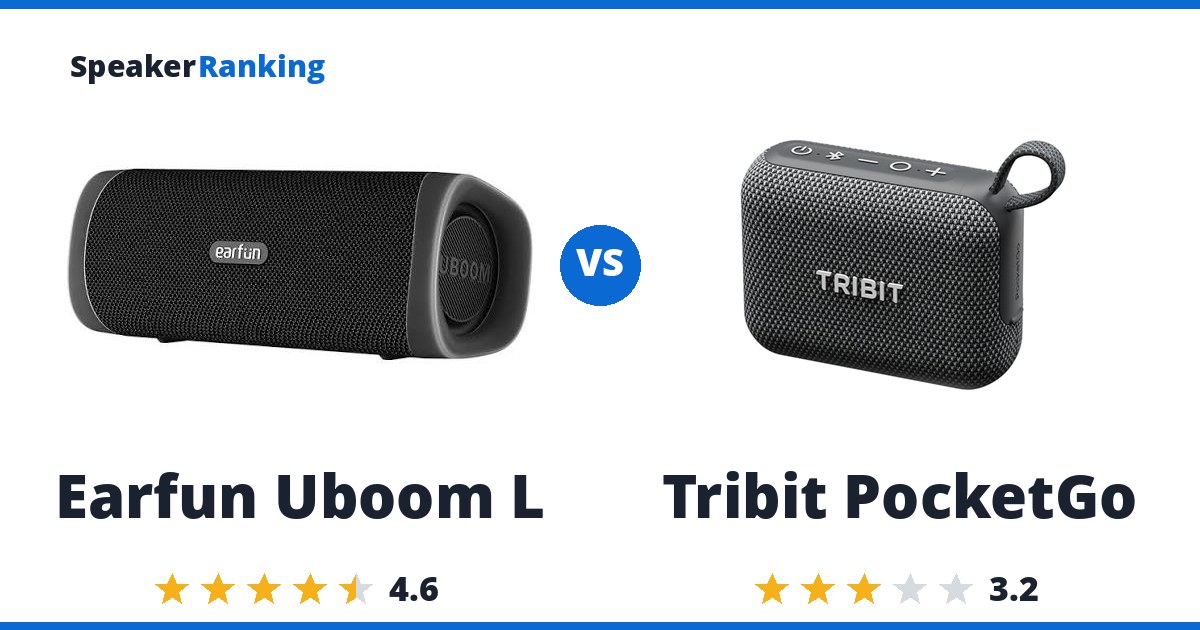
The case for the Earfun Uboom L: One of the strongest small-speaker values for music: reviews praise clear vocals, a natural overall balance and a genuinely convincing stereo image when two are paired. The tradeoff: It cannot produce real low-bass rumble or fill a large, noisy space, and the top end loses some detail.
Why pick the Tribit PocketGo: Fuller low end than the JBL Go 5, despite the JBL’s clearer, more typical JBL sound. The tradeoff: Battery life isn’t the biggest for this speaker class.
Buy the Earfun Uboom L at $49.79 for a medium speaker, or the Tribit PocketGo at $22.99 for a small speaker instead.
Still deciding? The full Portable Bluetooth rankings cover every ranked option.
Specifications Side By Side
| Earfun Uboom L | Tribit PocketGo | |
|---|---|---|
| Price | $49.79 after coupon UBOOMLWC | $22.99 |
| Ranked | #1 of 144 in Medium Size Portable Bluetooth Speakers | #27 of 47 in Small Size Portable Bluetooth Speakers |
| App | Yes (firmware >= 1.2.6) | Yes (Tribit app) |
| Aux Input | Yes | No |
| Aux Latency | 216ms | - |
| Bass Extension (-10dB) | 56Hz | - |
| Battery Life | 16 hours (Manufacturer specified) | 20 hours (Manufacturer specified) |
| Bluetooth Codecs | AAC, SBC | SBC, AAC |
| Built-in Microphone | Yes | Yes |
| EQ | Yes (10 band, firmware >= 1.2.6) | Yes (6 presets + custom) |
| IP Rating | IP67 | IP68 |
| Bluetooth Latency | 400ms normal / 66ms low latency mode | - |
| Maximum SPL | 103dB (measured by Alan Ross Reviews) | - |
| Party Mode | No | No |
| Power Bank | No | No |
| Power Input | USB-C | USB-C |
| Stereo | Yes | No |
| Omnidirectional | No | Pointing up |
| TWS | Yes | Yes |
| Weight | 1.4 lbs (650 g) | 0.5 lbs (220 g) |
| Bluetooth Version | 5.0 | 6.0 |
| Dimensions | 3.1” x 8.3” x 2.8” (78 x 210 x 72 mm) | 4.3” x 3.2” x 1.7” (108 x 81 x 42 mm) |
| Drivers | 2x 55mm drivers + 2x passive radiators | 1x 45mm full-range driver |
| Amplifier Power | 28W | 7W |
| Digital Aux Input | No | No |
| Frequency Response | - | 80Hz - 20kHz (Manufacturer specified) |
| Charging Time | - | 3 hours |
| MicroSD Playback | - | Yes |
| Discontinued | - | No |
| Strap | - | Yes (built-in loop) |
Related Speaker Comparisons
How Earfun Uboom L compares with other leading options:
- Earfun Uboom L vs Soundcore Motion 300
- Earfun Uboom L vs Soundcore Motion+
- Earfun Uboom L vs Minirig 4
- Earfun Uboom L vs B&O Beosound A1 2nd gen
- Earfun Uboom L vs JBL Charge 6
Prices on this page were last checked September 26, 2026 at 11:14 PM UTC. Product prices and availability are accurate as of that date/time and are subject to change; the price and availability shown on Amazon at the time of purchase will apply to the purchase of this product.
As an eBay Partner, we may be compensated if you make a purchase.
The Two Speakers In Full
 Earfun Uboom L: $49.79 after coupon UBOOMLWC Amazon EarFun eBay
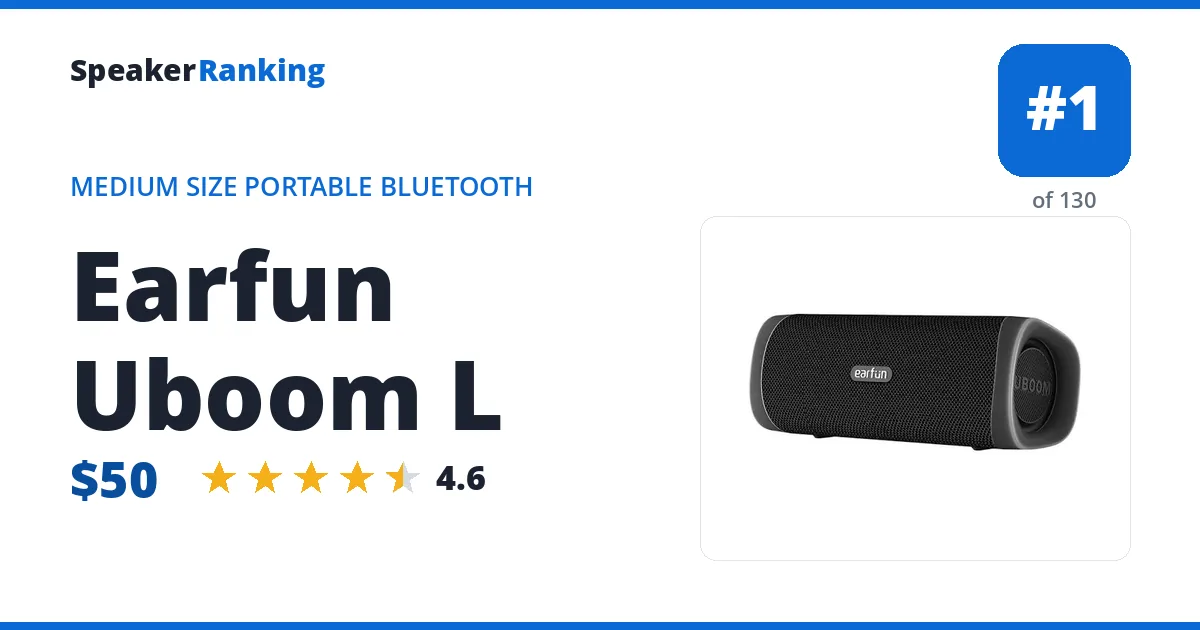
Pros: One of the strongest small-speaker values for music: reviews praise clear vocals, a natural overall balance and a genuinely convincing stereo image when two are paired. IP67 protection, indoor/outdoor sound modes and Video Mode make it unusually adaptable; Video Mode substantially improves lip-sync for a single speaker. Measured bass extension of 56Hz (-10dB).
Cons: It cannot produce real low-bass rumble or fill a large, noisy space, and the top end loses some detail. Low-latency Video Mode disables stereo pairing, so a two-speaker setup is not a good movie system. Firmware and app behavior have also varied over the model’s long life, and the physical controls can be easy to trigger in a bag. Latency is about 400ms by default and 66ms in Video Mode, which you enable by pressing the Bluetooth button twice.
Setup: Try setting up the Earfun App (Android or iOS) to see if that works. If not, you’ll need to flash firmware 1.2.7 to work with the app and set with Oluv’s EQ in the Earfun app which sounds the best. The instructions say that you need a USB3 cable, but most USB2 cables work just fine, try the one included with your phone. Check the current firmware version by turning it on, then pressing the power and Bluetooth buttons at the same time. To flash, turn the speaker off then hold down the Bluetooth button while plugging in the cable. To flash on a mac, see these instructions. In TWS mode, long press the outdoor button for 2 seconds to change TWS to Party mode and back.
Full Earfun Uboom L review and specifications →
| Amplifier Power | 28W |
|---|---|
| App | Yes (firmware >= 1.2.6) |
| Aux Input | Yes |
| Aux Latency | 216ms |
| Bass Extension (-10dB) | 56Hz |
| Battery Life | 16 hours (Manufacturer specified) |
| Bluetooth Codecs | AAC, SBC |
| Bluetooth Latency | 400ms normal / 66ms low latency mode |
| Bluetooth Version | 5.0 |
| Built-in Microphone | Yes |
| Digital Aux Input | No |
| Dimensions | 3.1” x 8.3” x 2.8” (78 x 210 x 72 mm) |
| Drivers | 2x 55mm drivers + 2x passive radiators |
| EQ | Yes (10 band, firmware >= 1.2.6) |
| IP Rating | IP67 |
| Maximum SPL | 103dB (measured by Alan Ross Reviews) |
| Omnidirectional | No |
| Party Mode | No |
| Power Bank | No |
| Power Input | USB-C |
| Stereo | Yes |
| TWS | Yes |
| Weight | 1.4 lbs (650 g) |
- Links
- Reviews, Comparisons and Sound Samples
- Joy & Oluv’Sone: Best portable speakers 2025 - get the best bang for your buck $$$ More from Oluv’Sone →
- Oluv Patreon: SoundCore Boom 3i - first impressions & EQs
- Joy & Oluv’Sone: New Beats Pill 2024: sound demo
- CEONTHEMAKING: Earfun Uboom L - This Speaker Replaced My JBL Flip 6… More from CEONTHEMAKING →
- Techder Audios: EARFUN UBOOM L VS SOUNDCORE MOTION+ More from techderaudios →
- Alan Ross Reviews: Earfun UBoom L Review Speaker tuned by a Geek vs Soundcore Motion Plus $100 dollar best portable? More from alanrossreviews →
- Oluv Patreon: Soundcore Motion 300 = Bose Soundlink Flex = Earfun UBoom L?
- Jay’s Straight Up Reviews & More: Earfun UBoom L 💣(EQ2) 🆚 Tribit XSound Mega 🔥(XBass EQ)- Bluetooth Speaker Bedroom Bash. Who U Got?🔝 More from JaysStraightUpReviews →
- Joy & Oluv’Sone: JBL, Bose, B&O, Sonos, Earfun, SoundCore… which portable speaker sounds best?
- DIY Subwoofers - Uboom L Measurements and Review
- Head-to-Head Comparisons
 Tribit PocketGo: $22.99 Amazon eBay
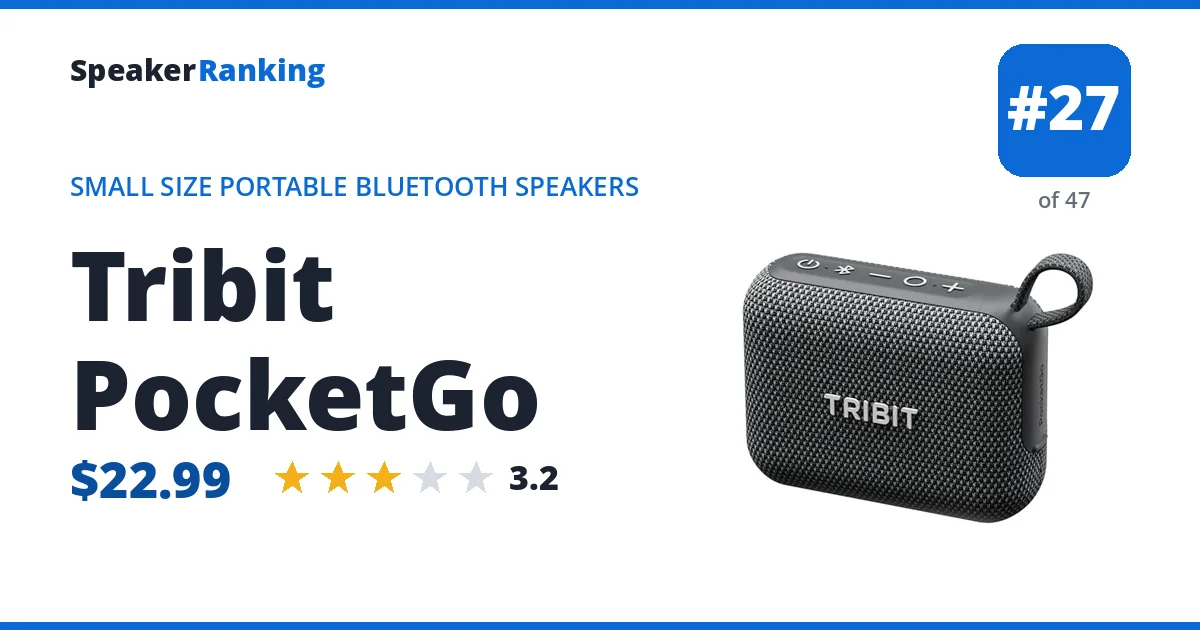
Pros: Fuller low end than the JBL Go 5, despite the JBL’s clearer, more typical JBL sound. Costs about half the price of the JBL Go 5. Can stand, hang from its loop, or lay flat on its feet for flexible placement. About on par with the Soundcore Select 4 Go, and a touch louder at lower volumes. App support with signature EQ and customization.
Cons: Battery life isn’t the biggest for this speaker class. JBL Go 5 has better build quality plus lightshow, Auracast, and AirTouch. Loses more bass than the Soundcore Select 4 Go at maximum volume. Slightly nasal quality to the sound.
Full Tribit PocketGo review and specifications →
| Amplifier Power | 7W |
|---|---|
| App | Yes (Tribit app) |
| Aux Input | No |
| Battery Life | 20 hours (Manufacturer specified) |
| Bluetooth Codecs | SBC, AAC |
| Bluetooth Version | 6.0 |
| Built-in Microphone | Yes |
| Charging Time | 3 hours |
| Digital Aux Input | No |
| Dimensions | 4.3” x 3.2” x 1.7” (108 x 81 x 42 mm) |
| Discontinued | No |
| Drivers | 1x 45mm full-range driver |
| EQ | Yes (6 presets + custom) |
| Frequency Response | 80Hz - 20kHz (Manufacturer specified) |
| IP Rating | IP68 |
| MicroSD Playback | Yes |
| Omnidirectional | Pointing up |
| Party Mode | No |
| Power Bank | No |
| Power Input | USB-C |
| Stereo | No |
| Strap | Yes (built-in loop) |
| TWS | Yes |
| Weight | 0.5 lbs (220 g) |
- Links
- Reviews, Comparisons and Sound Samples
- Techder Audios: JBL Go 5 vs Tribit Pocket Go: The Ultimate Pocket Speaker Battle (2026) More from techderaudios →
- Jay’s Straight Up Reviews & More: Tribit PocketGo vs Soundcore Select 4 Go - Bluetooth Pocket Speaker Battle More from JaysStraightUpReviews →
- Storytripper HD: Tribit Pocket Go vs Tribit StormBox Micro 2 More from storytripperhd →
- Head-to-Head Comparisons
- Tribit PocketGo vs JBL Go 3
- Tribit PocketGo vs Onn Small Rugged Speaker
- Tribit PocketGo vs JBL Go 4
- Tribit PocketGo vs JBL Go 5
- Tribit PocketGo vs Dayton Audio Boost Mini
- Tribit PocketGo vs Soundcore Select 4 Go
- Tribit PocketGo vs Monster Bluetooth Speaker
- Tribit PocketGo vs JBL Clip 4
- See all 45 comparisons