Coverage note. Speaker Ranking currently covers 5 Pioneer models across portable bluetooth speakers, powered speakers, passive speakers and subwoofers. These are the products in our database, not a complete list of everything Pioneer makes.
What this page covers. The Pioneer models ranked here span portable bluetooth speakers, powered speakers, passive speakers and subwoofers, including Pioneer SW-8MK2, Pioneer DJ VM-50 and Pioneer SP-BS22-LR (Philharmonic AAM Mod). Use each model’s category position to compare it with alternatives of the same size and use case.
This page lists all 5 Pioneer speakers ranked on this site across portable bluetooth speakers, powered speakers, passive speakers and subwoofers. Each model is shown in the category where it competes, with its current rank and the size of that ranking.
Use the category position rather than the brand name alone: speakers from the same manufacturer can perform very differently by size, price and product family.
Prices on this page were last checked October 1, 2026 at 6:23 PM UTC. Product prices and availability are accurate as of that date/time and are subject to change; the price and availability shown on Amazon at the time of purchase will apply to the purchase of this product.
As an eBay Partner, we may be compensated if you make a purchase.
Quick Navigation
- Boombox Size Portable Bluetooth Speakers
- Medium Size Powered Bookshelf Speakers
- Discontinued Pioneer Models
Boombox Size Portable Bluetooth Speakers
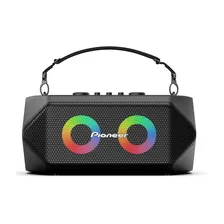 Ranked #89 of 89 in Boombox Size Portable Bluetooth Speakers - Pioneer PBM5: $149.00 Sam’s Club eBay
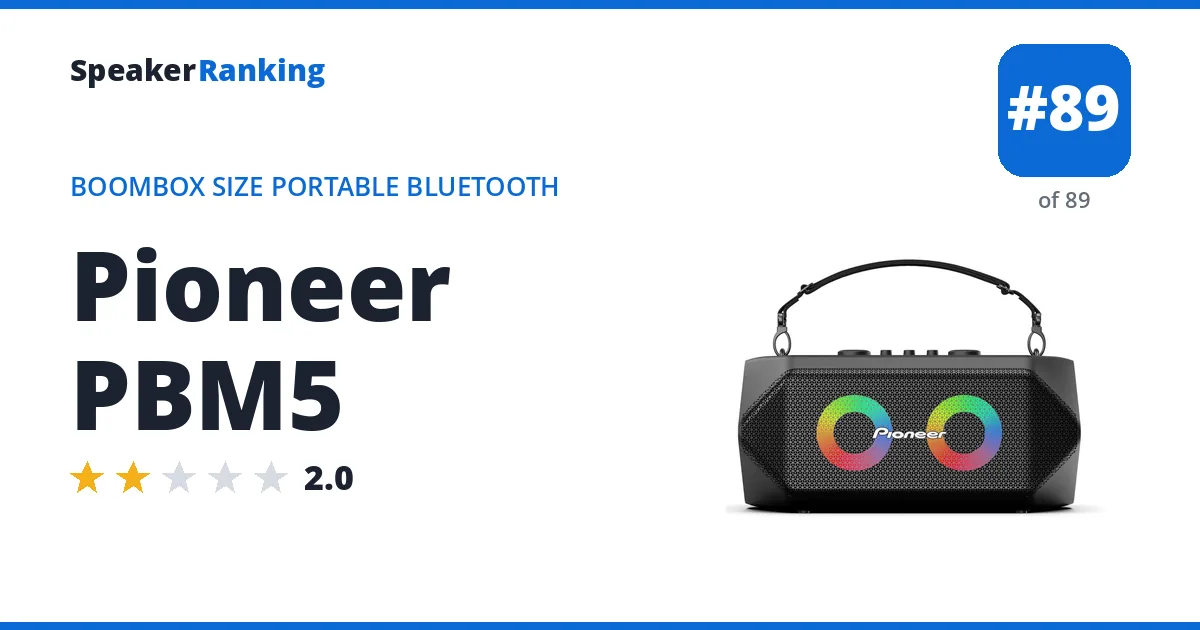
Pros: Loud for its size: Williston Audio Labs measured about 105 dB at 2 meters, louder than the Turtlebox Original Gen3 and Kicker Bullfrog BF400 in the same test. Two 5.25 inch woofers and two 2 inch tweeters with a port tuned to 48Hz, two microphone inputs plus a guitar input with bass, treble and reverb controls for the mics, aux and USB playback, IPX5 splash resistance, RGB lights, a shoulder strap, Bluetooth 5.4 with Auracast, and charging from either USB-C or the included AC cord. A rated 13 hours at 60% volume.
Cons: Williston Audio Labs was not impressed with its sound: there is very little bass below 100Hz, and the amplifier’s output has a big dip from 1.6kHz to 10kHz that leaves the upper mids and treble recessed. None of the EQ presets fixed it, and a 1990 JVC boombox sounded cleaner. The amp measured about 90W in total, not the claimed 300W, and only about 23W per woofer channel on battery. USB playback is MP3 only, there is no audio output and no microphone in the box, and it is sold only at Sam’s Club.
Full Pioneer PBM5 review and specifications →
| Amplifier Power | 300W peak (Manufacturer specified), about 90W measured |
|---|---|
| App | Yes |
| Aux Input | Yes |
| Battery Life | 13 hours at 60% volume (Manufacturer specified) |
| Bluetooth | Yes |
| Bluetooth Version | 5.4 |
| Dimensions | 8.9”H x 17.4”W x 8.1”D (226 x 442 x 207 mm) |
| Drivers | 2x 133mm (5.25”) woofers + 2x 51mm (2”) tweeters |
| EQ | Yes (presets + user EQ) |
| Guitar Input | Yes |
| IP Rating | IPX5 |
| Lights | Yes |
| Maximum SPL | 105dB at 2m (measured by Williston Audio Labs) |
| Microphone Input | Yes (2 inputs) |
| Omnidirectional | No |
| Party Mode | Yes (Auracast) |
| Power Input | USB-C or AC Power cord |
| Strap | Yes (detachable shoulder strap) |
| TWS | Yes |
| USB Playback | Yes (MP3 only) |
| Weight | 14.1 lbs (6.4 kg) |
- Links
- Reviews, Comparisons and Sound Samples
- Head-to-Head Comparisons
Medium Size Powered Bookshelf Speakers
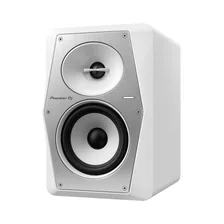 Ranked #25 of 68 in Medium Size Powered Bookshelf Speakers - Pioneer DJ VM-50: $338 per pair Amazon eBay
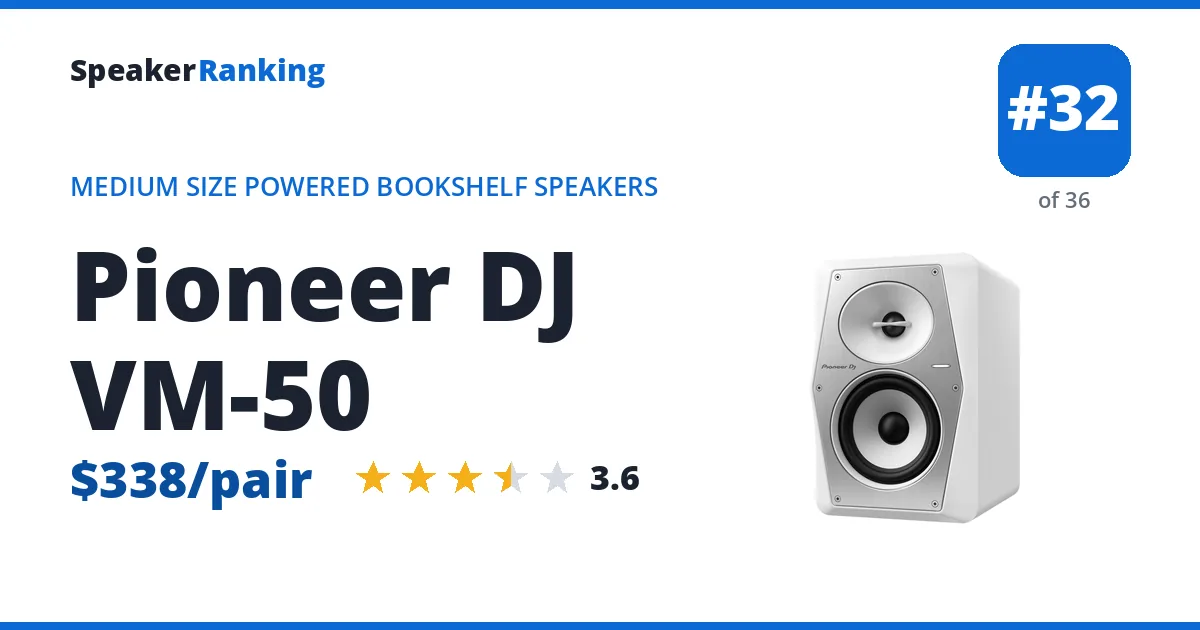
Pros: Erin’s Klippel measurements give scores of 4.64 standalone and 7.00 with an ideal subwoofer, with a -3dB point around 60Hz. The existing review reports low distortion and little sustained compression, supporting practical clean playback beyond what the tonal score alone captures. Separate bass and treble voicings and balanced inputs make adjustment straightforward. Measured bass extension of 61Hz (-3dB).
Cons: The default response spans 3.5dB from 300Hz to 5kHz, and the upper-midrange/treble balance varies with angle. EQ-switch selection and aiming therefore matter. Bass below about 50Hz is reduced, so it is not a full-range substitute for a monitor-and-subwoofer system. Its output evidence supports nearfield use, not unrestricted home-theater levels.
Full Pioneer DJ VM-50 review and specifications →
| AES Input | No |
|---|---|
| Amplifier Power | 30W LF + 30W HF; Class D |
| Aux Input | No |
| Bass Extension (-10dB) | 47.3Hz (measured, Erin’s Audio Corner) |
| Bass Extension (-3dB) | 61Hz (measured, Erin’s Audio Corner) |
| Bluetooth | No |
| Coaxial Input | No |
| DSP | Four LF and four HF EQ settings |
| Dimensions | 7.8” x 11.8” x 10.1” (198 x 300 x 256 mm) (W x H x D) |
| Drivers | 1” tweeter in horn; 5.25” aramid-fiber woofer |
| Frequency Response | 40Hz - 36kHz (Manufacturer specified) |
| HDMI Input | No |
| Inputs | XLR/TRS combo and RCA |
| Optical Input | No |
| RCA Input | Yes |
| Spinorama Preference Score | 4.64 |
| Spinorama Preference Score with Perfect Sub | 7.00 |
| TRS Input | Yes |
| USB Input | No |
| Weight | 12.1 lbs (5.5 kg) |
| XLR Input | Yes |
- Links
- Reviews, Comparisons and Sound Samples
- Head-to-Head Comparisons
- Pioneer DJ VM-50 vs Airpulse A100
- Pioneer DJ VM-50 vs KEF LSX II LT
- Pioneer DJ VM-50 vs Audioengine A5+ Classic
- Pioneer DJ VM-50 vs IK Multimedia iLoud MTM
- Pioneer DJ VM-50 vs Kali Audio IN-5
- Pioneer DJ VM-50 vs Adam Audio T5V
- Pioneer DJ VM-50 vs Kali Audio SM-5
- Pioneer DJ VM-50 vs Kanto YU6
- See all 54 comparisons
Discontinued Pioneer Models
Still ranked, and often still worth buying used, but no longer in production. Check availability before planning around one of these.
Medium Size Bookshelf Speakers
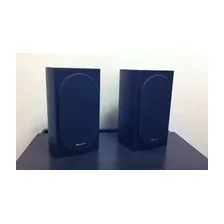 Ranked #63 of 90 in Medium Size Bookshelf Speakers - Pioneer SP-BS22-LR (Philharmonic AAM Mod): $168 per pair Discontinued eBay
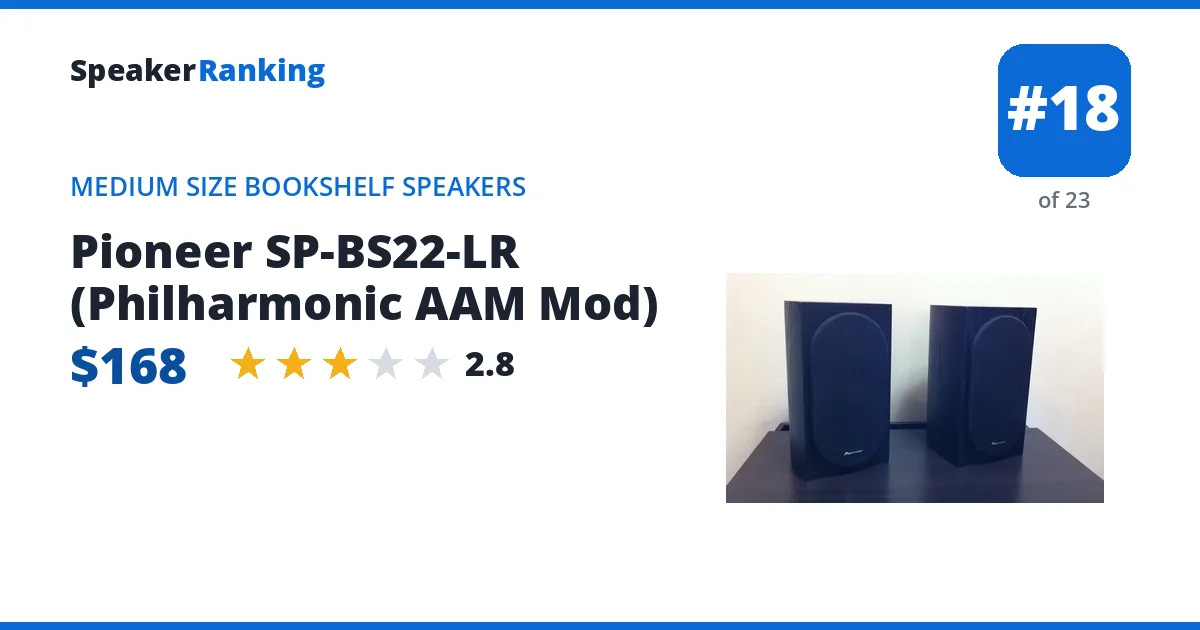
Pros: This is Dennis Murphy’s “Affordable Accuracy Monitor” (AAM) mod of the discontinued, budget Pioneer SP-BS22-LR: the stock tweeter is swapped for a Peerless BC25TG15 dome and a redesigned 3rd-order crossover is built to match it to the stock 4” woofer. CEA2034 spinorama shows only small variations from a flat on-axis response with some directivity error near the crossover, a marked improvement over the unmodified Pioneer, which the reviewer notes shows much more variation from flat. Distortion at 86dB SPL/1m is reasonably controlled above 200Hz, and tweeter distortion barely rises even at 96dB SPL/1m. Measured bass extension of 78Hz (-3dB), with a measured sensitivity of 83dB.
Cons: Some directivity error appears near the crossover frequency. Distortion climbs in the woofer’s range (below 200Hz) at both 86dB and 96dB SPL/1m. Minimum impedance dips to about 5 ohms with a couple of resonance peaks. This is a DIY project, not a finished retail product: Murphy sold ~$168 pre-built pairs for a while but no longer does, so it now requires sourcing a used/discontinued Pioneer SP-BS22-LR pair plus building the crossover and swapping the tweeter yourself. The mod itself is public domain, but there is no current turnkey way to buy this speaker.
Full Pioneer SP-BS22-LR (Philharmonic AAM Mod) review and specifications →
| Bass Extension (-10dB) | 60Hz (measured, Audio Science Review) |
|---|---|
| Bass Extension (-3dB) | 78Hz (measured, Audio Science Review) |
| Crossover Frequency | 3000Hz |
| DIY Kit | Yes |
| Dimensions | 12.6”H x 7.1”W x 8.5”D (320.0 x 180.0 x 215.0 mm) |
| Drivers | 1x 4” curvilinear-cone woofer (stock Pioneer), 1x Peerless BC25TG15 1” silk dome tweeter (replacement) |
| Impedance | 8 ohms nominal (approx. 5 ohms minimum, measured by Audio Science Review) |
| Sensitivity | 83dB (2.83V/1m, measured by Audio Science Review) |
| Spinorama Preference Score | 5.07 |
| Spinorama Preference Score with Perfect Sub | 7.82 |
| Weight | 9 lbs (4.1 kg) |
| Woofer Cabinet | ported, rear |
- Links
- Reviews, Comparisons and Sound Samples
- Head-to-Head Comparisons
- Pioneer SP-BS22-LR (Philharmonic AAM Mod) vs Dynaudio X14
- Pioneer SP-BS22-LR (Philharmonic AAM Mod) vs MartinLogan Motion 4i
- Pioneer SP-BS22-LR (Philharmonic AAM Mod) vs ELAC BS U5
- Pioneer SP-BS22-LR (Philharmonic AAM Mod) vs JBL L52 Classic
- Pioneer SP-BS22-LR (Philharmonic AAM Mod) vs Dynaudio Emit M10
- Pioneer SP-BS22-LR (Philharmonic AAM Mod) vs Parts Express Copperhead Desktop Kit
- Pioneer SP-BS22-LR (Philharmonic AAM Mod) vs JBL Stage A120
- Pioneer SP-BS22-LR (Philharmonic AAM Mod) vs ELAC Uni-Fi 2.0 UB52
- See all 37 comparisons
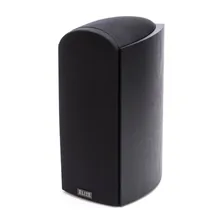 Ranked #85 of 90 in Medium Size Bookshelf Speakers - Pioneer Elite SP-EBS73-LR: $749 per pair Discontinued eBay
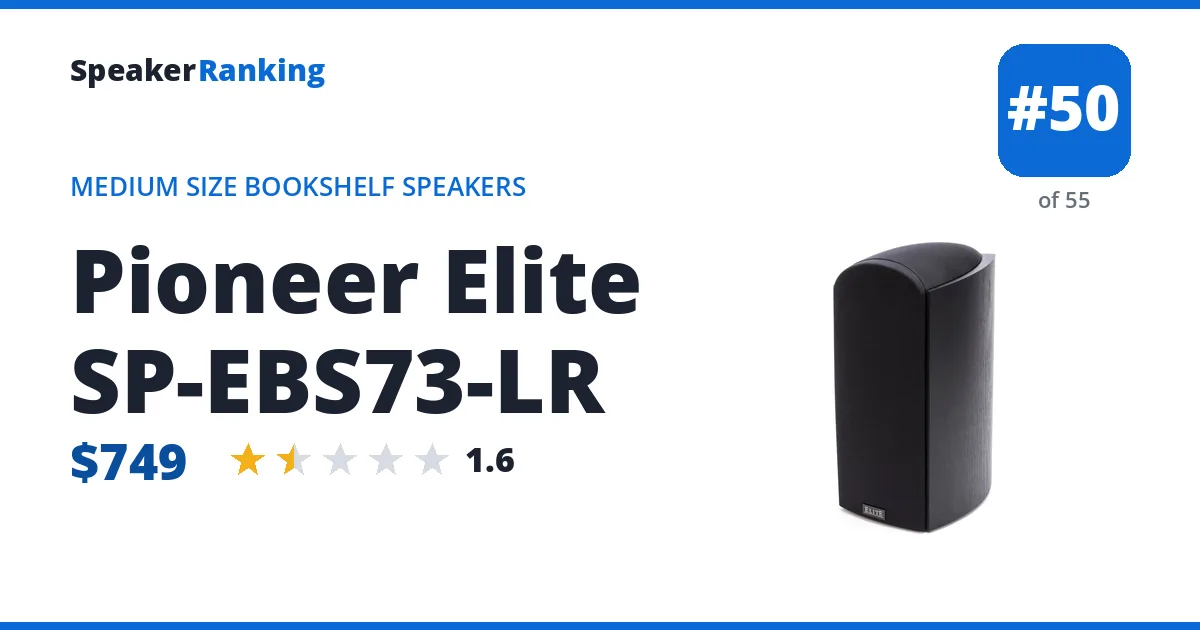
Pros: Unique dual-driver design combines a front-facing 3-way speaker with an up-firing 2-way Dolby Atmos coaxial driver in one cabinet, designed by Andrew Jones. With corrective EQ applied, the reviewer found “substantially more brilliance and detail,” and the up-firing Atmos driver produced “remarkable” spatial effects from a single box. Measured bass extension of 64.5Hz (-3dB).
Cons: A wide dip between 3-10kHz makes the front speaker sound “somewhat dull” without EQ, and impedance dips below 4 ohms demand a capable amplifier. Distortion is elevated at the crossover points, around 180Hz and 2600Hz. Amir concluded: “The hole in frequency response and high distortion around the crossover point rule out this speaker for any kind of hifi use, certainly at these prices.” Long discontinued.
Full Pioneer Elite SP-EBS73-LR review and specifications →
| Bass Extension (-10dB) | 45.9Hz (measured, Audio Science Review) |
|---|---|
| Bass Extension (-3dB) | 64.5Hz (measured, Audio Science Review) |
| DIY Kit | No |
| Dimensions | 15.7H x 7.4W x 9.7D in |
| Drivers | 5.25” aluminum-cone woofer, 2x 4” aluminum-cone midrange, 2x 1” silk dome tweeter (front 3-way + up-firing 2-way Atmos coaxial) |
| Impedance | below 4 ohms minimum |
| Sensitivity | 85dB (manufacturer specified) |
| Spinorama Preference Score | 3.22 |
| Spinorama Preference Score with Perfect Sub | 5.53 |
| Weight | 15.7 lbs (7.1 kg) each |
- Reviews, Comparisons and Sound Samples
- Head-to-Head Comparisons
- Pioneer Elite SP-EBS73-LR vs Ascend Sierra Luna
- Pioneer Elite SP-EBS73-LR vs Definitive Technology ProMonitor 1000
- Pioneer Elite SP-EBS73-LR vs Klipsch R-41M
- Pioneer Elite SP-EBS73-LR vs Polk T15
- Pioneer Elite SP-EBS73-LR vs JBL Control 1 Pro
- Pioneer Elite SP-EBS73-LR vs Fluance Signature HFS
- Pioneer Elite SP-EBS73-LR vs JBL Stage A130
- Pioneer Elite SP-EBS73-LR vs Q Acoustics 5020
- See all 30 comparisons
Small Home Subwoofers (Under 30 lbs)
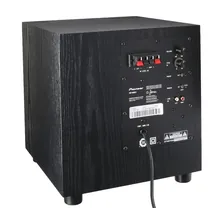 Ranked #10 of 48 in Small Home Subwoofers (Under 30 lbs) - Pioneer SW-8MK2: $299 Discontinued eBay
Pros: Independent CEA-2010 testing records 69.4 dB at 20 Hz and 112.4 dB through 40-80 Hz. The ported, front enclosure with 8” (203mm) driver is best suited to upper-bass support in a modest room.
Cons: Deep-bass output is limited relative to its midbass result, so it is not the right choice for the lowest movie effects. The 360.2H x 309.4W x 309.4D mm cabinet and 9.1 kg mass still need deliberate placement and calibration. Discontinued.
Full Pioneer SW-8MK2 review and specifications →
| CEA-2010-A Average (40-80Hz) | 112.4 dB |
|---|---|
| Cabinet Color | black |
| Country | Japan |
| Dimensions | 14.2”H x 12.2”W x 12.2”D (360.2 x 309.4 x 309.4 mm) |
| Drivers | 8” (203mm) driver |
| Enclosure | ported, front |
| Measurement Source | Brent Butterworth |
| Output SPL at 20 Hz | 69.4 dB |
| Output SPL at 25 Hz | 87.4 dB |
| Output SPL at 31.5 Hz | 102.8 dB |
| Output SPL at 40 Hz | 107.0 dB |
| Output SPL at 50 Hz | 113.8 dB |
| Output SPL at 63 Hz | 114.2 dB |
| Output SPL at 80 Hz | 114.6 dB |
| Warranty | 1? |
| Weight | 20.1 lbs (9.1 kg) |
- Links
- Reviews, Comparisons and Sound Samples
- Independently measured by Brent Butterworth; the published figures above come from this ASR subwoofer measurement thread.