Coverage note. Speaker Ranking currently covers 5 Neumann models across powered speakers. These are the products in our database, not a complete list of everything Neumann makes.
What this page covers. The Neumann models ranked here span powered speakers, including Neumann KH120 MKII, Neumann KH80 DSP and Neumann KH420. Use each model’s category position to compare it with alternatives of the same size and use case.
This page lists all 5 Neumann speakers ranked on this site across powered speakers. Each model is shown in the category where it competes, with its current rank and the size of that ranking.
Use the category position rather than the brand name alone: speakers from the same manufacturer can perform very differently by size, price and product family.
Prices on this page were last checked September 30, 2026 at 2:57 PM UTC. Product prices and availability are accurate as of that date/time and are subject to change; the price and availability shown on Amazon at the time of purchase will apply to the purchase of this product.
As an eBay Partner, we may be compensated if you make a purchase.
Quick Navigation
Medium Size Powered Bookshelf Speakers
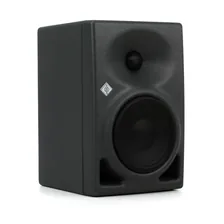 Ranked #2 of 68 in Medium Size Powered Bookshelf Speakers - Neumann KH120 MKII: $2000 per pair B&H Photo Video eBay
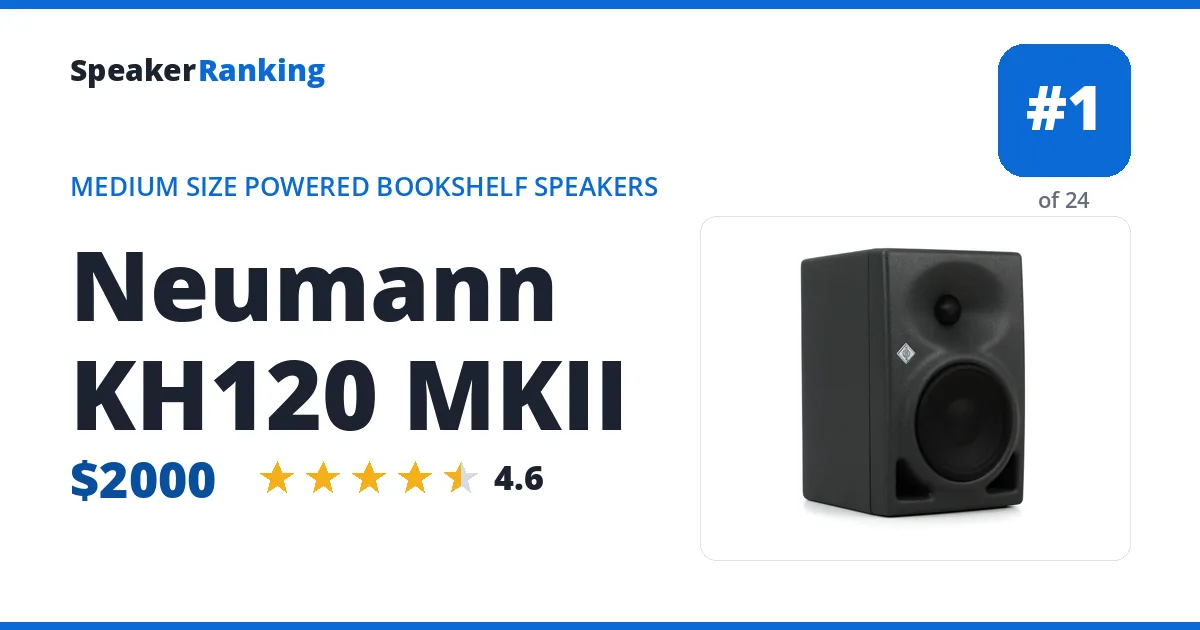
Pros: ASR’s Klippel data shows exceptional neutrality: only a 1.5dB span from 300Hz to 5kHz and low listening-window narrow-band deviation of 0.208. Scores of 6.49 standalone and 8.44 with an ideal subwoofer place it among the strongest measured options here. Bass reaches -3dB around 45Hz. The review reports very low distortion at 86dB/1m and clean performance outside deep bass at 96dB. Measured bass extension of 46Hz (-3dB).
Cons: Vertical crossover interference makes listening height important even though horizontal dispersion is well controlled. A small directivity irregularity remains around 2kHz. Distortion increases below about 50Hz at high output; a subwoofer can extend the system and reduce low-frequency demands. High price, and a flat anechoic response still needs suitable placement in the room.
Full Neumann KH120 MKII review and specifications →
| AES Input | No |
|---|---|
| Amplifier Power | 245W (145W woofer + 100W tweeter) |
| App | Yes (MA 1 alignment) |
| Aux Input | No |
| Bass Extension (-10dB) | 36Hz (measured, Audio Science Review) |
| Bass Extension (-3dB) | 46Hz (measured, Audio Science Review) |
| Bluetooth | No |
| Coaxial Input | No |
| DSP | Yes |
| Dimensions | 11.3”H x 7.2”W x 8.9”D (287 x 182.9 x 226.1 mm) |
| Drivers | 5.25” woofer, 1” titanium fabric dome tweeter |
| EQ | Yes (via DSP) |
| Frequency Response | 44Hz - 21kHz (±3dB) (Manufacturer specified) |
| HDMI Input | No |
| Inputs | XLR |
| Maximum SPL | 116.8dB @ 1m (manufacturer specified) |
| Optical Input | No |
| RCA Input | No |
| Spinorama Preference Score | 6.49 |
| Spinorama Preference Score with Perfect Sub | 8.44 |
| TRS Input | No |
| USB Input | No |
| Weight | 14.6 lbs (6.6 kg) each |
| XLR Input | Yes |
- Links
- Reviews, Comparisons and Sound Samples
- Head-to-Head Comparisons
- Neumann KH120 MKII vs Genelec 8030C
- Neumann KH120 MKII vs Genelec 8331A
- Neumann KH120 MKII vs Neumann KH80 DSP
- Neumann KH120 MKII vs Dynaudio LYD 5
- Neumann KH120 MKII vs Genelec 8330A
- Neumann KH120 MKII vs Genelec 8320A
- Neumann KH120 MKII vs Devialet Phantom II 98 dB
- Neumann KH120 MKII vs Topping MA4
- See all 51 comparisons
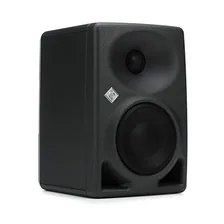 Ranked #4 of 68 in Medium Size Powered Bookshelf Speakers - Neumann KH80 DSP: $1,198 per pair Amazon B&H Photo Video eBay
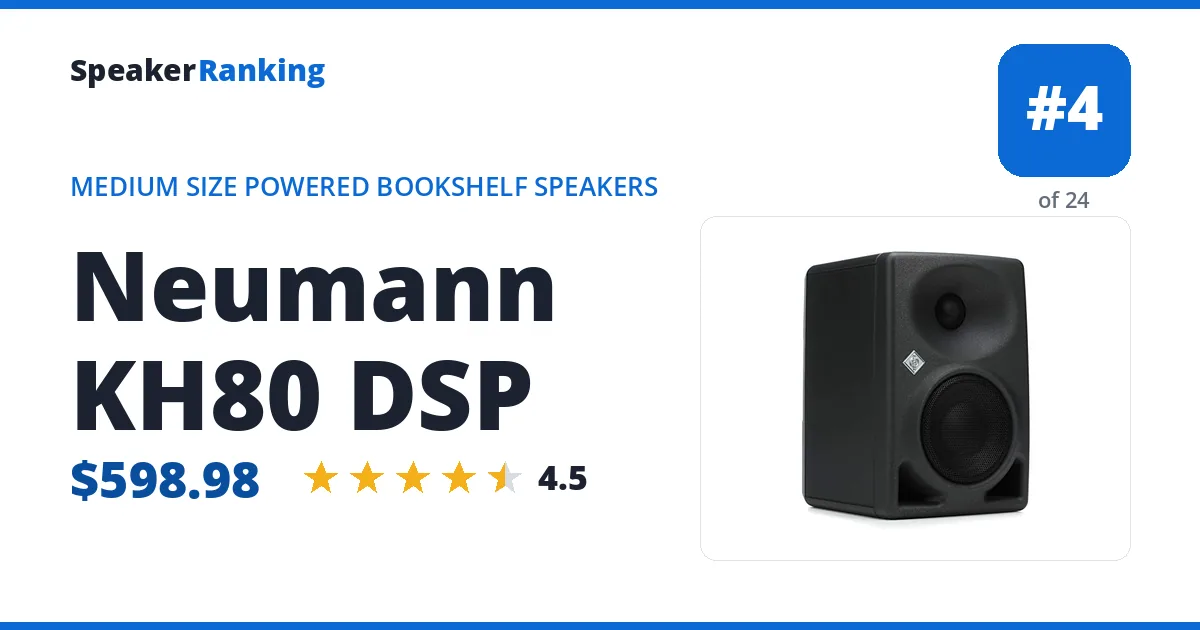
Pros: ASR’s selected Klippel measurement has a 1.4dB midrange response span and virtually no overall on-axis tilt. Scores of 5.89 standalone and 8.25 with an ideal subwoofer indicate excellent tonal accuracy in a compact monitor. The waveguide and steep crossover provide useful control of reflected sound, while placement filters help compensate for a desk or nearby boundaries. Existing multitone testing supports good moderate-level clarity. Measured bass extension of 57Hz (-3dB), with a measured sensitivity of 91.9dB.
Cons: Bass reaches -3dB around 59Hz in this measurement, less deep than the KH120 II. Output protection and increasing multitone distortion limit loud listening, especially in the bass. Room reflections and listening distance can alter perceived treble balance despite its flat direct response. Calibration equipment adds to the cost; the preference score is not a measurement of maximum clean output. It is expensive for its size.
Full Neumann KH80 DSP review and specifications →
| AES Input | No |
|---|---|
| Amplifier Power | 140W (90W woofer + 50W tweeter) |
| App | Yes (MA 1 alignment) |
| Aux Input | No |
| Bass Extension (-10dB) | 51Hz (measured, Erin’s Audio Corner) |
| Bass Extension (-3dB) | 57Hz (measured, Erin’s Audio Corner) |
| Bluetooth | No |
| Coaxial Input | No |
| DSP | Yes |
| Dimensions | 13.6”H x 10.8”W x 9.6”D (345.4 x 274.3 x 243.8 mm) |
| Drivers | 4.1” woofer, 1” fabric dome tweeter |
| EQ | Yes (via DSP) |
| Frequency Response | 57 Hz - 25 kHz (+-3 dB) (Manufacturer specified) |
| HDMI Input | No |
| Inputs | XLR |
| Maximum SPL | 110.7dB @ 1m (manufacturer specified) |
| Optical Input | No |
| RCA Input | No |
| Sensitivity | 91.9dB (measured at 0.3V/1m, Erin’s Audio Corner) |
| Spinorama Preference Score | 5.89 |
| Spinorama Preference Score with Perfect Sub | 8.25 |
| TRS Input | No |
| USB Input | No |
| Weight | 9 lbs (4.1 kg) each |
| XLR Input | Yes |
- Links
- Reviews, Comparisons and Sound Samples
- Erin’s Audio Corner: Neumann KH 80 Studio Monitor Review. Excellent Performance. Small Size. More from Erin’s Audio Corner →
- Erin’s Audio Corner Review Measurements
- Audio Science Review Measurements More from Audio Science Review →
- DSAUDIO.review: Neumann KH80 DSP vs Genelec 8020D Sound & Frequency Response Comparison More from DSAUDIOreview →
- DSAUDIO.review: Neumann KH80 DSP vs Yamaha HS8 Sound & Frequency Response Comparison
- DSAUDIO.review: Neumann KH80 DSP vs Focal Shape 40 Sound & Frequency Response Comparison
- DSAUDIO.review: Neumann KH80 DSP vs IK Multimedia iLoud MTM Sound & Frequency Response Comparison
- DSAUDIO.review: Neumann KH80 DSP vs JBL 305P MKII Sound & Frquency Response Comparison
- DSAUDIO.review: KEF LSX vs Neumann KH80 DSP Sound & Frequency Response Comparison
- DSAUDIO.review: Adam Audio A3X vs Neumann KH80 DSP Sound & Frequency Response Comparison
- DSAUDIO.review: Neumann KH80 DSP vs KRK Rokit 5 G4 RP5G4 Sound & Frequency Response Comparison
- Joy & Oluv’Sone: 🎃🔥 UBoom X - Halloween Rock Special 🎸🤘 More from Oluv’Sone →
- Audio Science Review Measurements (spinorama.org)
- Head-to-Head Comparisons
- Neumann KH80 DSP vs Genelec 8030C
- Neumann KH80 DSP vs Reflector Audio Square Two
- Neumann KH80 DSP vs Neumann KH120 MKII
- Neumann KH80 DSP vs Dynaudio LYD 5
- Neumann KH80 DSP vs Genelec 8331A
- Neumann KH80 DSP vs Genelec 8330A
- Neumann KH80 DSP vs Genelec 8320A
- Neumann KH80 DSP vs Devialet Phantom II 98 dB
- See all 66 comparisons
Large Size Powered Bookshelf Speakers
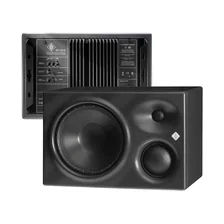 Ranked #5 of 68 in Large Size Powered Bookshelf Speakers - Neumann KH420: $10500 per pair B&H Photo Video eBay
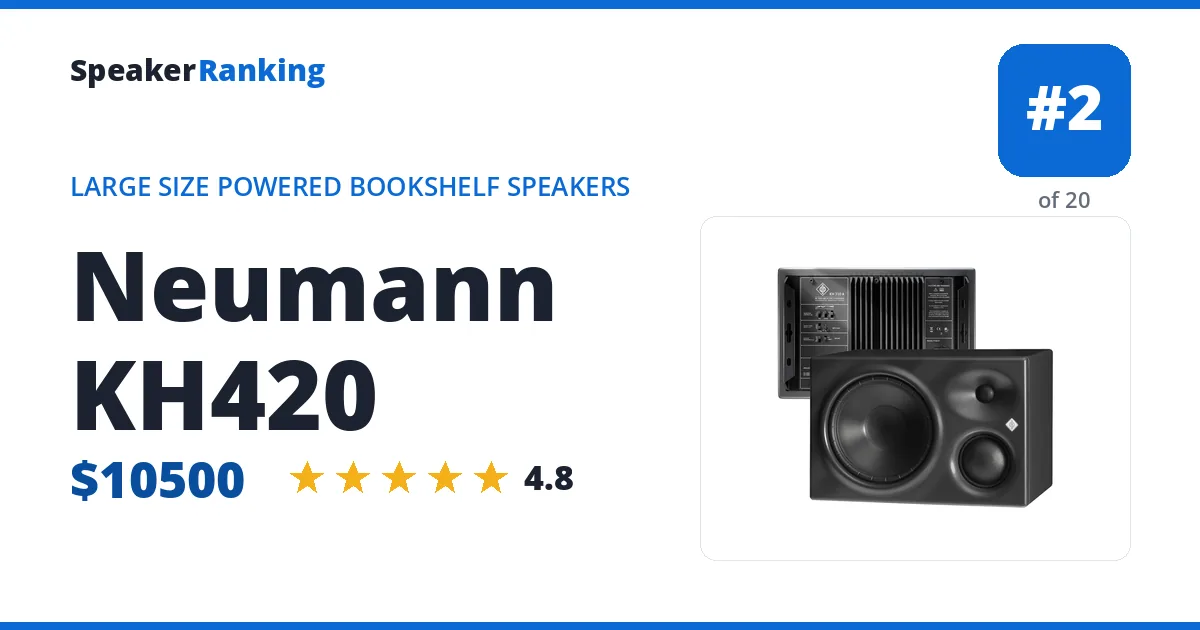
Pros: A 1.2dB response span from 300Hz to 5kHz, 8.14 ideal-subwoofer score and 27.8Hz measured -3dB extension combine accurate mids with genuinely deep bass. Its three-way design and low distortion at normal levels make it particularly attractive for larger listening distances and dynamic material. Measured bass extension of 27.8Hz (-3dB).
Cons: It is a large, heavy studio monitor rather than an easy desktop speaker. Vertical alignment matters around the crossover regions. Bass distortion rises as playback levels increase, and the measured high-level limits still apply despite the substantial drivers and amplifiers. Horizontal beamwidth is well controlled but on the narrow side at about ±55°.
Full Neumann KH420 review and specifications →
| AES Input | No |
|---|---|
| Amplifier Power | 555w Per Speaker |
| App | Yes (MA 1 alignment) |
| Aux Input | No |
| Bass Extension (-10dB) | 24.4Hz (derived, log-interpolated between spinorama.org -9dB/-12dB points) |
| Bass Extension (-3dB) | 27.8Hz (measured, Audio Science Review) |
| Bluetooth | No |
| Coaxial Input | No |
| DSP | No |
| Dimensions | 25.4”H x 13”W x 17.5”D (645.2 x 330.2 x 444.5 mm) |
| Drivers | 10” woofer, 4” dome midrange, 1” fabric dome tweeter |
| EQ | Yes (Room response controls) |
| Frequency Response | 31Hz - 21kHz (±3dB) (Manufacturer specified) |
| HDMI Input | No |
| Inputs | XLR |
| Maximum SPL | 124dB @ 1m (manufacturer specified) |
| Optical Input | No |
| RCA Input | No |
| Spinorama Preference Score | 7.02 |
| Spinorama Preference Score with Perfect Sub | 8.14 |
| TRS Input | No |
| USB Input | No |
| Weight | 77.2 lbs (35 kg) each |
| XLR Input | Yes |
- Links
- Reviews, Comparisons and Sound Samples
- Head-to-Head Comparisons
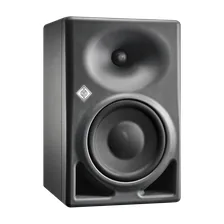 Ranked #8 of 68 in Large Size Powered Bookshelf Speakers - Neumann KH 150: $3,398 per pair B&H Photo Video eBay
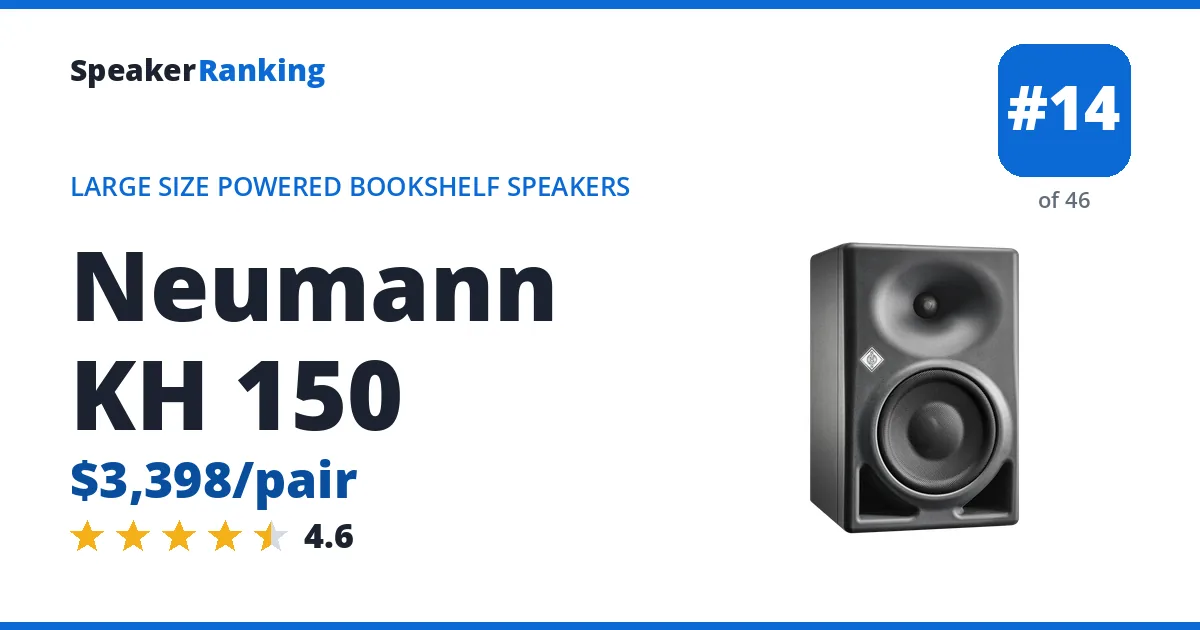
Pros: An exceptionally tight 1.0dB response span from 300Hz to 5kHz supports neutral vocals and instruments. The measured ideal-subwoofer score is 8.38, with -3dB bass extension to 39.6Hz. DSP and optional MA 1 alignment offer useful control over room-related response errors. Measured bass extension of 39.6Hz (-3dB).
Cons: A two-way nearfield monitor cannot match the largest three-way systems for deep-bass output at distance. Keep the tweeter near ear height to avoid crossover-related changes off the vertical axis. MA 1 calibration requires additional equipment, and studio connections are less convenient than a consumer streaming system.
Full Neumann KH 150 review and specifications →
| AES Input | No |
|---|---|
| Amplifier Power | 245W total (145W woofer, 100W tweeter, 10% THD+N) |
| Aux Input | No |
| Bass Extension (-10dB) | 34.2Hz (measured, Audio Science Review) |
| Bass Extension (-3dB) | 39.6Hz (measured, Audio Science Review) |
| Bluetooth | No |
| Coaxial Input | Yes |
| Country | Germany |
| Crossover Frequency | 1.7kHz |
| Dimensions | 13.6”H x 8.9”W x 10.7”D (345 x 225 x 273 mm) |
| Drivers | 1” tweeter, 6.5” woofer |
| Enclosure | ported |
| Frequency Response | 39Hz-20.4kHz +/-3dB |
| HDMI Input | No |
| Inputs | XLR (balanced analog), RCA S/PDIF (digital) |
| Maximum SPL | 118.7dB @ 1m half space (manufacturer specified) |
| Optical Input | No |
| RCA Input | Yes |
| Spinorama Preference Score | 6.65 |
| Spinorama Preference Score with Perfect Sub | 8.38 |
| TRS Input | No |
| USB Input | No |
| Warranty | 2 years |
| Weight | 17.6 lbs (8.0 kg) each |
| XLR Input | Yes |
- Links
- Reviews, Comparisons and Sound Samples
- Head-to-Head Comparisons
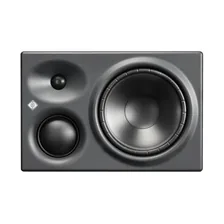 Ranked #17 of 68 in Large Size Powered Bookshelf Speakers - Neumann KH 310 A: $4,998 per pair B&H Photo Video eBay
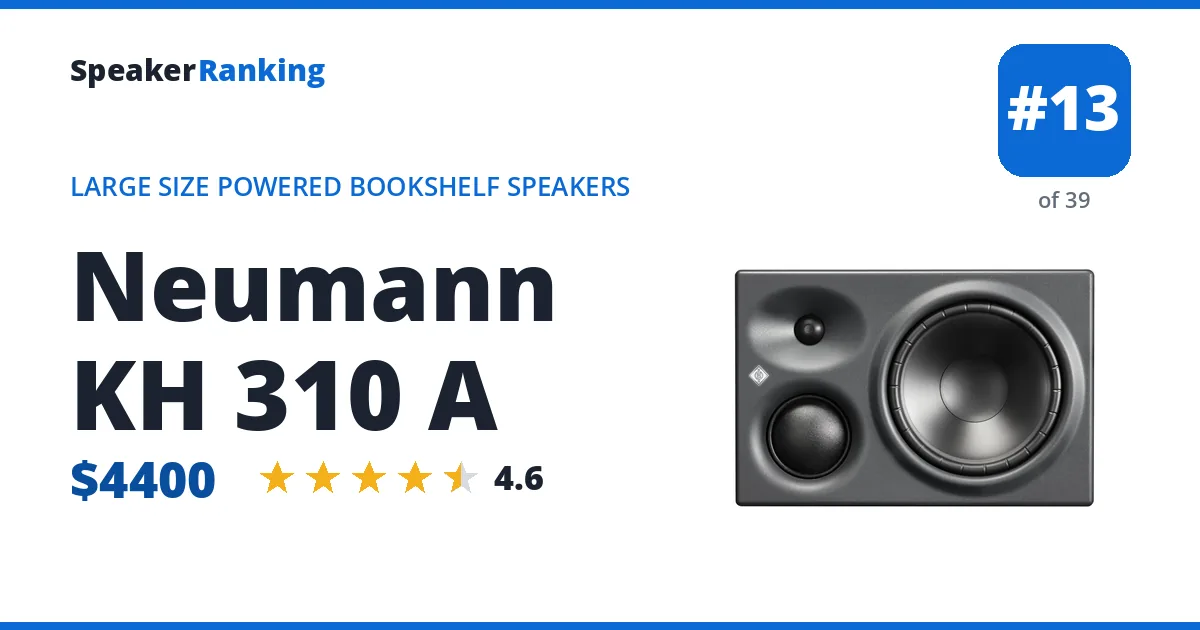
Pros: The sealed three-way design combines 35.2Hz measured -3dB extension with low distortion in the review’s demanding playback tests. Its 2.2dB response span from 300Hz to 5kHz and 7.70 ideal-subwoofer score support balanced monitoring with useful full-range capability. Measured bass extension of 35.2Hz (-3dB).
Cons: Its measured tonal balance is not as even as the KH 150 or the best coaxial alternatives. Correct orientation and listening height matter for the separated drivers. The analog system lacks the integrated calibration workflow of newer DSP models, so room correction requires additional equipment. An unexplained dip around 80Hz shows in the measurements.
Full Neumann KH 310 A review and specifications →
| AES Input | No |
|---|---|
| Amplifier Power | 290W total (150W woofer, 70W mid, 70W tweeter) |
| App | No |
| Aux Input | No |
| Bass Extension (-10dB) | 28.3Hz (derived, log-interpolated between spinorama.org -9dB/-12dB points) |
| Bass Extension (-3dB) | 35.2Hz (measured, Audio Science Review) |
| Bluetooth | No |
| Coaxial Input | No |
| DSP | No |
| Dimensions | 10” x 15.1” x 11.5” (253 x 383 x 292 mm) (H x W x D) |
| Drivers | 8.25” woofer, 3” midrange, 1” tweeter |
| EQ | No |
| Frequency Response | 34Hz - 21kHz (+/-3dB) (Manufacturer specified) |
| HDMI Input | No |
| Inputs | XLR (balanced analog) |
| Optical Input | No |
| RCA Input | No |
| Spinorama Preference Score | 6.21 |
| Spinorama Preference Score with Perfect Sub | 7.70 |
| TRS Input | No |
| USB Input | No |
| Weight | 28.7 lbs (13.0 kg) |
| XLR Input | Yes |
- Links
- Reviews, Comparisons and Sound Samples
- Head-to-Head Comparisons
- Neumann KH 310 A vs HEDD Type 20 MK2
- Neumann KH 310 A vs Genelec S360
- Neumann KH 310 A vs LOGProfessional Alpha
- Neumann KH 310 A vs Adam Audio S2V
- Neumann KH 310 A vs JBL 308P MKII
- Neumann KH 310 A vs Buchardt A10
- Neumann KH 310 A vs Yamaha HS8
- Neumann KH 310 A vs Kali Audio LP-6 V2
- See all 38 comparisons