Coverage note. Speaker Ranking currently covers 5 MoFi models across passive speakers. These are the products in our database, not a complete list of everything MoFi makes.
What this page covers. The MoFi models ranked here span passive speakers, including MoFi SourcePoint V10 Master Edition, MoFi SourcePoint 888 and MoFi SourcePoint 8. Use each model’s category position to compare it with alternatives of the same size and use case.
This page lists all 5 MoFi speakers ranked on this site across passive speakers. Each model is shown in the category where it competes, with its current rank and the size of that ranking.
Use the category position rather than the brand name alone: speakers from the same manufacturer can perform very differently by size, price and product family.
Prices on this page were last checked September 30, 2026 at 2:57 PM UTC. Product prices and availability are accurate as of that date/time and are subject to change; the price and availability shown on Amazon at the time of purchase will apply to the purchase of this product.
As an eBay Partner, we may be compensated if you make a purchase.
Quick Navigation
Large Size Bookshelf Speakers
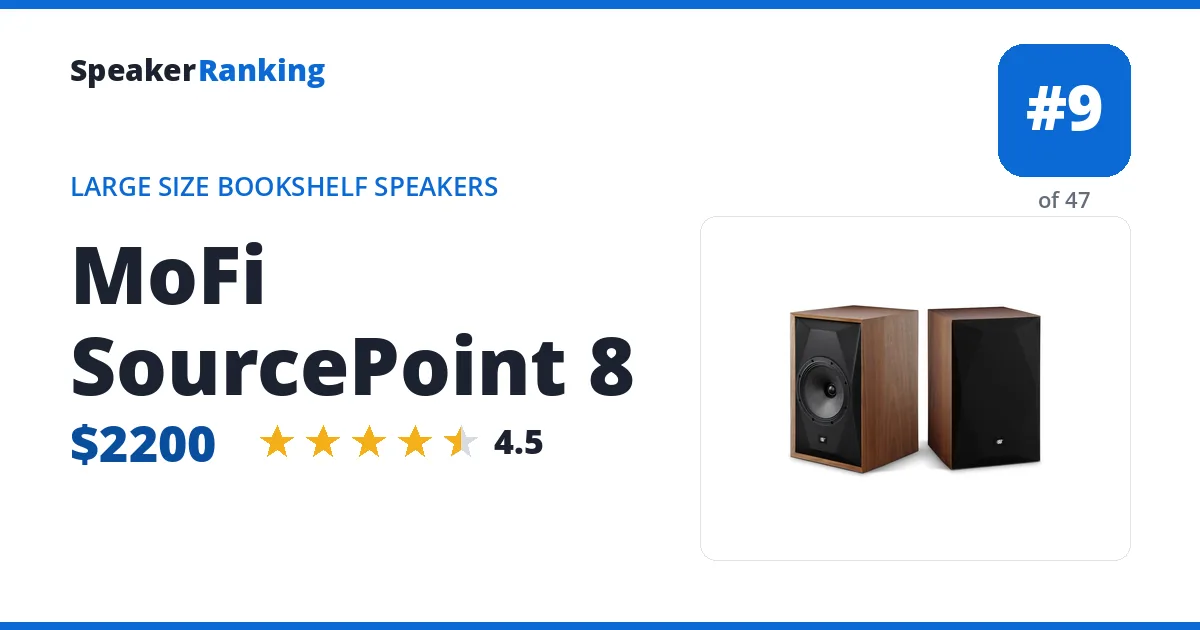
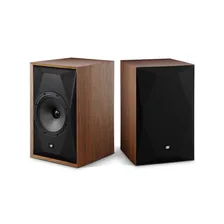 Ranked #17 of 134 in Large Size Bookshelf Speakers - MoFi SourcePoint 8: $2594 per pair Crutchfield eBay
Pros: 8” twin-drive concentric driver paired with a 1.25” soft dome tweeter, in a diffraction-reducing baffle design; rated 47Hz-30kHz. Notably more neutral and true-to-source than its sibling SourcePoint 10, which the reviewer found a bit too bright in the treble by comparison: measured about 4-5dB less high-frequency output. Excellent imaging: passed multiple stereo-panning and depth tests, including smooth continuous left-to-right pans without wobble and correct front-to-back layering of vocals versus percussion. Wide horizontal dispersion of about ±60°, broader than the reviewer expected from a coaxial design, and forgiving enough in placement that about 10° of toe-out variance and moving above or below the tweeter axis both still sound good. Excellent dynamic range and compression linearity: about 26dB of headroom up to 102dB/1m equivalent, with issues only appearing below about 60Hz. 8-ohm nominal impedance made it easy to drive on everything from a budget Denon AVR to a high-end Macintosh amplifier. No significant evidence of woofer-cone modulation distortion affecting the tweeter, even at 96dB/1m. Measured bass extension of 52Hz (-3dB), with a measured sensitivity of 86.3dB.
Cons: Like other coincident designs, produces diffraction dips around 4kHz and 7kHz when pointed directly on-axis; needs about 10-15° of toe-out to smooth those out. The rear-ported cabinet (two ports) means it can’t be placed too close to a wall without the bass becoming overblown: the reviewer settled on about 2 feet of clearance. F3 of 52Hz and F10 of 43Hz mean genuine deep bass tops out in the mid-40s Hz in-room: a subwoofer is still needed for true low-end extension. Harmonic distortion crosses the reviewer’s 3% threshold at 96dB (though it’s second-order and less audibly significant), and multitone distortion becomes noticeably more audible at that same output level. Vertical response doesn’t perfectly mirror horizontal, since the cabinet is a rectangle rather than a perfect square around the driver.
Full MoFi SourcePoint 8 review and specifications →
| Bass Extension (-10dB) | 43Hz (measured, Erin’s Audio Corner) |
|---|---|
| Bass Extension (-3dB) | 52Hz (measured, Erin’s Audio Corner) |
| DIY Kit | No |
| Dimensions | 18”H x 11.4”W x 13.2”D (457.2 x 289.6 x 335.3 mm) |
| Drivers | 8” woofer, 1.25-inch soft-dome tweeter |
| Impedance | 8 ohms nominal (8 ohms minimum above 80Hz, measured, Erin’s Audio Corner) |
| Sensitivity | 86.3dB (measured, Erin’s Audio Corner) |
| Spinorama Preference Score | 5.15 |
| Spinorama Preference Score with Perfect Sub | 7.28 |
| Weight | 28 lbs (12.7 kg) each |
| Woofer Cabinet | ported, rear |
- Links
- Reviews, Comparisons and Sound Samples
- Erin’s Audio Corner: Why Do People Love the MoFi SourcePoint 8? More from Erin’s Audio Corner →
- Erin’s Audio Corner Website MoFi SourcePoint 8
- Erin’s Audio Corner: Upgrade Your Sound with These 6 Surprisingly Affordable Speakers!
- Erin’s Audio Corner: My Personal Favorite Speakers Under $2500
- Erin’s Audio Corner: My Top Picks of 2023: Must-Haves Under $3000
- GR-Research: Danny Tackles Andrews Jones: The Source Point 8! Spoiler Alert (It’s Really Good) More from GR-Research →
- Erin’s Audio Corner Measurements (spinorama.org)
- Head-to-Head Comparisons
- MoFi SourcePoint 8 vs Buchardt Audio E50
- MoFi SourcePoint 8 vs KEF R3
- MoFi SourcePoint 8 vs Epos ES14N
- MoFi SourcePoint 8 vs AsciLab F6Bs
- MoFi SourcePoint 8 vs Wharfedale Aura 2
- MoFi SourcePoint 8 vs Arendal 1528 Monitor 8
- MoFi SourcePoint 8 vs KEF Q Concerto Meta
- MoFi SourcePoint 8 vs Ascend Acoustics CMT-340 SE2
- See all 60 comparisons
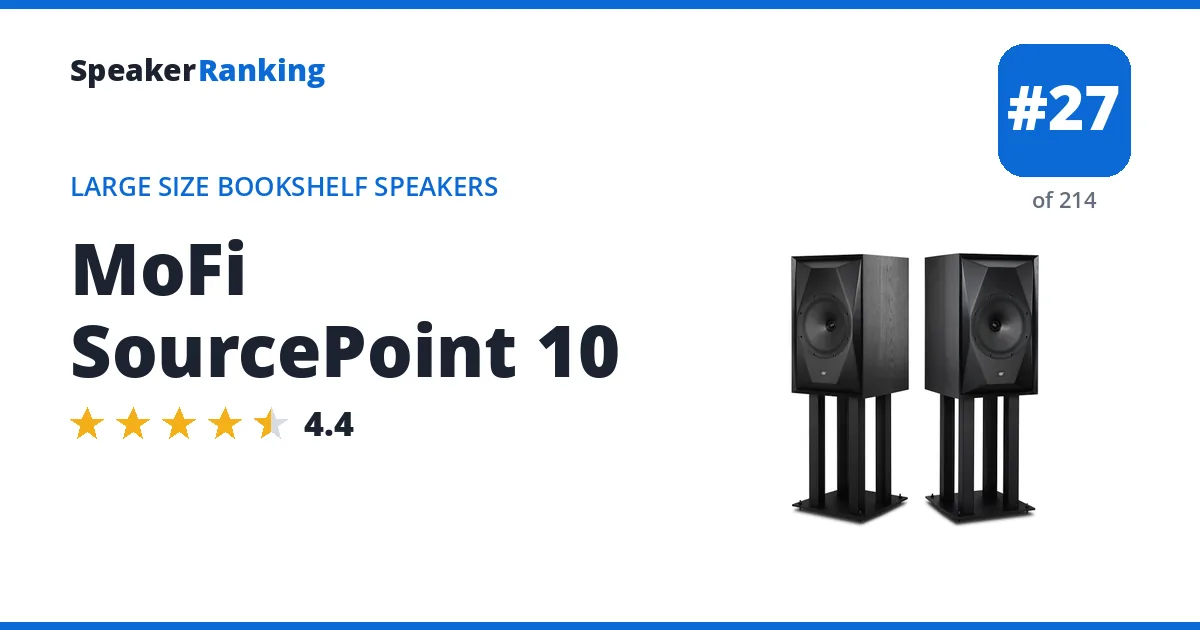
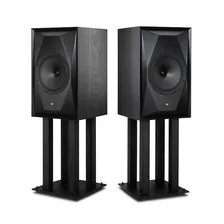 Ranked #26 of 134 in Large Size Bookshelf Speakers - MoFi SourcePoint 10: $3795 per pair Crutchfield eBay
Pros: Andrew Jones-designed concentric/coincident driver delivers best-in-class sound power and early-reflections directivity in the reviewer’s testing: a genuine “point source” design. Vertical and horizontal radiation patterns closely match each other (about ±50° horizontal, ±30-40° vertical), a hallmark benefit of a well-executed concentric driver. Distortion stays low: under 1% above 100Hz at 86dB, and under 3% up to 100Hz even at 96dB, better than the reviewer expected from a low-excursion waveguide-loaded woofer. Surprisingly strong dynamic capability with little audible compression at both low and high volume. Widely spaced (about 11 feet apart) with roughly 15° of toe-out produced a huge, expansive soundstage without significant loss of imaging precision. Solidly built cabinet (about 40 lbs, heavily braced) minimizes cabinet resonance. Measured bass extension of 56Hz (-3dB), with a measured sensitivity of 88.2dB.
Cons: Like virtually all coincident designs, sounds notably bright pointed directly on-axis due to a deliberate treble lift (meant to compensate for the 28mm tweeter’s earlier beaming versus a typical 25mm/1” tweeter) combined with a diffraction dip/peak from the waveguide edge; needs about 15° of toe-out to sound neutral, and even then benefits from an extra 1-2dB of treble EQ. Toeing out further (to 30°) flattens the treble further but introduces a dip in the midrange-to-tweeter crossover region: there’s no single toe-out angle that fixes everything at once. F3 of 56Hz and F10 of 38Hz (about 40Hz in-room) mean genuine deep bass is limited; the reviewer would pair it with a sealed 10” or 12” subwoofer for regular daily listening. Bass extension and cabinet placement trade off against midrange cleanliness: placing it close to a wall for more bass risks a wall-bounce suckout in the midrange (roughly 200-500Hz depending on distance). Not perfectly time-aligned between tweeter and woofer (about 0.4ms delta), an inherent limitation of passive coincident drivers versus actively time-corrected designs. Some resonances appear in measurements, likely port-related. Minimum impedance around 6.4 ohms with EPDR near 3 ohms, so the reviewer recommends sticking with a 4-ohm-rated amplifier to be safe.
Full MoFi SourcePoint 10 review and specifications →
| Bass Extension (-10dB) | 38Hz (measured, Erin’s Audio Corner) |
|---|---|
| Bass Extension (-3dB) | 56Hz (measured, Erin’s Audio Corner) |
| DIY Kit | No |
| Dimensions | 22.5”H x 14.5”W x 16.6”D (571.5 x 368.3 x 421.6 mm) |
| Drivers | 10” Paper-pulp Cone woofer, 1.25-inch soft-dome tweeter |
| Impedance | 8 ohms nominal, 6.4 ohms minimum (measured, Erin’s Audio Corner) |
| Sensitivity | 88.2dB (measured, Erin’s Audio Corner) |
| Spinorama Preference Score | 4.16 |
| Spinorama Preference Score with Perfect Sub | 6.17 |
| Weight | 46.3 lbs (21.0 kg) each |
| Woofer Cabinet | ported, rear |
- Links
- Reviews, Comparisons and Sound Samples
- Head-to-Head Comparisons
- MoFi SourcePoint 10 vs Radiant Acoustics Clarity 6.2
- MoFi SourcePoint 10 vs Wharfedale Super Linton
- MoFi SourcePoint 10 vs Dynaudio Heritage Special
- MoFi SourcePoint 10 vs Ascend Acoustics CMT-340 SE2
- MoFi SourcePoint 10 vs Arendal 1528 Monitor 8
- MoFi SourcePoint 10 vs Wharfedale Linton 85
- MoFi SourcePoint 10 vs AsciLab F6Bs
- MoFi SourcePoint 10 vs Ascend Acoustics Sierra-LX
- See all 49 comparisons
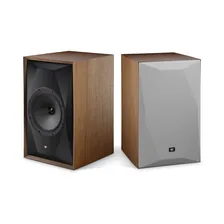 Ranked #70 of 134 in Large Size Bookshelf Speakers - MoFi SourcePoint 10 Master Edition: $3,799 per pair MoFi Electronics eBay
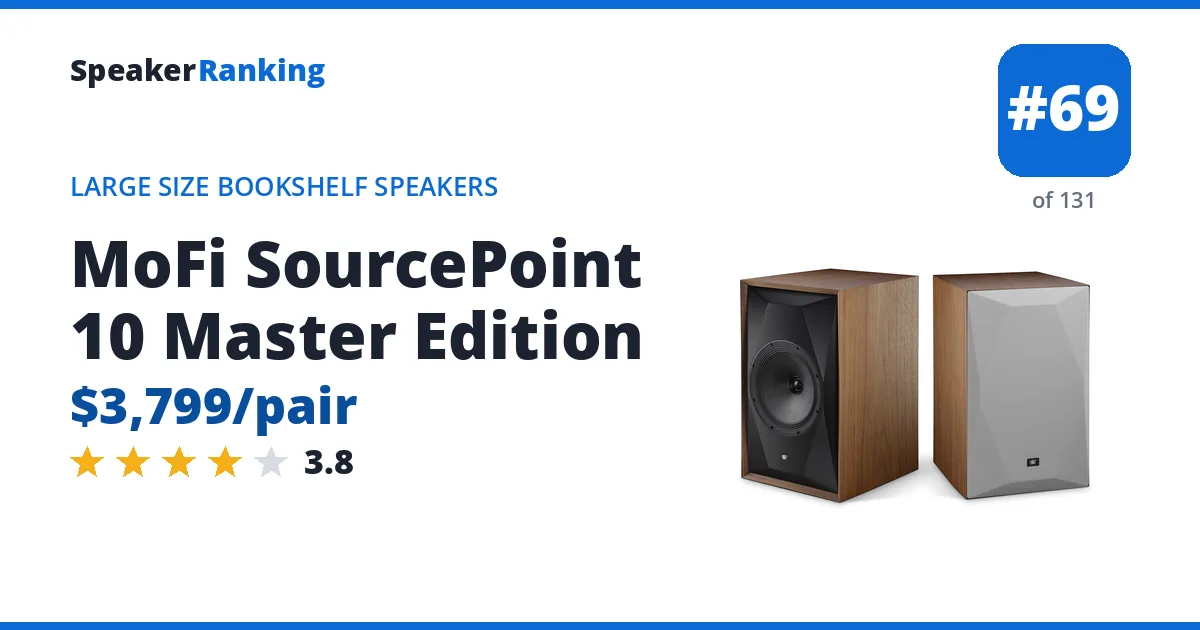
Pros: A high-sensitivity 10-inch concentric design with a refined crossover, adjustable treble and amplifier-friendly impedance. Local Spinorama scores of 4.76 raw and 6.77 with a subwoofer combine with 42Hz extension and broad controlled radiation. Measured bass extension of 56.4Hz (-3dB).
Cons: The cabinets are unusually large and heavy for stand-mount speakers, and suitable stands add expense and floor space. A mild response contour remains despite the premium Master Edition crossover.
Full MoFi SourcePoint 10 Master Edition review and specifications →
| Bass Extension (-10dB) | 41.0Hz (derived from Erin’s Audio Corner on-axis curve, spinorama.org) |
|---|---|
| Bass Extension (-3dB) | 56.4Hz (measured, Erin’s Audio Corner via spinorama.org) |
| DIY Kit | No |
| Dimensions | 22.5H x 14.5W x 16.6D in |
| Drivers | 1.25-inch soft-dome tweeter concentric in 10-inch paper woofer |
| Enclosure | 2-way vented |
| Frequency Response | 42Hz-30kHz |
| Impedance | 8 ohms nominal, 6.2 ohms minimum |
| Sensitivity | 91dB |
| Spinorama Preference Score | 4.76 |
| Spinorama Preference Score with Perfect Sub | 6.77 |
| Weight | 46.3 lbs (21 kg) each |
- Links
- Reviews, Comparisons and Sound Samples
- Head-to-Head Comparisons
Large Size Floorstanding Speakers
 Ranked #3 of 74 in Large Size Floorstanding Speakers - MoFi SourcePoint V10 Master Edition: $7995 per pair Crutchfield eBay
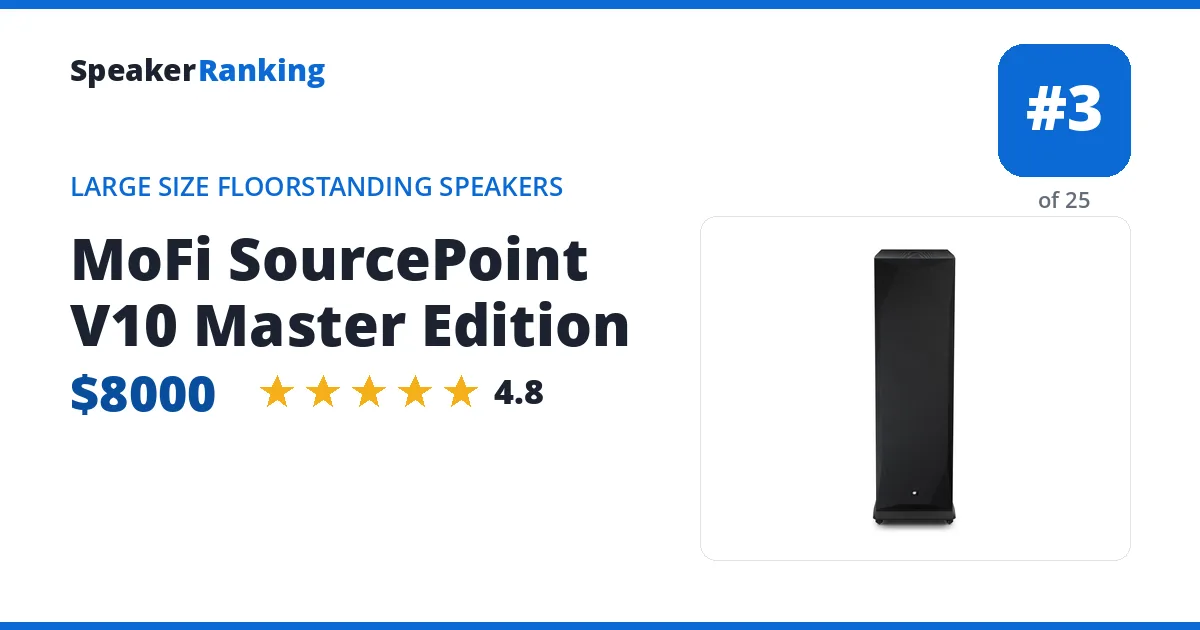
Pros: Extended bass to approximately 30 Hz in-room without subwoofer; images with excellent precision indicating tight frequency response matching between speakers. Integrated bass management with three-way treble attenuation switches for room tuning. New design from Andrew Jones represents reviewer personal second choice (behind only KEF Blade 2 Meta at 29k) among hundreds of systems auditioned; ranks above Dutch & Dutch 8C, JBL 4367, and JBL M2. Measured bass extension of 38Hz (-3dB), with a measured sensitivity of 88.8dB.
Cons: Moderate sensitivity (~89 dB) means amplifier power requirements higher than many alternatives. Deep bass extension ends above subsonic frequencies (pipe organ territory below 17 Hz requires subwoofer).
Full MoFi SourcePoint V10 Master Edition review and specifications →
| Bass Extension (-10dB) | 25Hz (measured, Erin’s Audio Corner) |
|---|---|
| Bass Extension (-3dB) | 38Hz (measured, Erin’s Audio Corner) |
| DIY Kit | No |
| Dimensions | 48.8”H x 15.5”W x 19.9”D (1239.5 x 393.7 x 505.5 mm) |
| Drivers | 10” woofer, 10” paper‑cone concentric midrange, 1.25” soft‑dome concentric tweeter |
| Impedance | 6 ohms nominal, 5.3 ohms minimum (measured, Erin’s Audio Corner) |
| Sensitivity | 88.8dB (measured, Erin’s Audio Corner) |
| Spinorama Preference Score | 5.00 |
| Spinorama Preference Score with Perfect Sub | 6.31 |
| Weight | 160.9 lbs (73 kg) |
| Woofer Cabinet | passive radiator |
- Links
- Reviews, Comparisons and Sound Samples
- Head-to-Head Comparisons
- MoFi SourcePoint V10 Master Edition vs KEF Blade Two Meta
- MoFi SourcePoint V10 Master Edition vs MoFi SourcePoint 888
- MoFi SourcePoint V10 Master Edition vs GR-Research NX-Treme
- MoFi SourcePoint V10 Master Edition vs Revel F328Be
- MoFi SourcePoint V10 Master Edition vs Radiant Acoustics Clarity 66
- MoFi SourcePoint V10 Master Edition vs Ascend Acoustics ELX Ribbon Tower
- MoFi SourcePoint V10 Master Edition vs Revel F226Be
- MoFi SourcePoint V10 Master Edition vs JBL 4367
- See all 29 comparisons
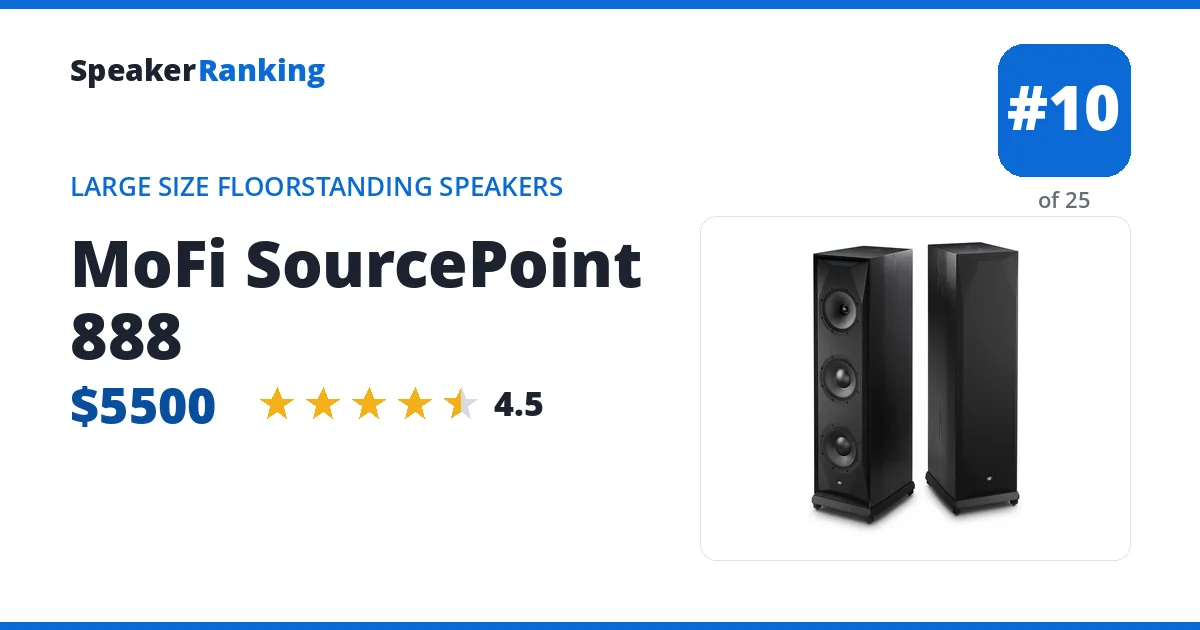
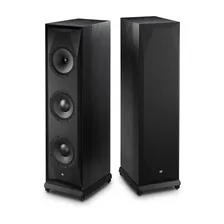 Ranked #4 of 74 in Large Size Floorstanding Speakers - MoFi SourcePoint 888: $5495 per pair Crutchfield eBay
Pros: Three-way vented design: an 8” coaxial mid-range/1.25” dome tweeter driver plus two additional 8” woofers crossed at about 130Hz, giving genuinely full-range output (F3 34Hz, F10 26Hz) other than the deepest subsonic content. Ranked by the reviewer among his personal top three speakers out of roughly 200 tested, alongside the KEF Blade 2 Meta and Dutch & Dutch 8C, despite costing a small fraction of either. Excellent compression/dynamic-range linearity, holding its own against much pricier speakers like the March Audio Sointuva AWG, KEF Reference 1 Meta, and KEF Blade 2 Meta. On-axis (0°) and 30°-off-axis estimated in-room responses track within about 1-1.5dB of each other above 500Hz, so tonal balance barely changes with placement or listening angle: excellent for multi-seat home theater or entertaining. Wide horizontal dispersion of about ±60°. Distortion stays low: under 1% at 86dB, and under 1% above 200Hz even at 96dB, with multitone distortion mostly under 1% as well. Not a difficult amplifier load (5-ohm minimum impedance, 4.2-ohm minimum EPDR). Checks the three boxes the reviewer considers essential for a home theater speaker: low compression, low distortion, and excellent directivity. Measured bass extension of 34Hz (-3dB), with a measured sensitivity of 85.6dB.
Cons: A significant investment, best ordered from a dealer with a good return policy. Large and heavy floorstander (about 96 lbs, 42” tall) requiring real floor space and rear clearance. Positioning is fairly specific: needs about 2 feet from the rear wall. Closer causes boominess in the 40-50Hz region, farther loses bass extension. Vertical dispersion (about ±50°) is narrower than horizontal (about ±60°), since the two 8” woofers are spaced vertically apart on a tower cabinet, causing some vertical mismatch at lower frequencies. A small on-axis dip around 500Hz and a deliberately lower tweeter level (about 0.5dB below the midrange) are intentional design choices for smoother in-room response, but mean the raw on-axis measurement isn’t perfectly flat. A mild diffraction-related dip appears around 3kHz in directivity measurements. Toeing the speaker out more than about 10° starts to noticeably reduce top-end energy.
Full MoFi SourcePoint 888 review and specifications →
| Bass Extension (-10dB) | 26Hz (measured, Erin’s Audio Corner) |
|---|---|
| Bass Extension (-3dB) | 34Hz (measured, Erin’s Audio Corner) |
| DIY Kit | No |
| Dimensions | 41.2”H x 12.6”W x 16.1”D (1046.5 x 320 x 408.9 mm) |
| Drivers | Dual 8” paper cone woofers, 8” Paper Cone midrange, 1.25” wide roll soft dome tweeter |
| Impedance | 6 ohms nominal, 5 ohms minimum (measured, Erin’s Audio Corner) |
| Sensitivity | 85.6dB (measured, Erin’s Audio Corner) |
| Spinorama Preference Score | 6.09 |
| Spinorama Preference Score with Perfect Sub | 7.21 |
| Weight | 94.8 lbs (43 kg) each |
| Woofer Cabinet | ported, rear |
- Links
- Reviews, Comparisons and Sound Samples
- Head-to-Head Comparisons
- MoFi SourcePoint 888 vs MoFi SourcePoint V10 Master Edition
- MoFi SourcePoint 888 vs Revel F328Be
- MoFi SourcePoint 888 vs KEF Blade Two Meta
- MoFi SourcePoint 888 vs Radiant Acoustics Clarity 66
- MoFi SourcePoint 888 vs GR-Research NX-Treme
- MoFi SourcePoint 888 vs Ascend Acoustics ELX Ribbon Tower
- MoFi SourcePoint 888 vs KEF R5 Meta
- MoFi SourcePoint 888 vs Revel F226Be
- See all 36 comparisons