Short answer: the Ascend Acoustics CMT-340 SE2. It ranks #23 of 130 bookshelf speakers by sound quality at $798; the Wharfedale Super Linton ranks #24 and costs $2699, so there is little reason to consider the other one.
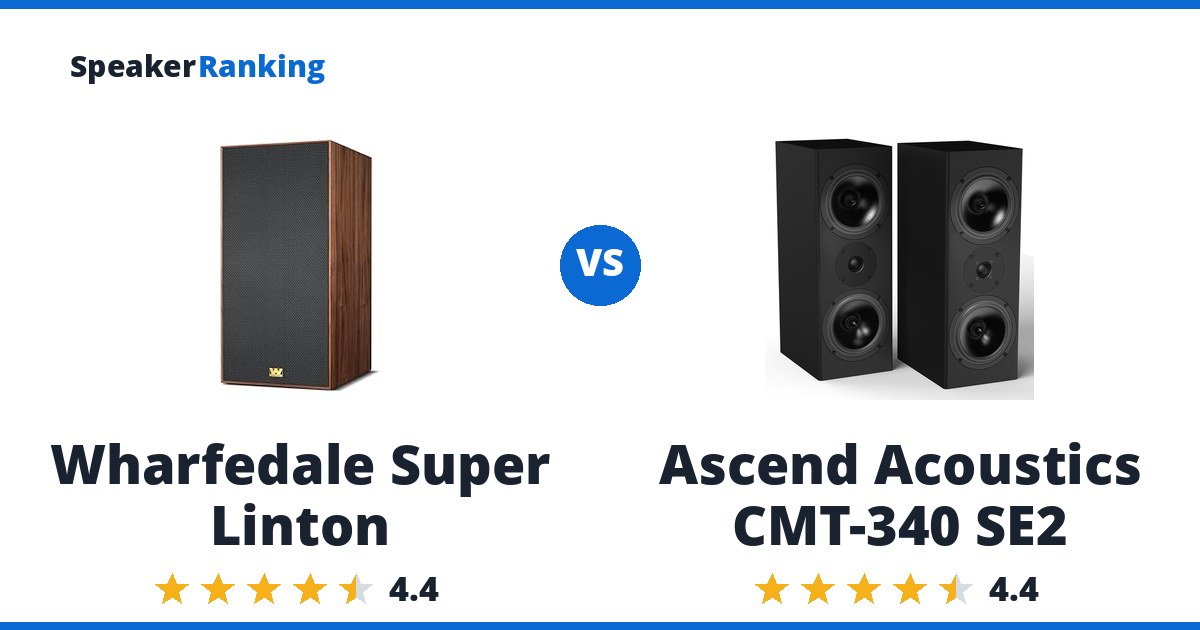
What the Wharfedale Super Linton offers: Three-way design with a 1” soft dome tweeter, 5” woven Kevlar mid-range, and 8” woven Kevlar woofer in a dual rear-ported, heavily damped MDF/particle-board cabinet. Comes as a genuinely matched pair (measured within about 1dB of each other) and includes custom matching stands. A major dynamic-range improvement over the original Heritage Linton - kick drums retain their impact from low to high volume instead of compressing, the standout objective improvement in this update. Fixes the original Linton’s main flaw: a 1-3kHz scoop that made it sound a bit soft and subdued is filled in here, giving noticeably more attack and dynamic punch. About 3dB more sensitivity than the original Linton (measured ~88.2dB), meaning roughly half the amplifier power for the same output. Wide horizontal radiation of about ±70°, right in the reviewer’s preferred range for an enveloping soundstage. Lower midrange distortion than the original Linton. Bass-shelf tuning intentionally allows closer-to-wall placement (about 1 foot worked well) without excess boominess, more flexible than the original Linton in that regard. Watch for: Rolls off earlier than the original Linton (F3 77Hz versus the original’s 52Hz), a deliberate trade-off for the closer-wall-placement flexibility. On-axis, there’s a mild treble lift around 4-6kHz that can sound a touch sibilant, though the reviewer found it not very noteworthy in practice. Diffraction shows up around 1.5-2kHz on-axis; needs about 10° of toe-out to smooth this out, though going further to 30° starts to lose some top-end air. Distortion peaks slightly higher than the original Linton in the 50-70Hz region. Minimum impedance dips to about 3 ohms around 150Hz, so a 4-ohm-stable amplifier is recommended for best results. Vertical dispersion of about ±20° means multi-row home theater seating outside that window will hear reduced top-end. Asymmetrical design requires attention to setup (tweeters need to face outward) for the most linear in-room response. A costly upgrade for existing Linton owners if the original’s specific flaws didn’t bother them.
What the Ascend Acoustics CMT-340 SE2 offers: High-quality manufacturer Klippel NFS data shows 0.295dB on-axis average absolute deviation, 0.531 listening-window smoothness, and a strong 7.17 preference score with a subwoofer. Its dual 6.5-inch woofers, 92dB anechoic sensitivity, and 240W continuous power rating support high output and dynamics. Watch for: Bass rolls off early for the cabinet size, measuring 77.6Hz at -3dB, 64.5Hz at -6dB, and 48.3Hz at -12dB; the preference score without a subwoofer is only 4.51. The 4.35 sound-power directivity-index standard deviation also indicates more off-axis variation than the strongest designs, and the rear port needs placement clearance.
Buy the Ascend Acoustics CMT-340 SE2. It ranks higher for sound quality than the Wharfedale Super Linton and costs less, so there is no real case for the other one.
Want more options? Browse the full Passive Home rankings.
Specifications Side By Side
| Wharfedale Super Linton | Ascend Acoustics CMT-340 SE2 | |
|---|---|---|
| Price | $2,699.00 per pair | $798 per pair |
| Ranked | #24 of 130 in Large Size Bookshelf Speakers | #23 of 130 in Large Size Bookshelf Speakers |
| Bass Extension (-10dB) | 34Hz (measured, Erin's Audio Corner) | approximately 53Hz (measured, spinorama.org) |
| Bass Extension (-3dB) | 77Hz (measured, Erin's Audio Corner) | 77.6Hz (measured, spinorama.org) |
| Dimensions | 23.8"H x 11.8"W x 13"D (604.5 x 299.7 x 330.2 mm) | 21 x 7.5 x 10.5 in each |
| Impedance | 4 ohms nominal (3 ohms minimum, measured, Erin's Audio Corner) | 8 ohms nominal |
| Drivers | 8"(200mm) black woven Kevlar® cone woofer, 5"(135mm) black woven Kevlar® cone midrange, 1" (25mm) soft dome tweeter | Two 6.5-inch woofers; 27mm soft-dome tweeter |
| Sensitivity | 88.2dB (measured, Erin's Audio Corner) | 92dB at 2.83V/1m anechoic |
| Weight | 43.7 lbs (19.8 kg) each | 29.1 lbs (13.2 kg) each |
| Woofer Cabinet | ported, rear | - |
| Spinorama Preference Score | 5.28 | 4.51 |
| Spinorama Preference Score with Perfect Sub | 7.12 | 7.17 |
| Power Handling | - | 240W continuous; 400W short-term peak |
Related Speaker Comparisons
More top alternatives to Ascend Acoustics CMT-340 SE2:
- Ascend Acoustics CMT-340 SE2 vs Perlisten S4b
- KEF Reference 1 Meta vs Ascend Acoustics CMT-340 SE2
- Ascend Acoustics CMT-340 SE2 vs GR-Research NX-Studio
- AsciLab C6B vs Ascend Acoustics CMT-340 SE2
- Audio First Cadentia 3 vs Ascend Acoustics CMT-340 SE2
Prices on this page were last checked September 16, 2026 at 12:41 AM UTC. Product prices and availability are accurate as of that date/time and are subject to change; the price and availability shown on Amazon at the time of purchase will apply to the purchase of this product.
As an eBay Partner, we may be compensated if you make a purchase.
The Two Speakers In Full
 Wharfedale Super Linton: $2,699.00 per pair Amazon Crutchfield eBay
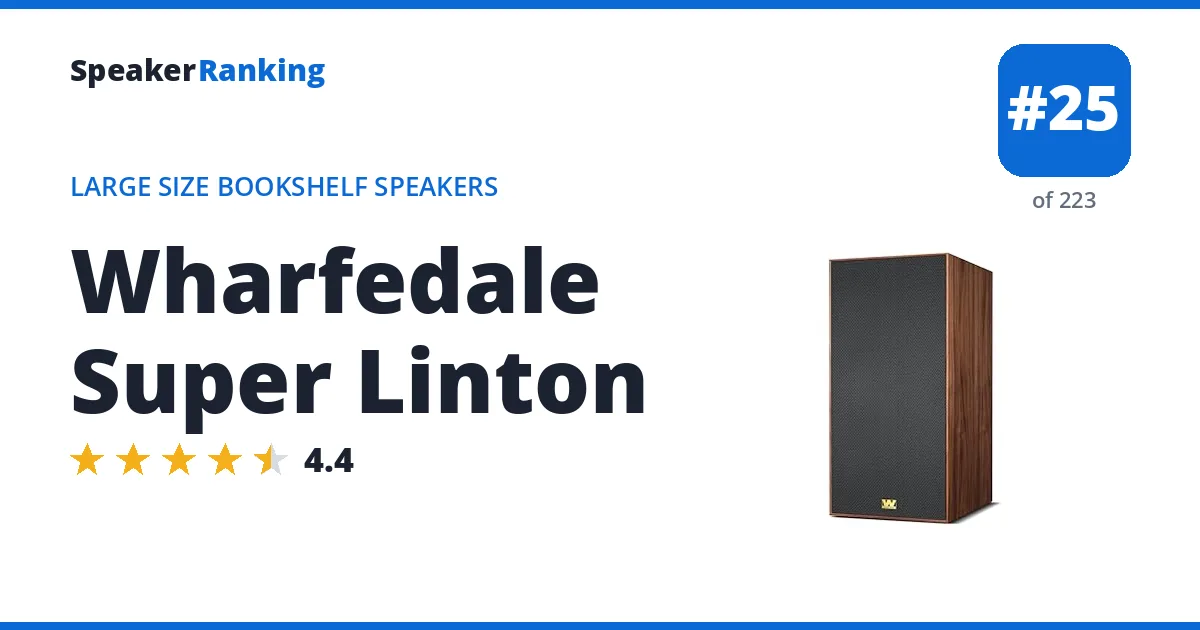
Pros: Three-way design with a 1” soft dome tweeter, 5” woven Kevlar mid-range, and 8” woven Kevlar woofer in a dual rear-ported, heavily damped MDF/particle-board cabinet. Comes as a genuinely matched pair (measured within about 1dB of each other) and includes custom matching stands. A major dynamic-range improvement over the original Heritage Linton - kick drums retain their impact from low to high volume instead of compressing, the standout objective improvement in this update. Fixes the original Linton’s main flaw: a 1-3kHz scoop that made it sound a bit soft and subdued is filled in here, giving noticeably more attack and dynamic punch. About 3dB more sensitivity than the original Linton (measured ~88.2dB), meaning roughly half the amplifier power for the same output. Wide horizontal radiation of about ±70°, right in the reviewer’s preferred range for an enveloping soundstage. Lower midrange distortion than the original Linton. Bass-shelf tuning intentionally allows closer-to-wall placement (about 1 foot worked well) without excess boominess, more flexible than the original Linton in that regard. Measured bass extension of 77Hz (-3dB), with a measured sensitivity of 88.2dB.
Cons: Rolls off earlier than the original Linton (F3 77Hz versus the original’s 52Hz), a deliberate trade-off for the closer-wall-placement flexibility. On-axis, there’s a mild treble lift around 4-6kHz that can sound a touch sibilant, though the reviewer found it not very noteworthy in practice. Diffraction shows up around 1.5-2kHz on-axis; needs about 10° of toe-out to smooth this out, though going further to 30° starts to lose some top-end air. Distortion peaks slightly higher than the original Linton in the 50-70Hz region. Minimum impedance dips to about 3 ohms around 150Hz, so a 4-ohm-stable amplifier is recommended for best results. Vertical dispersion of about ±20° means multi-row home theater seating outside that window will hear reduced top-end. Asymmetrical design requires attention to setup (tweeters need to face outward) for the most linear in-room response. A costly upgrade for existing Linton owners if the original’s specific flaws didn’t bother them.
Full Wharfedale Super Linton review and specifications →
| Bass Extension (-10dB) | 34Hz (measured, Erin's Audio Corner) |
|---|---|
| Bass Extension (-3dB) | 77Hz (measured, Erin's Audio Corner) |
| Dimensions | 23.8"H x 11.8"W x 13"D (604.5 x 299.7 x 330.2 mm) |
| Drivers | 8"(200mm) black woven Kevlar® cone woofer, 5"(135mm) black woven Kevlar® cone midrange, 1" (25mm) soft dome tweeter |
| Impedance | 4 ohms nominal (3 ohms minimum, measured, Erin's Audio Corner) |
| Sensitivity | 88.2dB (measured, Erin's Audio Corner) |
| Spinorama Preference Score | 5.28 |
| Spinorama Preference Score with Perfect Sub | 7.12 |
| Weight | 43.7 lbs (19.8 kg) each |
| Woofer Cabinet | ported, rear |
- Links
- Reviews, Comparisons and Sound Samples
- Erin’s Audio Corner: 5 Reasons Wharfedale Super Linton is the Hidden Gem of Audio Equipment More from Erin’s Audio Corner →
- Erin’s Audio Corner Website Wharfedale Super Linton Review
- Erin’s Audio Corner: Upgrade Your Sound with These 6 Surprisingly Affordable Speakers!
- Erin’s Audio Corner: My Absolute Favorite Products of 2024 Revealed
- Erin’s Audio Corner Measurements (spinorama.org)
- Head-to-Head Comparisons
- Wharfedale Super Linton vs Arendal 1528 Monitor 8
- Wharfedale Super Linton vs MoFi SourcePoint 10
- Wharfedale Super Linton vs Radiant Acoustics Clarity 6.2
- Wharfedale Super Linton vs Dynaudio Heritage Special
- Wharfedale Super Linton vs AsciLab F6Bs
- Wharfedale Super Linton vs MoFi SourcePoint 8
- Wharfedale Super Linton vs Wharfedale Linton 85
- Wharfedale Super Linton vs Buchardt Audio E50
- See all 51 comparisons
 Ascend Acoustics CMT-340 SE2: $798 per pair Ascend Acoustics eBay
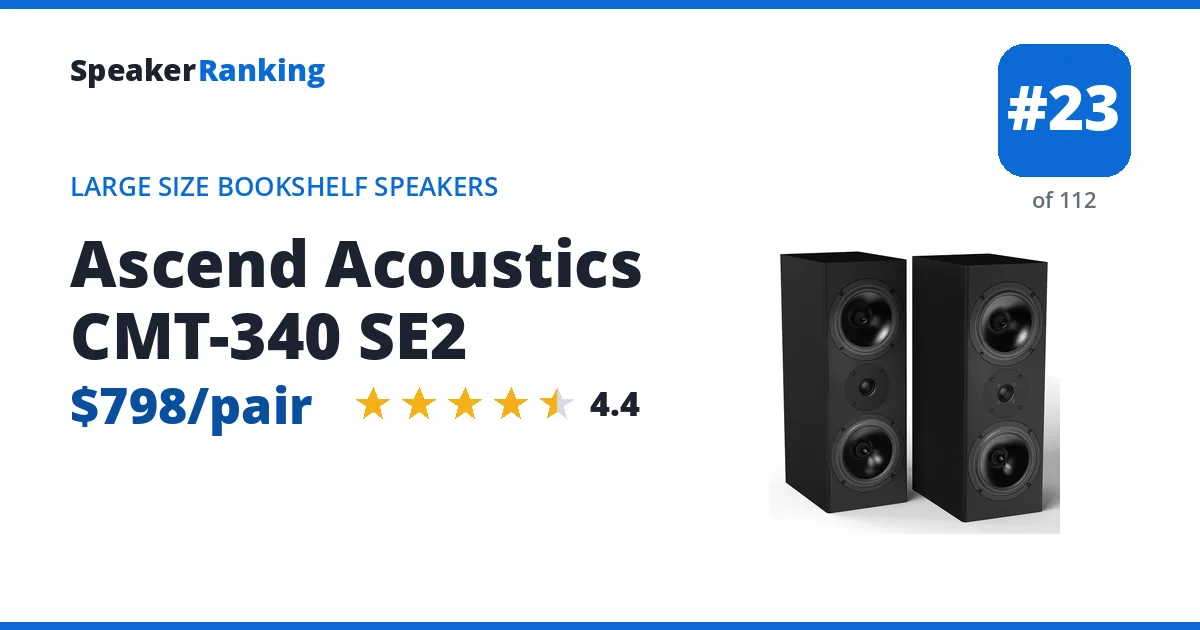
Pros: High-quality manufacturer Klippel NFS data shows 0.295dB on-axis average absolute deviation, 0.531 listening-window smoothness, and a strong 7.17 preference score with a subwoofer. Its dual 6.5-inch woofers, 92dB anechoic sensitivity, and 240W continuous power rating support high output and dynamics. Measured bass extension of 77.6Hz (-3dB).
Cons: Bass rolls off early for the cabinet size, measuring 77.6Hz at -3dB, 64.5Hz at -6dB, and 48.3Hz at -12dB; the preference score without a subwoofer is only 4.51. The 4.35 sound-power directivity-index standard deviation also indicates more off-axis variation than the strongest designs, and the rear port needs placement clearance.
Full Ascend Acoustics CMT-340 SE2 review and specifications →
| Bass Extension (-10dB) | approximately 53Hz (measured, spinorama.org) |
|---|---|
| Bass Extension (-3dB) | 77.6Hz (measured, spinorama.org) |
| Dimensions | 21 x 7.5 x 10.5 in each |
| Drivers | Two 6.5-inch woofers; 27mm soft-dome tweeter |
| Impedance | 8 ohms nominal |
| Power Handling | 240W continuous; 400W short-term peak |
| Sensitivity | 92dB at 2.83V/1m anechoic |
| Spinorama Preference Score | 4.51 |
| Spinorama Preference Score with Perfect Sub | 7.17 |
| Weight | 29.1 lbs (13.2 kg) each |
- Links
- Reviews, Comparisons and Sound Samples
- Head-to-Head Comparisons
- Ascend Acoustics CMT-340 SE2 vs Arendal 1528 Monitor 8
- Ascend Acoustics CMT-340 SE2 vs AsciLab F6Bs
- Ascend Acoustics CMT-340 SE2 vs MoFi SourcePoint 10
- Ascend Acoustics CMT-340 SE2 vs Radiant Acoustics Clarity 6.2
- Ascend Acoustics CMT-340 SE2 vs Dynaudio Heritage Special
- Ascend Acoustics CMT-340 SE2 vs MoFi SourcePoint 8
- Ascend Acoustics CMT-340 SE2 vs Buchardt Audio E50
- Ascend Acoustics CMT-340 SE2 vs KEF R3
- See all 44 comparisons