Short answer: the HSU Research CCB-8, if you are buying new. The KEF Q350 ranks higher than it (#106 vs #124 of 131 bookshelf speakers, 3.0/5 vs 2.3/5) but is discontinued, so only consider it used; the HSU Research CCB-8 is still sold new at $699.
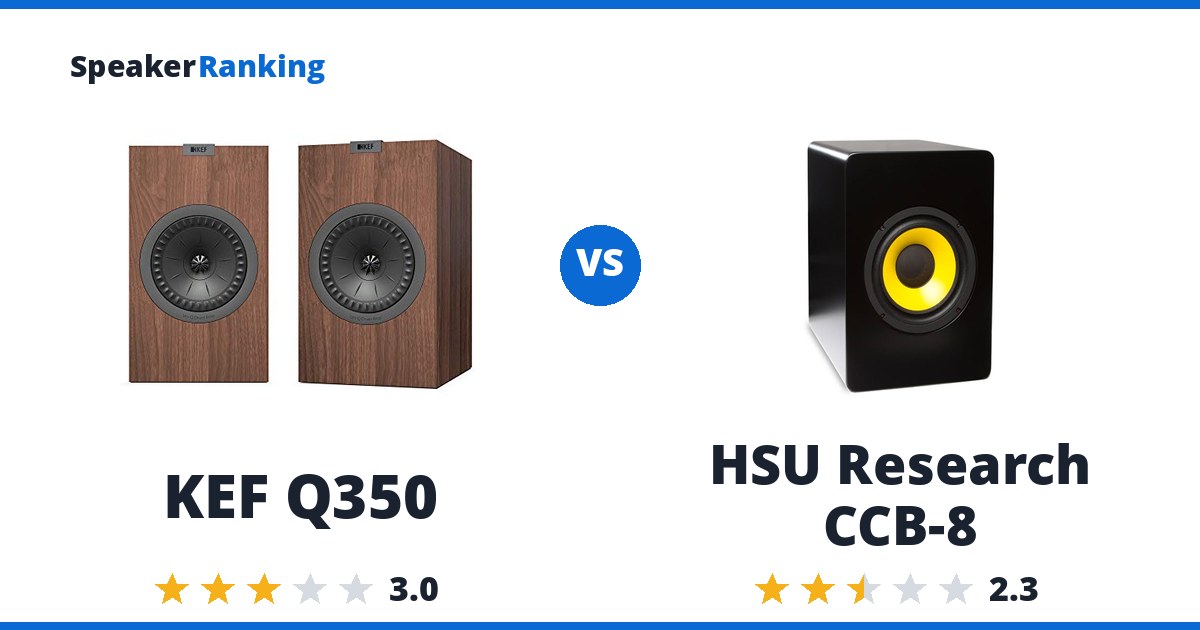
The case for the KEF Q350: CEA2034 spinorama shows a reasonably flat on-axis response with excellent directivity, aided by the coaxial Uni-Q driver. The catch: Two resonances at 700Hz and 1.2kHz show up on-axis, alongside an upper-bass boost.
Why pick the HSU Research CCB-8: Legitimately good midrange and mid-bass punch below about 1kHz, with in-room bass extension to about 60-70Hz that’s impressive for an 8” coaxial driver running this high a sensitivity (~90dB measured). The tradeoff: Badly unbalanced top end that the reviewer called ‘just a terrible speaker’ outright: a roughly 7dB peak-dip swing in the upper mid/treble causes real listening fatigue regardless of listening angle (tried on-axis, 15 degrees off, and 30 degrees off, all bad).
Buy the HSU Research CCB-8 if you want one new; the KEF Q350 is discontinued, so only look for it used.
Still deciding? The full Passive Home rankings cover every ranked option.
Specifications Side By Side
| KEF Q350 | HSU Research CCB-8 | |
|---|---|---|
| Price | $699.00 per pair Discontinued | $699 per pair |
| Ranked | #106 of 131 in Large Size Bookshelf Speakers | #124 of 131 in Large Size Bookshelf Speakers |
| Bass Extension (-10dB) | 38Hz (measured, Audio Science Review) | 52Hz (measured, Erin’s Audio Corner) |
| Bass Extension (-3dB) | 70Hz (measured, Audio Science Review) | 65Hz (measured, Erin’s Audio Corner) |
| Impedance | 4 ohms | 8 ohms nominal |
| Sensitivity | 86dB (measured, Audio Science Review) | 90.4dB (2.83V/1m, measured by Erin’s Audio Corner) |
| Drivers | 25mm tweeter + 165mm woofer | 8” coaxial driver, constant-directivity horn tweeter |
| Weight | 29.5 lbs (13.4 kg) | 22 lbs (10 kg) each |
| Dimensions | 14.1”H x 8.3”W x 12”D (358.0 x 210.0 x 306.0 mm) | 15” x 10.5” x 12” (381 x 267 x 305 mm) |
| Woofer Cabinet | ported, rear | Vented |
| Spinorama Preference Score | 5.25 (spinorama.org) | 1.62 |
| Spinorama Preference Score with Perfect Sub | 7.12 (spinorama.org) | 4.04 |
| DIY Kit | No | No |
| Frequency Response | - | 50Hz - 20kHz (+-2dB at 15 degrees off-axis, Manufacturer specified) |
| Recommended Power | - | 10-400W RMS per channel |
Related Speaker Comparisons
More worthwhile head-to-heads for KEF Q350:
- KEF Q350 vs AsciLab C6B
- KEF Q350 vs KEF R3 Meta
- KEF Q Concerto Meta vs KEF Q350
- KEF Q350 vs MoFi SourcePoint 8
- Wharfedale Linton 85 vs KEF Q350
Prices on this page were last checked September 30, 2026 at 2:57 PM UTC. Product prices and availability are accurate as of that date/time and are subject to change; the price and availability shown on Amazon at the time of purchase will apply to the purchase of this product.
As an eBay Partner, we may be compensated if you make a purchase.
The Two Speakers In Full
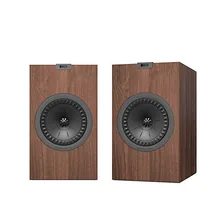 KEF Q350: $699.00 per pair Discontinued Amazon eBay
Newer model: the KEF Q3 Meta, ranked higher, rated 3.4/5.
Pros: CEA2034 spinorama shows a reasonably flat on-axis response with excellent directivity, aided by the coaxial Uni-Q driver. Vertical directivity is better than most non-coaxial two-way speakers, another benefit of the concentric design. Measured bass extension of 70Hz (-3dB), with a measured sensitivity of 86dB.
Cons: Two resonances at 700Hz and 1.2kHz show up on-axis, alongside an upper-bass boost. Predicted in-room response looks a bit boomy as a result. Distortion climbs substantially in the 100Hz-1kHz range at 96dB SPL/1m, with a distinct resonance-driven peak around 900Hz-1kHz at both test levels. Discontinued.
Full KEF Q350 review and specifications →
| Bass Extension (-10dB) | 38Hz (measured, Audio Science Review) |
|---|---|
| Bass Extension (-3dB) | 70Hz (measured, Audio Science Review) |
| DIY Kit | No |
| Dimensions | 14.1”H x 8.3”W x 12”D (358.0 x 210.0 x 306.0 mm) |
| Drivers | 25mm tweeter + 165mm woofer |
| Impedance | 4 ohms |
| Sensitivity | 86dB (measured, Audio Science Review) |
| Spinorama Preference Score | 5.25 (spinorama.org) |
| Spinorama Preference Score with Perfect Sub | 7.12 (spinorama.org) |
| Weight | 29.5 lbs (13.4 kg) |
| Woofer Cabinet | ported, rear |
- Links
- Reviews, Comparisons and Sound Samples
- Head-to-Head Comparisons
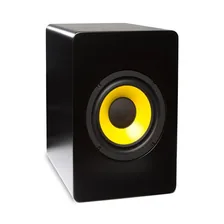 HSU Research CCB-8: $699 per pair HSU Research eBay
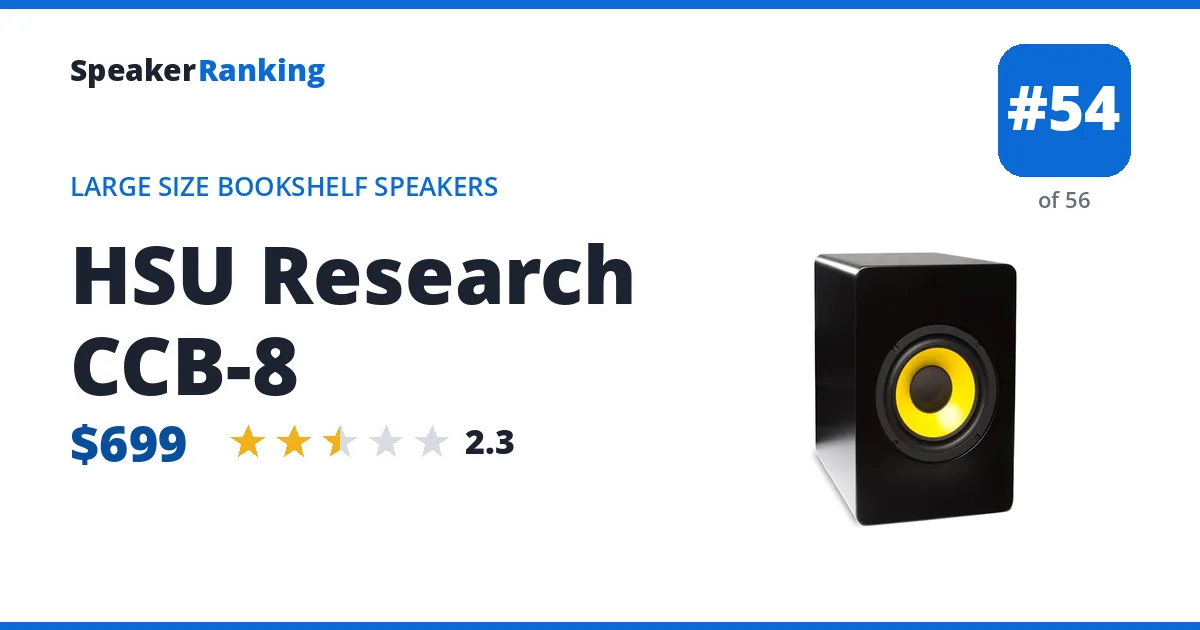
Pros: Legitimately good midrange and mid-bass punch below about 1kHz, with in-room bass extension to about 60-70Hz that’s impressive for an 8” coaxial driver running this high a sensitivity (~90dB measured). Wide horizontal dispersion (~55 degrees) that holds up reasonably well off-axis. Measured bass extension of 65Hz (-3dB), with a measured sensitivity of 90.4dB.
Cons: Badly unbalanced top end that the reviewer called ‘just a terrible speaker’ outright: a roughly 7dB peak-dip swing in the upper mid/treble causes real listening fatigue regardless of listening angle (tried on-axis, 15 degrees off, and 30 degrees off, all bad). Resonances around 600Hz and 1.2kHz plus erratic high-frequency behavior hurt imaging noticeably. Would need 9 bands of EQ to get close to flat, and even then two dips near 2kHz and 8kHz are baked into the crossover and can’t be fixed with EQ at all: the reviewer’s verdict was simply to skip it.
Full HSU Research CCB-8 review and specifications →
| Bass Extension (-10dB) | 52Hz (measured, Erin’s Audio Corner) |
|---|---|
| Bass Extension (-3dB) | 65Hz (measured, Erin’s Audio Corner) |
| DIY Kit | No |
| Dimensions | 15” x 10.5” x 12” (381 x 267 x 305 mm) |
| Drivers | 8” coaxial driver, constant-directivity horn tweeter |
| Frequency Response | 50Hz - 20kHz (+-2dB at 15 degrees off-axis, Manufacturer specified) |
| Impedance | 8 ohms nominal |
| Recommended Power | 10-400W RMS per channel |
| Sensitivity | 90.4dB (2.83V/1m, measured by Erin’s Audio Corner) |
| Spinorama Preference Score | 1.62 |
| Spinorama Preference Score with Perfect Sub | 4.04 |
| Weight | 22 lbs (10 kg) each |
| Woofer Cabinet | Vented |
- Links
- Reviews, Comparisons and Sound Samples
- Head-to-Head Comparisons