Short answer: the Neumann KH420, narrowly, on measured accuracy. Its spinorama is extended and flat on axis, matching Neumann’s own published measurement to within 0.08dB, but its well-controlled horizontal beamwidth is on the narrow side at about ±55 degrees. The Kali IN-8 V2 is the three-way coaxial with front porting for near-wall placement, though it is notably forward in the 4-5kHz range.
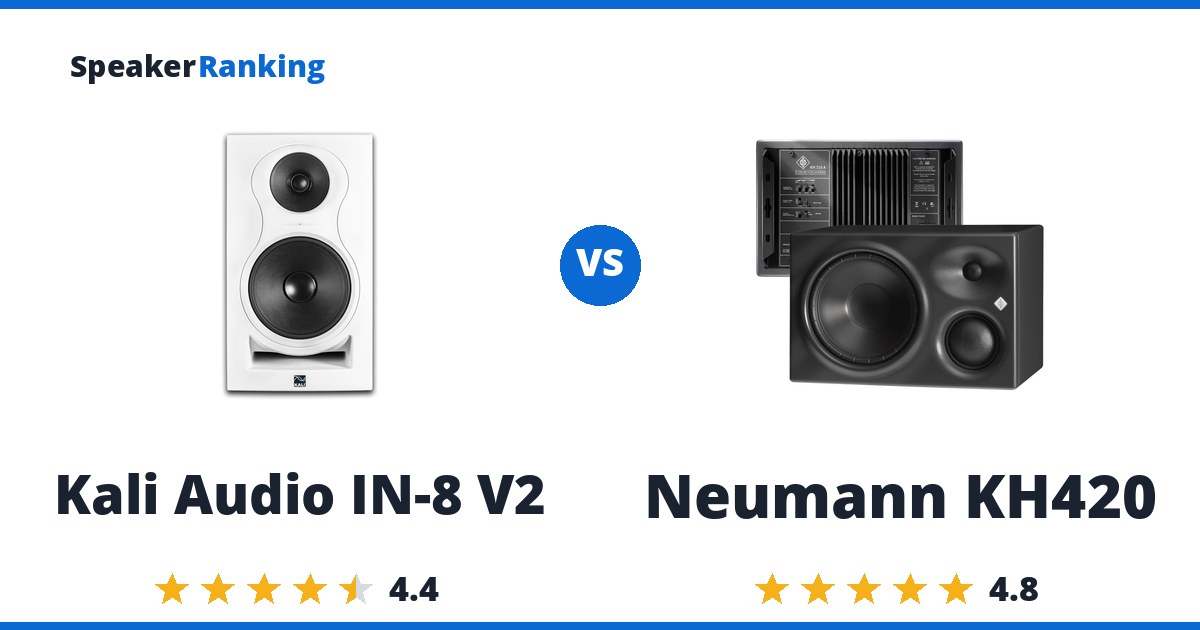
The case for the Kali Audio IN-8 V2: Three-way coaxial (coincident) driver in a front-ported cabinet, allowing near-wall placement without port noise issues. The catch: Notable forwardness/brashness in the 4-5kHz range when listened to on-axis.
What the Neumann KH420 gets right: CEA2034 spinorama shows an extended, flat on-axis response that matches Neumann’s own published measurement to within 0.08dB at its one. The catch: Horizontal beamwidth, while well controlled, is on the narrow side at about ±55 degrees.
Buy the Kali Audio IN-8 V2 if the price is the priority over sound quality, or the Neumann KH420 if sound quality is the priority over the price.
Looking for alternatives? See the complete Powered Home rankings.
Specifications Side By Side
| Kali Audio IN-8 V2 | Neumann KH420 | |
|---|---|---|
| Price | $998 per pair | $10500 per pair |
| Ranked | #26 of 67 in Large Size Powered Bookshelf Speakers | #5 of 67 in Large Size Powered Bookshelf Speakers |
| Bass Extension (-10dB) | 36Hz (measured, Erin's Audio Corner) | 24Hz (measured, Audio Science Review) |
| Bass Extension (-3dB) | 44Hz (measured, Erin's Audio Corner) | 32Hz (measured, Audio Science Review) |
| Dimensions | 17.8"H x 10"W x 11.3"D (452.1 x 254 x 287 mm) | 25.4"H x 13"W x 17.5"D (645.2 x 330.2 x 444.5 mm) |
| Inputs | XLR, RCA | XLR |
| Weight | 22.9 lbs (10.4 kg) each | 77.2 lbs (35 kg) each |
| Drivers | 8" (203mm) woofer | 10" woofer, 4" dome midrange, 1" fabric dome tweeter |
| App | No | Yes (MA 1 alignment) |
| Bluetooth | No | No |
| EQ | Yes (Room adjustment) | Yes (Room response controls) |
| DSP | No | No |
| Amplifier Power | 140w Per Speaker | 555w Per Speaker |
| Sensitivity | 89dB (measured at 0.3V/1m, Erin's Audio Corner) | - |
| Spinorama Preference Score | 3.53 | 6.39 |
| Spinorama Preference Score with Perfect Sub | 5.40 | 7.51 |
| XLR Input | Yes | Yes |
| RCA Input | Yes | No |
| TRS Input | No | No |
| Optical Input | No | No |
| Coaxial Input | No | No |
| USB Input | No | No |
| HDMI Input | No | No |
| AES Input | No | No |
| Aux Input | No | No |
| Frequency Response | 45Hz - 21kHz (±3dB) (Manufacturer specified) | 31Hz - 21kHz (±3dB) (Manufacturer specified) |
| Maximum SPL | - | 124dB @ 1m (manufacturer specified) |
Related Speaker Comparisons
More worthwhile head-to-heads for Neumann KH420:
- Genelec 8351B vs Neumann KH420
- Genelec 8361A vs Neumann KH420
- Neumann KH420 vs Neumann KH 150
- Dutch & Dutch 8C vs Neumann KH420
- Neumann KH420 vs Neumann KH 310 A
Prices on this page were last checked September 23, 2026 at 11:24 PM UTC. Product prices and availability are accurate as of that date/time and are subject to change; the price and availability shown on Amazon at the time of purchase will apply to the purchase of this product.
As an eBay Partner, we may be compensated if you make a purchase.
The Two Speakers In Full
 Kali Audio IN-8 V2: $998 per pair Amazon eBay
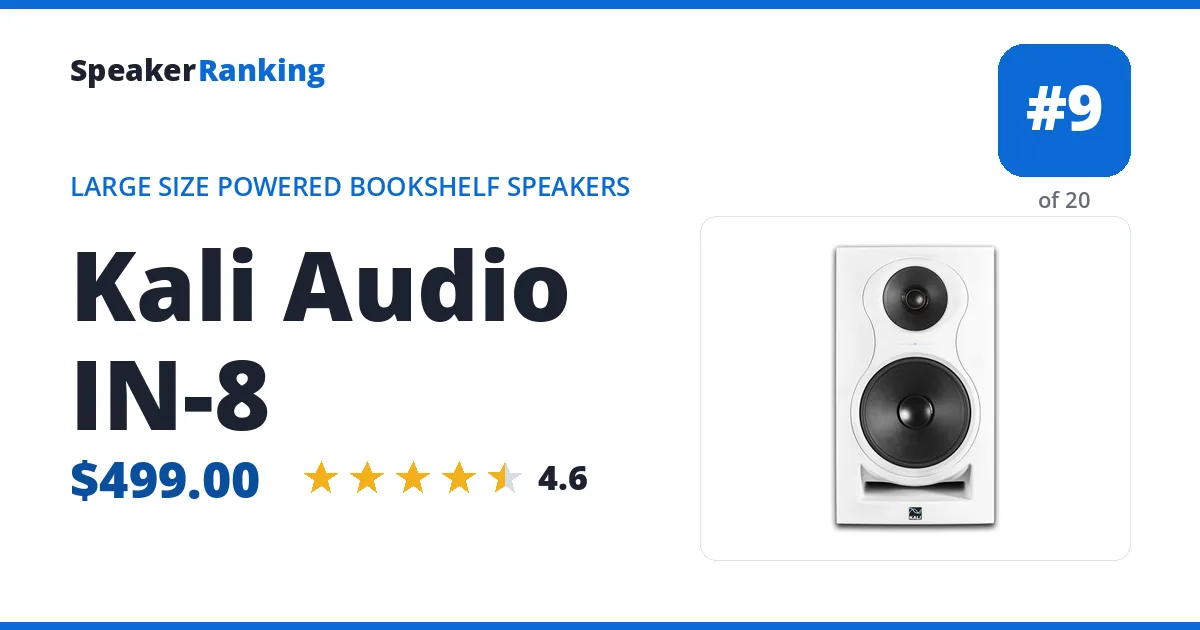
Pros: The IN-8 V2’s coaxial midrange/tweeter supports coherent imaging, and low distortion at ordinary levels complements its 6.54 ideal-subwoofer score. Measured -3dB extension of 45.4Hz provides useful bass; boundary settings assist placement. Measured bass extension of 44Hz (-3dB), with a measured sensitivity of 89dB.
Cons: The measured 3.0dB response span from 300Hz to 5kHz includes unevenness that can make some vocals sound forward. Bass and limiter behavior constrain high-level playback. These measurements apply to the V2, not the first-generation IN-8.
Full Kali Audio IN-8 V2 review and specifications →
| AES Input | No |
|---|---|
| Amplifier Power | 140w Per Speaker |
| App | No |
| Aux Input | No |
| Bass Extension (-10dB) | 36Hz (measured, Erin's Audio Corner) |
| Bass Extension (-3dB) | 44Hz (measured, Erin's Audio Corner) |
| Bluetooth | No |
| Coaxial Input | No |
| DSP | No |
| Dimensions | 17.8"H x 10"W x 11.3"D (452.1 x 254 x 287 mm) |
| Drivers | 8" (203mm) woofer |
| EQ | Yes (Room adjustment) |
| Frequency Response | 45Hz - 21kHz (±3dB) (Manufacturer specified) |
| HDMI Input | No |
| Inputs | XLR, RCA |
| Optical Input | No |
| RCA Input | Yes |
| Sensitivity | 89dB (measured at 0.3V/1m, Erin's Audio Corner) |
| Spinorama Preference Score | 3.53 |
| Spinorama Preference Score with Perfect Sub | 5.40 |
| TRS Input | No |
| USB Input | No |
| Weight | 22.9 lbs (10.4 kg) each |
| XLR Input | Yes |
- Links
- Reviews, Comparisons and Sound Samples
- Head-to-Head Comparisons
- Kali Audio IN-8 V2 vs Genelec 8050B
- Kali Audio IN-8 V2 vs Kali Audio LP-6 V2
- Kali Audio IN-8 V2 vs Yamaha HS8
- Kali Audio IN-8 V2 vs JBL 4305P
- Kali Audio IN-8 V2 vs Focal Solo6 ST6
- Kali Audio IN-8 V2 vs JBL 308P MKII
- Kali Audio IN-8 V2 vs Kali Audio LP-6
- Kali Audio IN-8 V2 vs Genelec 8040B
- See all 37 comparisons
 Neumann KH420: $10500 per pair B&H Photo Video eBay
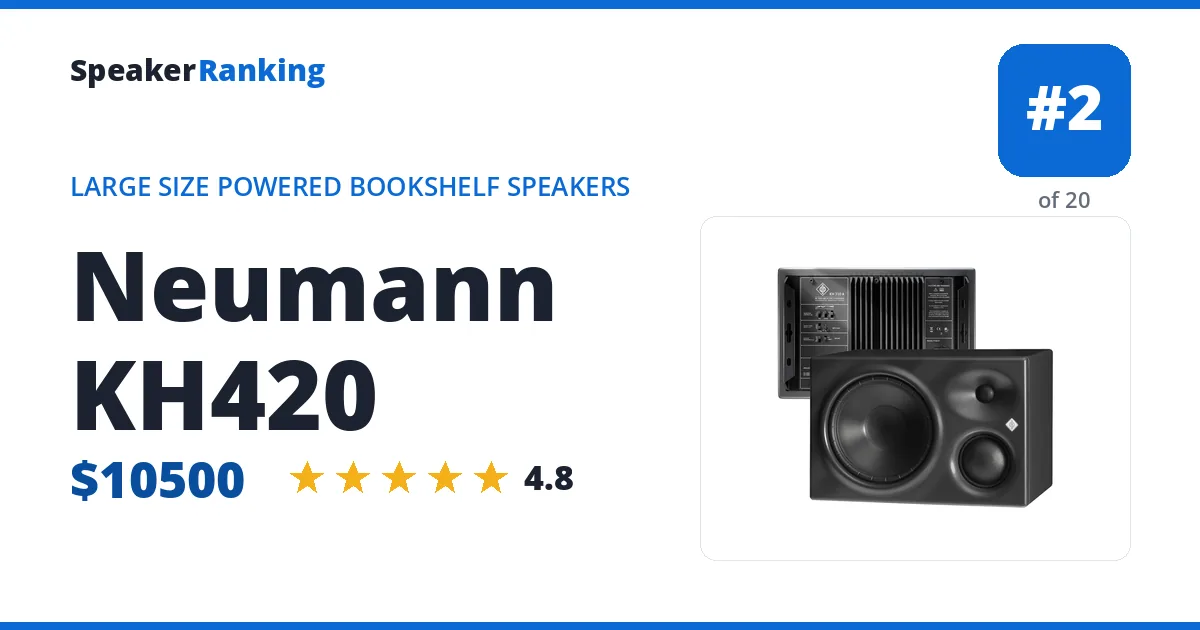
Pros: A 1.2dB response span from 300Hz to 5kHz, 7.51 ideal-subwoofer score and 27.8Hz measured -3dB extension combine accurate mids with genuinely deep bass. Its three-way design and low distortion at normal levels make it particularly attractive for larger listening distances and dynamic material. Measured bass extension of 32Hz (-3dB).
Cons: It is a large, heavy studio monitor rather than an easy desktop speaker. Vertical alignment matters around the crossover regions. Bass distortion rises as playback levels increase, and the measured high-level limits still apply despite the substantial drivers and amplifiers.
Full Neumann KH420 review and specifications →
| AES Input | No |
|---|---|
| Amplifier Power | 555w Per Speaker |
| App | Yes (MA 1 alignment) |
| Aux Input | No |
| Bass Extension (-10dB) | 24Hz (measured, Audio Science Review) |
| Bass Extension (-3dB) | 32Hz (measured, Audio Science Review) |
| Bluetooth | No |
| Coaxial Input | No |
| DSP | No |
| Dimensions | 25.4"H x 13"W x 17.5"D (645.2 x 330.2 x 444.5 mm) |
| Drivers | 10" woofer, 4" dome midrange, 1" fabric dome tweeter |
| EQ | Yes (Room response controls) |
| Frequency Response | 31Hz - 21kHz (±3dB) (Manufacturer specified) |
| HDMI Input | No |
| Inputs | XLR |
| Maximum SPL | 124dB @ 1m (manufacturer specified) |
| Optical Input | No |
| RCA Input | No |
| Spinorama Preference Score | 6.39 |
| Spinorama Preference Score with Perfect Sub | 7.51 |
| TRS Input | No |
| USB Input | No |
| Weight | 77.2 lbs (35 kg) each |
| XLR Input | Yes |
- Links
- Reviews, Comparisons and Sound Samples
- Head-to-Head Comparisons