Short answer: a tie on sound quality. Both are rated 4.1/5 (#3 and #4 of 13 line array and installation pa speakers), so choose on features and fit.
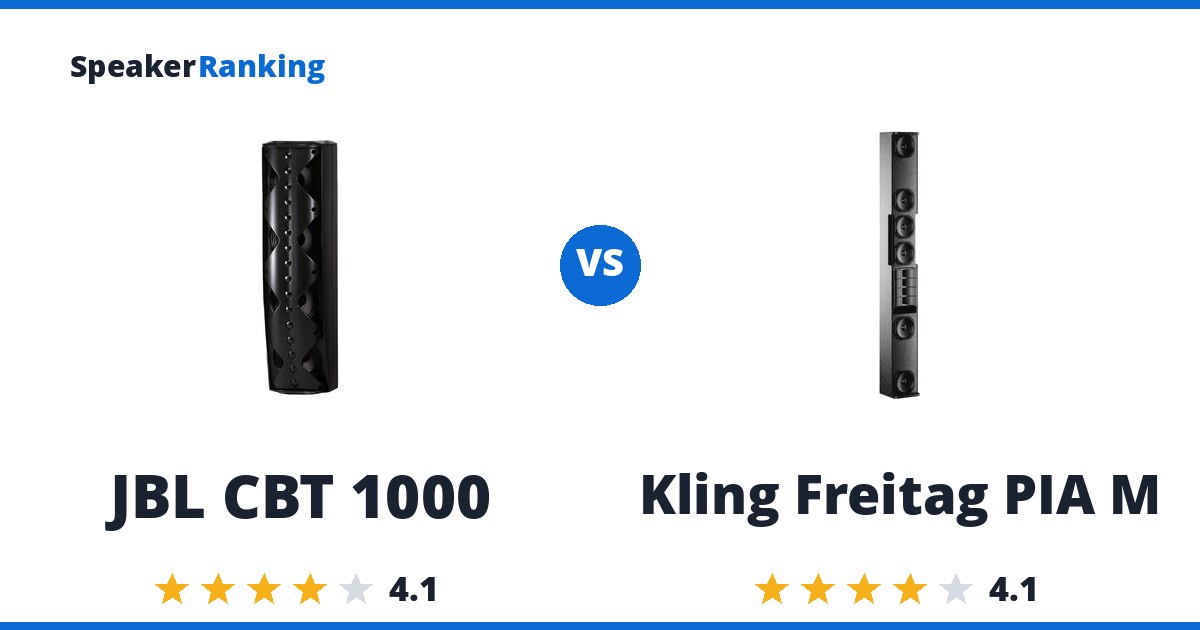
Why pick the JBL CBT 1000: Its 8.13 preference score with an ideal subwoofer is one of the highest of any PA speaker we list, and a 0.168 listening-window deviation shows a very even tonal balance for listeners across the coverage area. The catch: The measurements are manufacturer supplied and spinorama rates their quality as low.
What the Kling Freitag PIA M does well: High-quality manufacturer measurements give preference scores of 4.50 standalone and 7.92 with an ideal subwoofer, with a 1.7dB reference band and 0.82 predicted in-room smoothness. Watch for: Bass is limited, at 95Hz for -3dB and about 82Hz for -10dB in bass-reflex mode, so it needs a subwoofer for music.
Buy the JBL CBT 1000 or the Kling Freitag PIA M on features: they are rated the same for sound quality at close to the same price.
Still deciding? The full PA & Live Sound rankings cover every ranked option.
Specifications Side By Side
| JBL CBT 1000 | Kling Freitag PIA M | |
|---|---|---|
| Price | $3,075.00 | - |
| Ranked | #3 of 13 in Line Array and Installation PA Speakers | #4 of 13 in Line Array and Installation PA Speakers |
| Configuration | Passive 2-way Constant Beamwidth Technology column | Passive 3-way column loudspeaker |
| Drivers | 6x 6.5” neodymium woofers, 24x 1” neodymium tweeters | 4x 0.75” compression drivers on adjustable horn, 2x 4” midrange (cardioid chamber), 4x 4” woofers (switchable bass-reflex/cardioid) |
| Frequency Response | 45Hz - 20kHz (-10dB, manufacturer specified) | 85Hz - 23kHz (±10dB, bass-reflex mode, manufacturer specified) |
| Dimensions | 40.2”H x 9.8”W x 13.6”D (1020 x 250 x 345 mm) | 47.1”H x 5.5”W x 6.6”D (1196 x 139 x 168 mm) |
| Amplifier Power | Passive speaker; requires external amplification | Passive speaker; requires external amplification |
| Power Handling | 1,500W (6,000W peak) | 150W nominal / 325W program / 650W peak |
| Coverage | Switchable vertical patterns, wide horizontal | 100° x 5° to 25° (adjustable) |
| Sensitivity | 102dB (highest setting) | - |
| Impedance | 4 ohms | 8 ohms |
| DSP | No (passive) | No (passive) |
| Weight | 54 lbs (24.5 kg) | 26.9 lbs (12.2 kg) |
| Bluetooth | No | No |
| XLR Input | No | No |
| RCA Input | No | No |
| TRS Input | No | No |
| Optical Input | No | No |
| Coaxial Input | No | No |
| USB Input | No | No |
| HDMI Input | No | No |
| AES Input | No | No |
| Aux Input | No | No |
| Microphone Input | No | No |
| Guitar Input | No | No |
| Bass Extension (-3dB) | 115Hz (measured, vendor Spinorama data) | 95Hz (measured, vendor Spinorama data) |
| Bass Extension (-10dB) | about 48.3Hz (measured, vendor Spinorama data) | about 81.7Hz (measured, vendor Spinorama data) |
| Spinorama Preference Score | 4.67 | 4.50 |
| Spinorama Preference Score with Perfect Sub | 8.13 | 7.92 |
| Maximum SPL | - | 132dB (manufacturer specified) |
Related Speaker Comparisons
How JBL CBT 1000 compares with other leading options:
- L-Acoustics SYVA-low+top vs JBL CBT 1000
- JBL CBT 1000 + CBT 1000E vs JBL CBT 1000
- JBL CBT 1000 vs L-Acoustics SYVA
- JBL CBT 1000 vs Alcons Audio QR24
- JBL CBT 1000 vs JBL CBT 70J-1
Prices on this page were last checked September 26, 2026 at 11:14 PM UTC. Product prices and availability are accurate as of that date/time and are subject to change; the price and availability shown on Amazon at the time of purchase will apply to the purchase of this product.
As an eBay Partner, we may be compensated if you make a purchase.
The Two Speakers In Full
 JBL CBT 1000: $3,075.00 Passive B&H Photo Video eBay
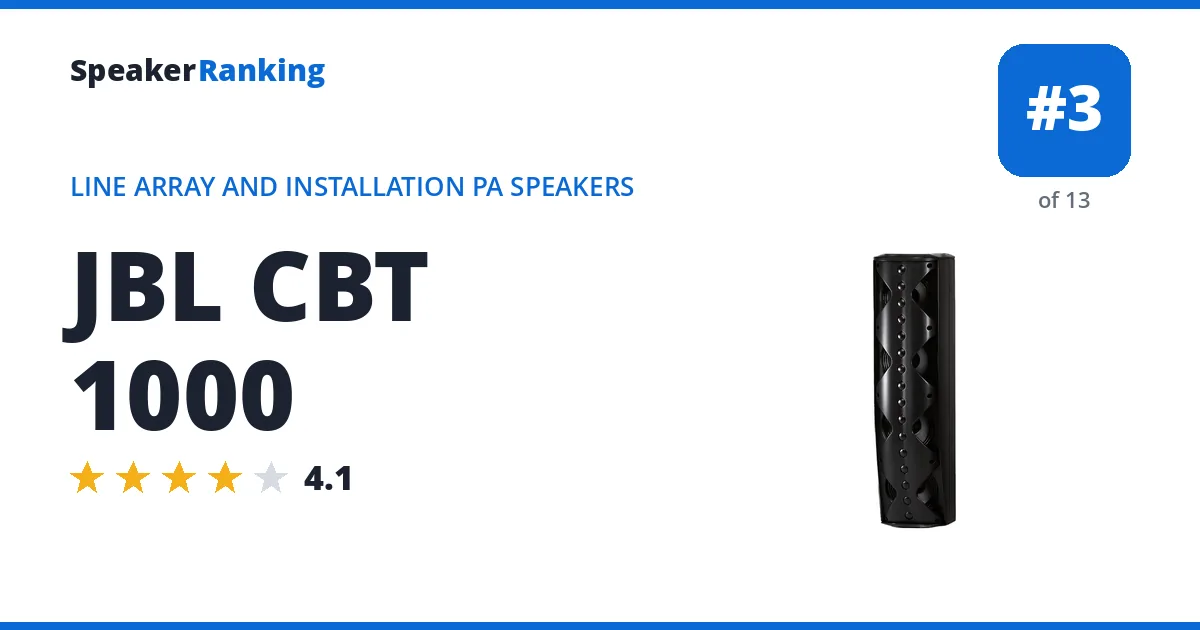
Pros: Its 8.13 preference score with an ideal subwoofer is one of the highest of any PA speaker we list, and a 0.168 listening-window deviation shows a very even tonal balance for listeners across the coverage area. Six 6.5-inch woofers and 24 one-inch tweeters in JBL’s Constant Beamwidth design give switchable vertical coverage, 102dB sensitivity and a 1,500W rating. The optional CBT 1000E extension adds bass and throw. Measured bass extension of 115Hz (-3dB).
Cons: The measurements are manufacturer supplied and spinorama rates their quality as low. On its own the standalone score is 4.67, and the measured bass response is uneven, reaching 115Hz at -3dB but about 48Hz at -10dB, so a subwoofer or the CBT 1000E helps. It is passive, weighs 24.5kg and needs an external amplifier.
Full JBL CBT 1000 review and specifications →
| AES Input | No |
|---|---|
| Amplifier Power | Passive speaker; requires external amplification |
| Aux Input | No |
| Bass Extension (-10dB) | about 48.3Hz (measured, vendor Spinorama data) |
| Bass Extension (-3dB) | 115Hz (measured, vendor Spinorama data) |
| Bluetooth | No |
| Coaxial Input | No |
| Configuration | Passive 2-way Constant Beamwidth Technology column |
| Coverage | Switchable vertical patterns, wide horizontal |
| DSP | No (passive) |
| Dimensions | 40.2”H x 9.8”W x 13.6”D (1020 x 250 x 345 mm) |
| Drivers | 6x 6.5” neodymium woofers, 24x 1” neodymium tweeters |
| Frequency Response | 45Hz - 20kHz (-10dB, manufacturer specified) |
| Guitar Input | No |
| HDMI Input | No |
| Impedance | 4 ohms |
| Microphone Input | No |
| Optical Input | No |
| Power Handling | 1,500W (6,000W peak) |
| RCA Input | No |
| Sensitivity | 102dB (highest setting) |
| Spinorama Preference Score | 4.67 |
| Spinorama Preference Score with Perfect Sub | 8.13 |
| TRS Input | No |
| USB Input | No |
| Weight | 54 lbs (24.5 kg) |
| XLR Input | No |
- Links
- Reviews, Comparisons and Sound Samples
- Head-to-Head Comparisons
 Kling Freitag PIA M Passive eBay
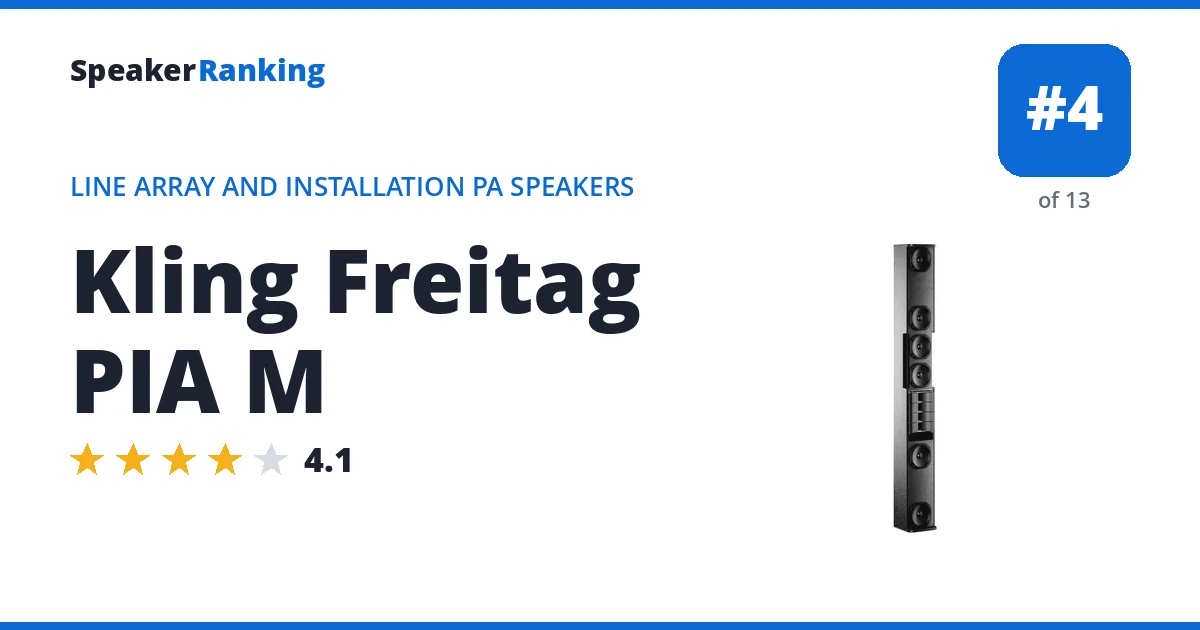
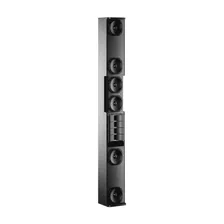
Pros: High-quality manufacturer measurements give preference scores of 4.50 standalone and 7.92 with an ideal subwoofer, with a 1.7dB reference band and 0.82 predicted in-room smoothness. The 3-way column has an adjustable tweeter array (5°, 15° or 25° vertical), a cardioid midrange and a woofer section switchable between bass reflex and cardioid to cut sound behind the speaker. It reaches 132dB from a slim 12.2kg cabinet. Measured bass extension of 95Hz (-3dB).
Cons: Bass is limited, at 95Hz for -3dB and about 82Hz for -10dB in bass-reflex mode, so it needs a subwoofer for music. It is passive and meant for Kling & Freitag amplifiers, and it is sold only through pro dealers with no published price.
Full Kling Freitag PIA M review and specifications →
| AES Input | No |
|---|---|
| Amplifier Power | Passive speaker; requires external amplification |
| Aux Input | No |
| Bass Extension (-10dB) | about 81.7Hz (measured, vendor Spinorama data) |
| Bass Extension (-3dB) | 95Hz (measured, vendor Spinorama data) |
| Bluetooth | No |
| Coaxial Input | No |
| Configuration | Passive 3-way column loudspeaker |
| Coverage | 100° x 5° to 25° (adjustable) |
| DSP | No (passive) |
| Dimensions | 47.1”H x 5.5”W x 6.6”D (1196 x 139 x 168 mm) |
| Drivers | 4x 0.75” compression drivers on adjustable horn, 2x 4” midrange (cardioid chamber), 4x 4” woofers (switchable bass-reflex/cardioid) |
| Frequency Response | 85Hz - 23kHz (±10dB, bass-reflex mode, manufacturer specified) |
| Guitar Input | No |
| HDMI Input | No |
| Impedance | 8 ohms |
| Maximum SPL | 132dB (manufacturer specified) |
| Microphone Input | No |
| Optical Input | No |
| Power Handling | 150W nominal / 325W program / 650W peak |
| RCA Input | No |
| Spinorama Preference Score | 4.50 |
| Spinorama Preference Score with Perfect Sub | 7.92 |
| TRS Input | No |
| USB Input | No |
| Weight | 26.9 lbs (12.2 kg) |
| XLR Input | No |
- Links
- Reviews, Comparisons and Sound Samples
- Head-to-Head Comparisons