Short answer: the Perlisten S4b if sound quality matters most, the GR-Research X-LS Encore if price matters most. The Perlisten S4b ranks #2 of 130 bookshelf speakers at $8000. The GR-Research X-LS Encore ranks #83 at $1300, $6700 cheaper.
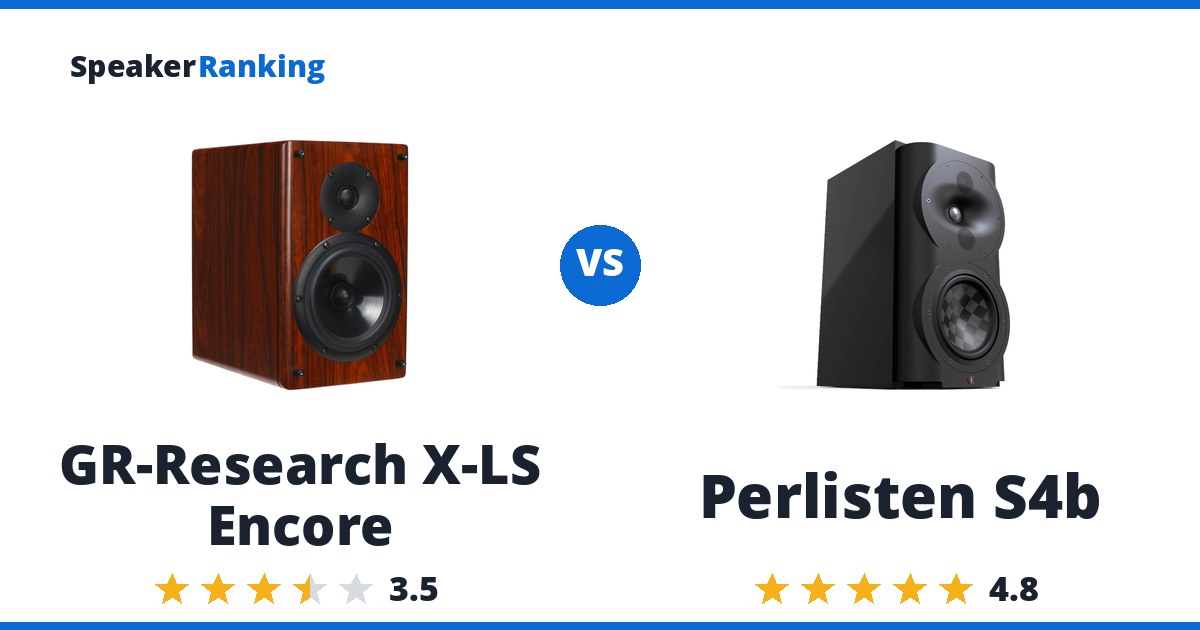
What the GR-Research X-LS Encore offers: An amazing value, especially if you managed to snag one of these built by AV123 in the early 2000s for $200-300. CEA2034 spinorama shows a generally flat on-axis response, especially in the listening window. Predicted in-room response is generally smooth and on-target. Distortion at 86dB SPL/1m is pretty clean above 200Hz. Watch for: A slight depression in the upper bass and some peaking in the lower bass shows up on-axis, along with directivity error in the crossover region. Vertical directivity requires staying within about 20 degrees of the tweeter axis. At 96dB SPL/1m distortion becomes “rather unhappy,” with bass distortion, a possible woofer issue around 2kHz, and a tweeter problem above 7kHz. As a DIY kit, it requires building the cabinet and crossover yourself.
What the Perlisten S4b offers: Reference-grade directivity and output from a compact sealed monitor. Erin called its radiation behavior the smoothest he had measured: Perlisten’s DPC array (beryllium tweeter between two midrange domes) shapes vertical output while transitioning cleanly to the 7-inch woofer. Harmonic distortion remains below 1% at 86dB and, above 100Hz, also below 1% at 96dB; compression is exceptionally low. The response is highly linear, the midrange was a listening highlight, and the sealed F10 of 40Hz provides a predictable slope for subwoofer integration. Watch for: Erin measured only 84.5dB sensitivity and an impedance minimum just under 4 ohms, a difficult efficiency/load combination that deserves substantial clean amplification. Its 78Hz F3 means a subwoofer is effectively mandatory for full-range listening despite the 40Hz F10. A roughly +3dB feature around 10kHz appears on-axis, though Erin did not find it objectionable. Price is extreme for a stand-mount and the tightly managed vertical radiation makes correct stand height important.
Buy the GR-Research X-LS Encore when the price outweighs sound quality for you, and the Perlisten S4b when sound quality outweighs the price instead.
Still deciding? The full Passive Home rankings cover every ranked option.
Specifications Side By Side
| GR-Research X-LS Encore | Perlisten S4b | |
|---|---|---|
| Price | $1300 per pair | $8,000 per pair |
| Ranked | #83 of 130 in Large Size Bookshelf Speakers | #2 of 130 in Large Size Bookshelf Speakers |
| Bass Extension (-10dB) | 44Hz (measured, Audio Science Review) | 40Hz (measured, Erin's Audio Corner) |
| Bass Extension (-3dB) | 64Hz (measured, Audio Science Review) | 78Hz (measured, Erin's Audio Corner) |
| Dimensions | 13.5"H x 8.5"W x 12.1"D (342.9 x 215.9 x 308 mm) | 16.5"H x 9.4"W x 7.3"D |
| Impedance | 8 ohms | Just under 4 ohms minimum (measured, Erin's Audio Corner) |
| Sensitivity | 84.4dB (measured by Audio Science Review; 87dB manufacturer specified) | 84.5dB/2.83V/1m (measured, Erin's Audio Corner) |
| Drivers | 6.5" Peerless M-165 paper composite cone, non-resonant polymer frame woofer, 1" Peerless India T26SG tweeter | DPC array with 28mm beryllium tweeter and dual 28mm midrange domes; 7" woofer |
| Weight | 17 lbs (7.7 kg) each | 24.3 lbs (11 kg) each |
| Woofer Cabinet | ported | sealed |
| Spinorama Preference Score | - | 4.58 |
| Spinorama Preference Score with Perfect Sub | - | 7.24 |
Related Speaker Comparisons
More top alternatives to Perlisten S4b:
- Perlisten S4b vs KEF Reference 1 Meta
- GR-Research NX-Studio vs Perlisten S4b
- AsciLab C6B vs Perlisten S4b
- Perlisten S4b vs Audio First Cadentia 3
- KEF R3 Meta vs Perlisten S4b
Prices on this page were last checked September 16, 2026 at 12:41 AM UTC. Product prices and availability are accurate as of that date/time and are subject to change; the price and availability shown on Amazon at the time of purchase will apply to the purchase of this product.
As an eBay Partner, we may be compensated if you make a purchase.
The Two Speakers In Full
 GR-Research X-LS Encore: $1300 per pair Gr-research eBay
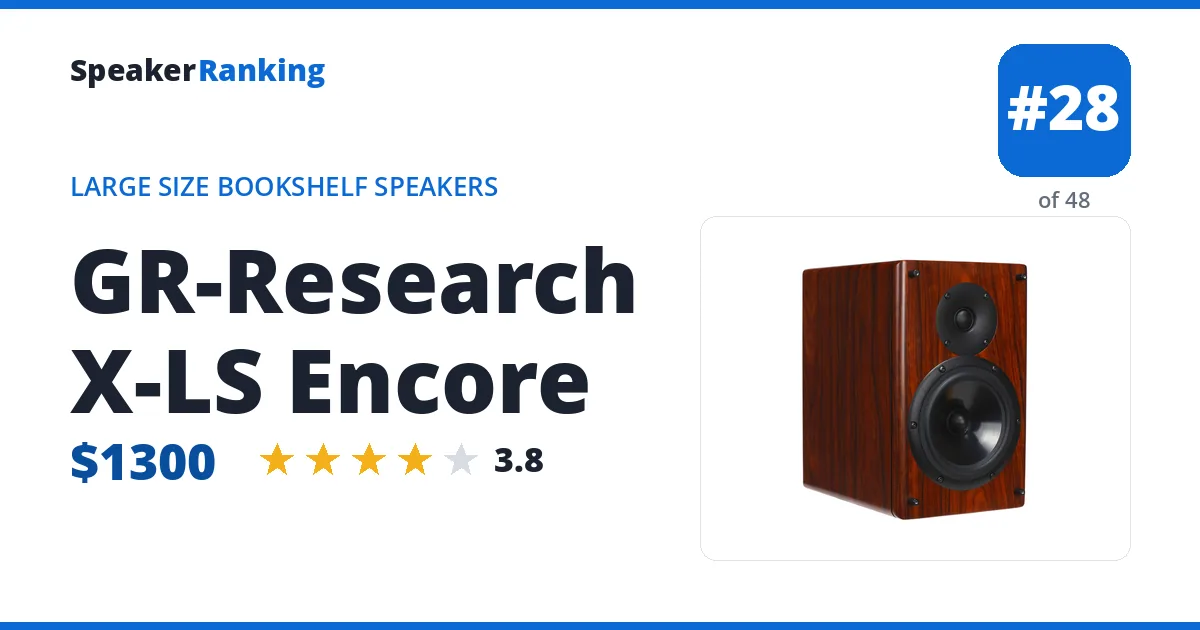
Pros: An amazing value, especially if you managed to snag one of these built by AV123 in the early 2000s for $200-300. CEA2034 spinorama shows a generally flat on-axis response, especially in the listening window. Predicted in-room response is generally smooth and on-target. Distortion at 86dB SPL/1m is pretty clean above 200Hz. Measured bass extension of 64Hz (-3dB), with a measured sensitivity of 84.4dB.
Cons: A slight depression in the upper bass and some peaking in the lower bass shows up on-axis, along with directivity error in the crossover region. Vertical directivity requires staying within about 20 degrees of the tweeter axis. At 96dB SPL/1m distortion becomes “rather unhappy,” with bass distortion, a possible woofer issue around 2kHz, and a tweeter problem above 7kHz. As a DIY kit, it requires building the cabinet and crossover yourself.
Full GR-Research X-LS Encore review and specifications →
| Bass Extension (-10dB) | 44Hz (measured, Audio Science Review) |
|---|---|
| Bass Extension (-3dB) | 64Hz (measured, Audio Science Review) |
| Dimensions | 13.5"H x 8.5"W x 12.1"D (342.9 x 215.9 x 308 mm) |
| Drivers | 6.5" Peerless M-165 paper composite cone, non-resonant polymer frame woofer, 1" Peerless India T26SG tweeter |
| Impedance | 8 ohms |
| Sensitivity | 84.4dB (measured by Audio Science Review; 87dB manufacturer specified) |
| Weight | 17 lbs (7.7 kg) each |
| Woofer Cabinet | ported |
- Links
- Reviews, Comparisons and Sound Samples
- Head-to-Head Comparisons
- GR-Research X-LS Encore vs Dynaudio Special Forty
- GR-Research X-LS Encore vs Mission LX-3 MKII
- GR-Research X-LS Encore vs ELAC Debut 2.0 B6.2
- GR-Research X-LS Encore vs SVS Prime Bookshelf
- GR-Research X-LS Encore vs KEF Q3 Meta
- GR-Research X-LS Encore vs Polk Monitor XT20
- GR-Research X-LS Encore vs Philharmonic BMR Monitor
- GR-Research X-LS Encore vs Sonus Faber Lumina II
- See all 47 comparisons
 Perlisten S4b: $8,000 per pair Perlisten Dealer Locator eBay
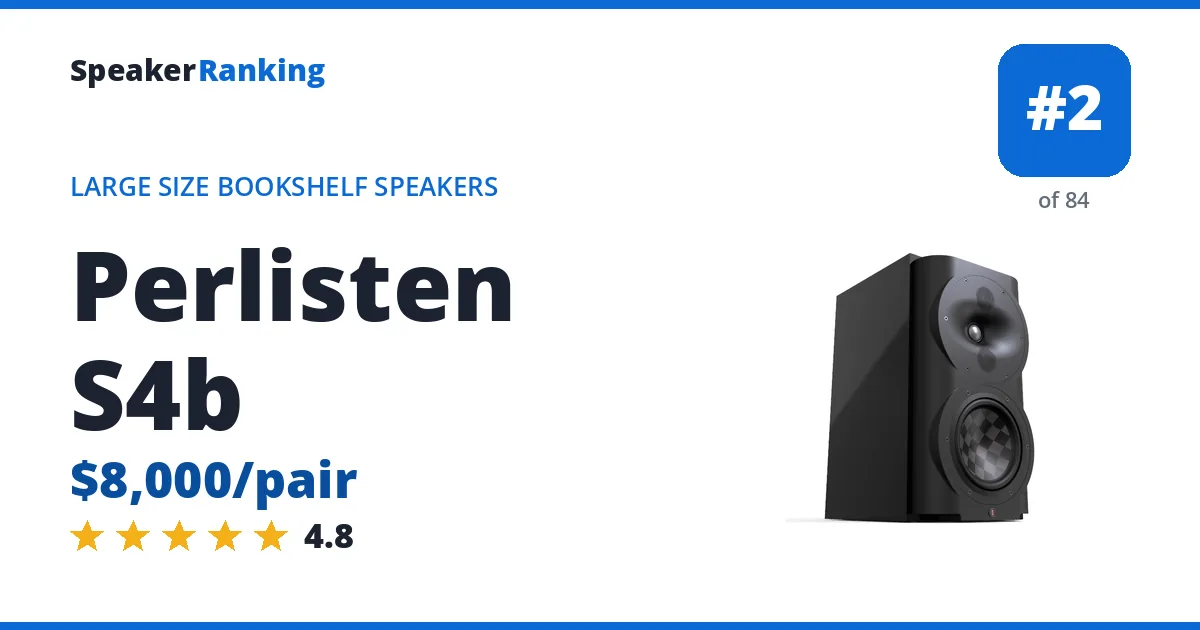
Pros: Reference-grade directivity and output from a compact sealed monitor. Erin called its radiation behavior the smoothest he had measured: Perlisten’s DPC array (beryllium tweeter between two midrange domes) shapes vertical output while transitioning cleanly to the 7-inch woofer. Harmonic distortion remains below 1% at 86dB and, above 100Hz, also below 1% at 96dB; compression is exceptionally low. The response is highly linear, the midrange was a listening highlight, and the sealed F10 of 40Hz provides a predictable slope for subwoofer integration. Measured bass extension of 78Hz (-3dB), with a measured sensitivity of 84.5dB.
Cons: Erin measured only 84.5dB sensitivity and an impedance minimum just under 4 ohms, a difficult efficiency/load combination that deserves substantial clean amplification. Its 78Hz F3 means a subwoofer is effectively mandatory for full-range listening despite the 40Hz F10. A roughly +3dB feature around 10kHz appears on-axis, though Erin did not find it objectionable. Price is extreme for a stand-mount and the tightly managed vertical radiation makes correct stand height important.
Full Perlisten S4b review and specifications →
| Bass Extension (-10dB) | 40Hz (measured, Erin's Audio Corner) |
|---|---|
| Bass Extension (-3dB) | 78Hz (measured, Erin's Audio Corner) |
| Dimensions | 16.5"H x 9.4"W x 7.3"D |
| Drivers | DPC array with 28mm beryllium tweeter and dual 28mm midrange domes; 7" woofer |
| Impedance | Just under 4 ohms minimum (measured, Erin's Audio Corner) |
| Sensitivity | 84.5dB/2.83V/1m (measured, Erin's Audio Corner) |
| Spinorama Preference Score | 4.58 |
| Spinorama Preference Score with Perfect Sub | 7.24 |
| Weight | 24.3 lbs (11 kg) each |
| Woofer Cabinet | sealed |
- Links
- Reviews, Comparisons and Sound Samples
- Head-to-Head Comparisons