Short answer: the Audioengine A5+ Classic on measured sound quality, the Kanto YU on price. The Audioengine A5+ Classic ranks #27 of 65 powered bookshelf speakers at $399. The Kanto YU ranks #39 at $349.99, $49.01 cheaper.
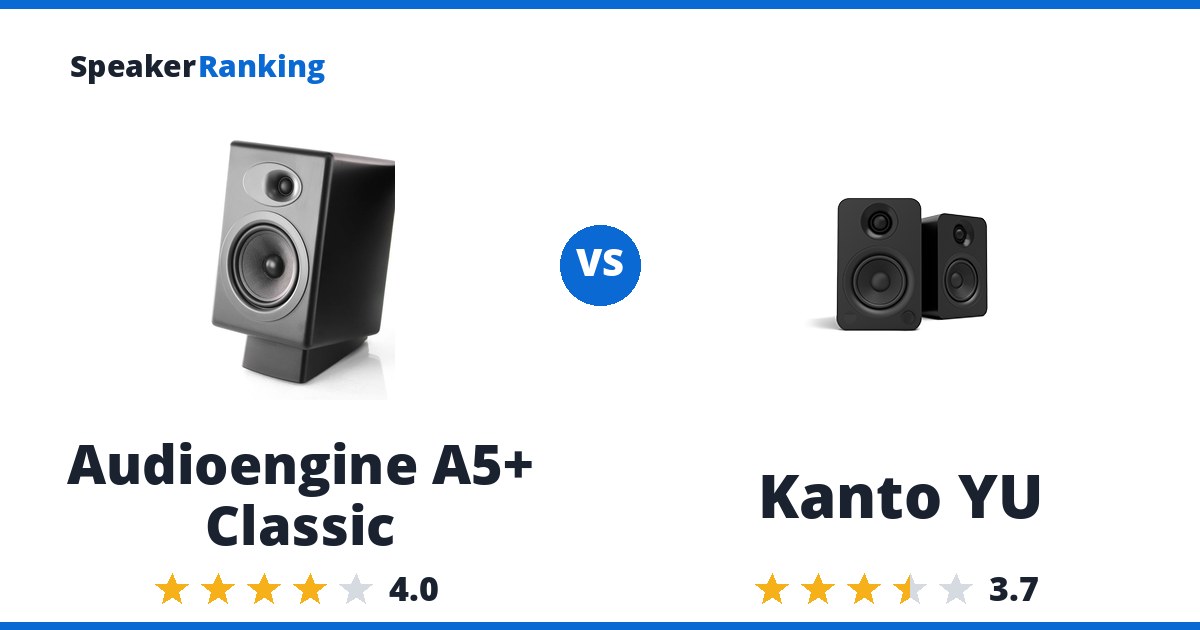
What the Audioengine A5+ Classic offers: ASR’s A5+ Powered measurements give 3.68 standalone and 6.15 with an ideal subwoofer, with a 2.7dB midrange span. The analog powered pair is straightforward to use without an external amplifier. The measured result supports a more capable tonal balance than its former low position suggested. Watch for: The measured -3dB point is around 69Hz, and the upper-bass recession can reduce body in voices and instruments. The existing review reports crossover-region directivity errors and a distortion feature around 800-900Hz. The score does not make it a reference monitor, and adding a subwoofer cannot correct those midrange and off-axis issues.
What the Kanto YU offers: RCA and Bluetooth inputs, remote control, tone adjustment and a subwoofer output make this compact pair simple to use. ASR’s measurements show a 2.9dB midrange span and a 5.51 preference score with an ideal subwoofer, supporting moderate desktop use with bass assistance. Watch for: Standalone preference is 2.59 and the -3dB point is about 85Hz, so it lacks low-bass weight. The response trends upward toward the treble and retains local irregularities across the listening window. A subwoofer adds bandwidth but does not make the speaker neutral. Connectivity is basic compared with models offering USB, optical or HDMI.
Buy the Audioengine A5+ Classic if sound quality is the priority over the price, or the Kanto YU if the price is the priority over sound quality.
Looking for alternatives? See the complete Powered Home rankings.
Specifications Side By Side
| Audioengine A5+ Classic | Kanto YU | |
|---|---|---|
| Price | $399.00 per pair | $349.99 per pair |
| Ranked | #27 of 65 in Medium Size Powered Bookshelf Speakers | #39 of 65 in Medium Size Powered Bookshelf Speakers |
| Bass Extension (-3dB) | 68Hz (measured, Audio Science Review) | - |
| Bass Extension (-10dB) | 50Hz (measured, Audio Science Review) | - |
| Dimensions | 10.9"H x 7.2"W x 9.7"D (276.2 x 182.6 x 247.6 mm) | 8.7H x 5.5W x 7.5D in |
| Frequency Response | 50Hz - 22kHz (+/-1.5dB) (Manufacturer specified) | - |
| Weight | 15.4 lbs (7 kg) (left/powered), 9.7 lbs (4.4 kg) (right) | 6.2 lbs (2.8 kg) active, 5.3 lbs (2.4 kg) passive |
| Drivers | 5" Kevlar woofer, 0.75" silk dome tweeter | 1" silk-dome tweeter, 4" Kevlar woofer |
| App | No | - |
| EQ | No | - |
| DSP | No | - |
| Amplifier Power | 50W RMS / 75W peak | 70W RMS / 140W peak per pair |
| Spinorama Preference Score | 3.68 | 2.59 |
| Spinorama Preference Score with Perfect Sub | 6.15 | 5.51 |
| Subwoofer Output | Yes | Yes |
| Outputs | RCA variable output (subwoofer) | Subwoofer |
| Enclosure | - | 2-way powered, rear-ported MDF |
| Inputs | - | RCA and Bluetooth 4.2 aptX |
| Bluetooth Codecs | - | SBC, aptX |
| Country | - | Canada (design) |
Related Speaker Comparisons
More worthwhile head-to-heads for Audioengine A5+ Classic:
- Audioengine A5+ Classic vs Genelec 8331A
- Audioengine A5+ Classic vs Neumann KH120 MKII
- Audioengine A5+ Classic vs Genelec 8030C
- Neumann KH80 DSP vs Audioengine A5+ Classic
- Audioengine A5+ Classic vs Dynaudio LYD 5
Prices on this page were last checked September 16, 2026 at 12:41 AM UTC. Product prices and availability are accurate as of that date/time and are subject to change; the price and availability shown on Amazon at the time of purchase will apply to the purchase of this product.
As an eBay Partner, we may be compensated if you make a purchase.
The Two Speakers In Full
 Audioengine A5+ Classic: $399.00 per pair Amazon B&H Photo Video eBay
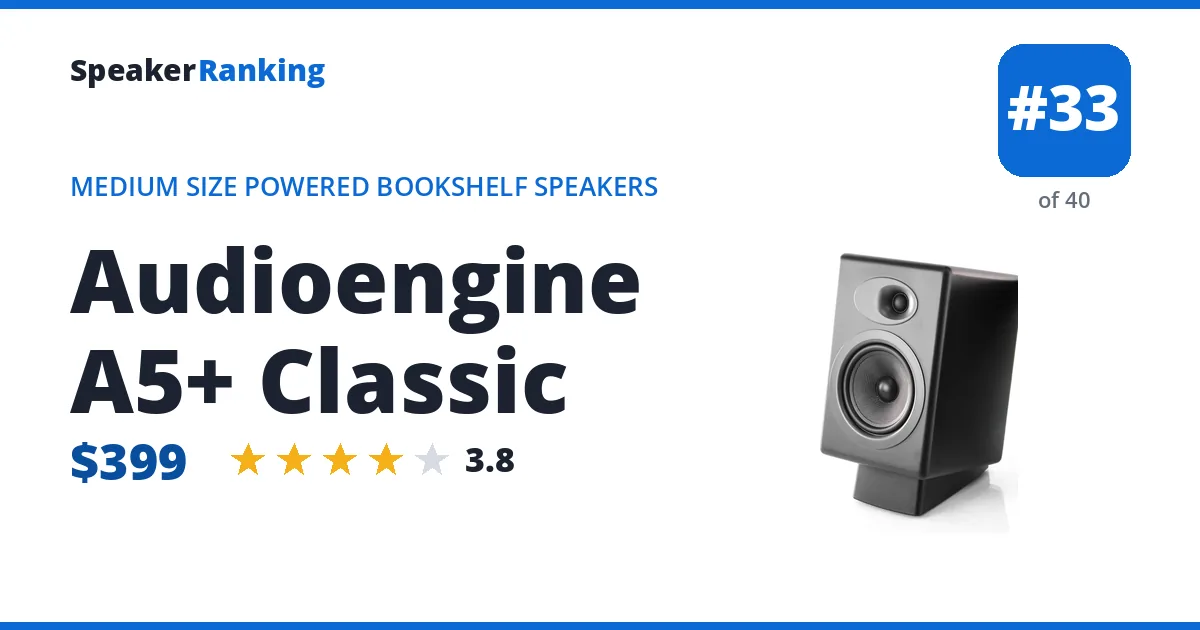
Pros: ASR’s A5+ Powered measurements give 3.68 standalone and 6.15 with an ideal subwoofer, with a 2.7dB midrange span. The analog powered pair is straightforward to use without an external amplifier. The measured result supports a more capable tonal balance than its former low position suggested. Measured bass extension of 68Hz (-3dB).
Cons: The measured -3dB point is around 69Hz, and the upper-bass recession can reduce body in voices and instruments. The existing review reports crossover-region directivity errors and a distortion feature around 800-900Hz. The score does not make it a reference monitor, and adding a subwoofer cannot correct those midrange and off-axis issues.
Full Audioengine A5+ Classic review and specifications →
| Amplifier Power | 50W RMS / 75W peak |
|---|---|
| App | No |
| Bass Extension (-10dB) | 50Hz (measured, Audio Science Review) |
| Bass Extension (-3dB) | 68Hz (measured, Audio Science Review) |
| DSP | No |
| Dimensions | 10.9"H x 7.2"W x 9.7"D (276.2 x 182.6 x 247.6 mm) |
| Drivers | 5" Kevlar woofer, 0.75" silk dome tweeter |
| EQ | No |
| Frequency Response | 50Hz - 22kHz (+/-1.5dB) (Manufacturer specified) |
| Outputs | RCA variable output (subwoofer) |
| Spinorama Preference Score | 3.68 |
| Spinorama Preference Score with Perfect Sub | 6.15 |
| Subwoofer Output | Yes |
| Weight | 15.4 lbs (7 kg) (left/powered), 9.7 lbs (4.4 kg) (right) |
- Links
- Reviews, Comparisons and Sound Samples
- Head-to-Head Comparisons
- Audioengine A5+ Classic vs KEF LSX II LT
- Audioengine A5+ Classic vs Adam Audio T5V
- Audioengine A5+ Classic vs Airpulse A100
- Audioengine A5+ Classic vs Kanto YU6
- Audioengine A5+ Classic vs Pioneer DJ VM-50
- Audioengine A5+ Classic vs M-Audio BX5 D3
- Audioengine A5+ Classic vs JBL 705P
- Audioengine A5+ Classic vs Kali LP-UNF
- See all 50 comparisons
 Kanto YU: $349.99 per pair Kanto Audio eBay
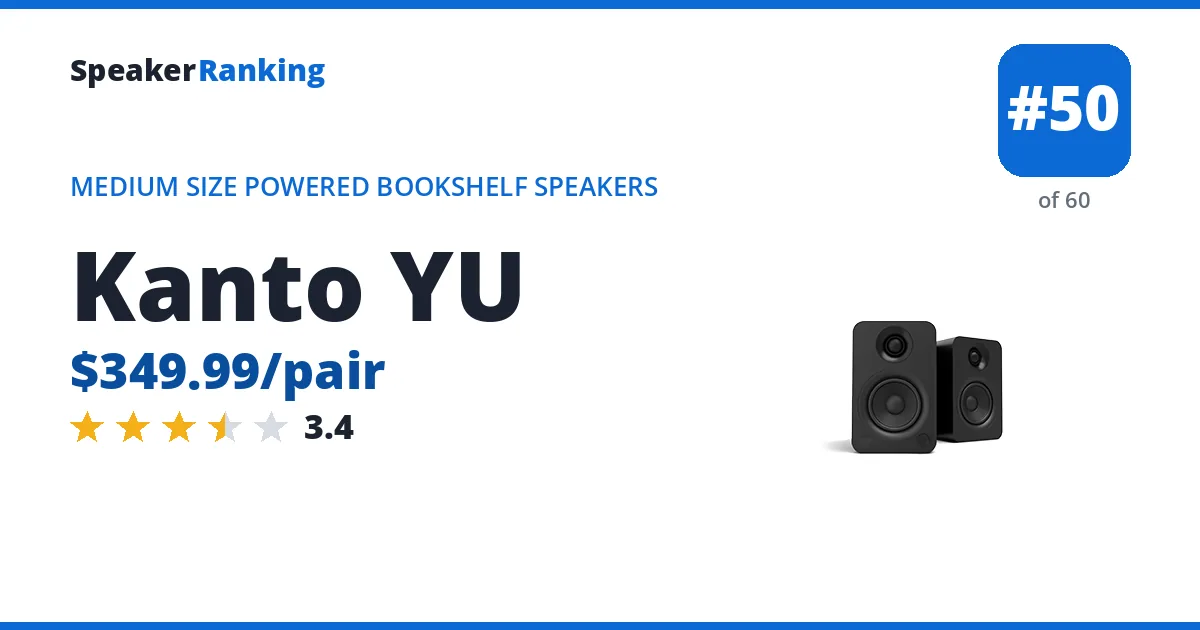
Pros: RCA and Bluetooth inputs, remote control, tone adjustment and a subwoofer output make this compact pair simple to use. ASR’s measurements show a 2.9dB midrange span and a 5.51 preference score with an ideal subwoofer, supporting moderate desktop use with bass assistance.
Cons: Standalone preference is 2.59 and the -3dB point is about 85Hz, so it lacks low-bass weight. The response trends upward toward the treble and retains local irregularities across the listening window. A subwoofer adds bandwidth but does not make the speaker neutral. Connectivity is basic compared with models offering USB, optical or HDMI.
Full Kanto YU review and specifications →
| Amplifier Power | 70W RMS / 140W peak per pair |
|---|---|
| Bluetooth Codecs | SBC, aptX |
| Country | Canada (design) |
| Dimensions | 8.7H x 5.5W x 7.5D in |
| Drivers | 1" silk-dome tweeter, 4" Kevlar woofer |
| Enclosure | 2-way powered, rear-ported MDF |
| Inputs | RCA and Bluetooth 4.2 aptX |
| Outputs | Subwoofer |
| Spinorama Preference Score | 2.59 |
| Spinorama Preference Score with Perfect Sub | 5.51 |
| Subwoofer Output | Yes |
| Weight | 6.2 lbs (2.8 kg) active, 5.3 lbs (2.4 kg) passive |
- Links
- Reviews, Comparisons and Sound Samples
- Head-to-Head Comparisons