Short answer: the Amazon Echo Pop. It ranks #8 of 8 powered desktop speakers by sound quality at $79.99; the Google Home Max ranks #10 and costs $399, so there is not much of a tradeoff to weigh.
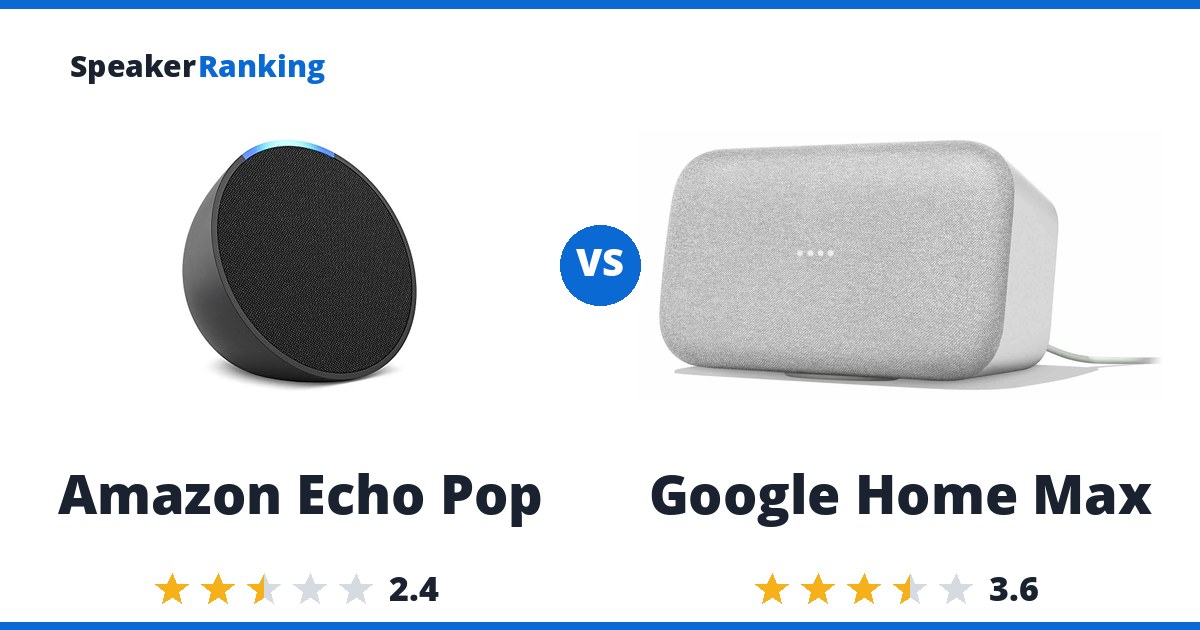
The case for the Amazon Echo Pop: The half-sphere design is compact and light at 195g, and it still gets the full Alexa feature set: on-board Alexa, Matter and Sidewalk support, and it doubles as an eero Wi-Fi extender adding up to 1,000 square feet of mesh coverage. The tradeoff: PCWorld’s review was blunt: despite a larger 1.95-inch driver on paper, it sounded flat and tinny with only a hint of bass next to the smaller-driver Echo Dot, and called the overall value proposition a hard no.
The case for the Google Home Max: The most capable driver set of Google’s own smart speakers, with two 4.5-inch high-excursion woofers and two 0.7-inch tweeters across six Class-D amplifiers. The tradeoff: Discontinued by Google since 2020, so it can no longer be bought new; used and refurbished stock is what remains, and RTINGS calls its soundstage mediocre despite the driver count.
Buy the Amazon Echo Pop. It ranks higher for sound quality than the Google Home Max and costs less, which settles it without a real tradeoff to make.
If sound quality matters at all to you, skip the Amazon Echo Pop. It ranks near the bottom of the 8 powered desktop speakers, so look higher up the list instead.
Want more options? Browse the full Powered Home rankings.
Specifications Side By Side
| Amazon Echo Pop | Google Home Max | |
|---|---|---|
| Price | $79.99 each | $399 each Discontinued |
| Ranked | #8 of 8 in Small Size Powered Desktop Speakers | #10 of 14 in Medium Size Powered Desktop Speakers |
| Aux Input | No | Yes |
| Battery Life | No Battery | No Battery |
| IP Rating | None | None |
| Party Mode | Yes (Wi-Fi multi-room, Alexa) | Yes (Wi-Fi multi-room, Chromecast built-in) |
| Power Input | External AC adapter | AC power cord |
| Stereo | No | No |
| Weight | 0.4 lbs (195 g) | 11.7 lbs (5.3 kg) |
| Wi-Fi | Yes | Yes (2.4GHz/5GHz) |
| App | Yes (Alexa) | Yes (Google Home) |
| Bluetooth Codecs | SBC, AAC | SBC, AAC |
| Built-in Microphone | Yes (mic mute switch; no motion or temperature sensor) | Yes (6 far-field mics for Smart Sound room correction) |
| EQ | No | Yes (Media EQ + Room EQ, automatic via Smart Sound) |
| Power Bank | No | No |
| TWS | Yes (Wi-Fi stereo pairing via Alexa app) | Yes (Wi-Fi stereo pairing via Google Home app) |
| Drivers | 1.95in driver | 2x 4.5in high-excursion woofers, 2x 0.7in tweeters |
| Discontinued | No | Yes |
| Inputs | Wi-Fi, Bluetooth | Wi-Fi, Bluetooth, Aux, USB-C |
| XLR Input | No | No |
| RCA Input | No | No |
| TRS Input | No | Yes (3.5mm) |
| Optical Input | No | No |
| Coaxial Input | No | No |
| USB Input | No | Yes |
| HDMI Input | No | No |
| AES Input | No | No |
| Bluetooth | Yes | Yes, 4.2 |
| Dimensions | 3.8" x 4.1" x 3.6" (96 x 104 x 91 mm) (H x W x D) | 7.5" x 13.2" x 6.1" (190 x 336 x 154 mm) (H x W x D) |
| Voice Assistants | Amazon Alexa / Alexa+ | Google Assistant |
| Streaming Services | Amazon Music, Spotify, Apple Music, Deezer, Pandora, iHeartRadio, SiriusXM, TuneIn | Chromecast built-in, Spotify Connect, Pandora, TuneIn, iHeartRadio |
| Amplifier Power | - | 6x Class-D amplifiers |
Related Speaker Comparisons
More worthwhile head-to-heads for Google Home Max:
- Google Home Max vs JBL Authentics 200
- Amazon Echo Dot 5th Gen vs Google Home Max
- Amazon Echo Pop vs JBL Authentics 200
- Google Home Max vs Google Nest Audio
- Google Home Max vs Google Home Speaker
Prices on this page were last checked September 22, 2026 at 5:11 AM UTC. Product prices and availability are accurate as of that date/time and are subject to change; the price and availability shown on Amazon at the time of purchase will apply to the purchase of this product.
As an eBay Partner, we may be compensated if you make a purchase.
The Two Speakers In Full
 Amazon Echo Pop: $79.99 each Amazon eBay
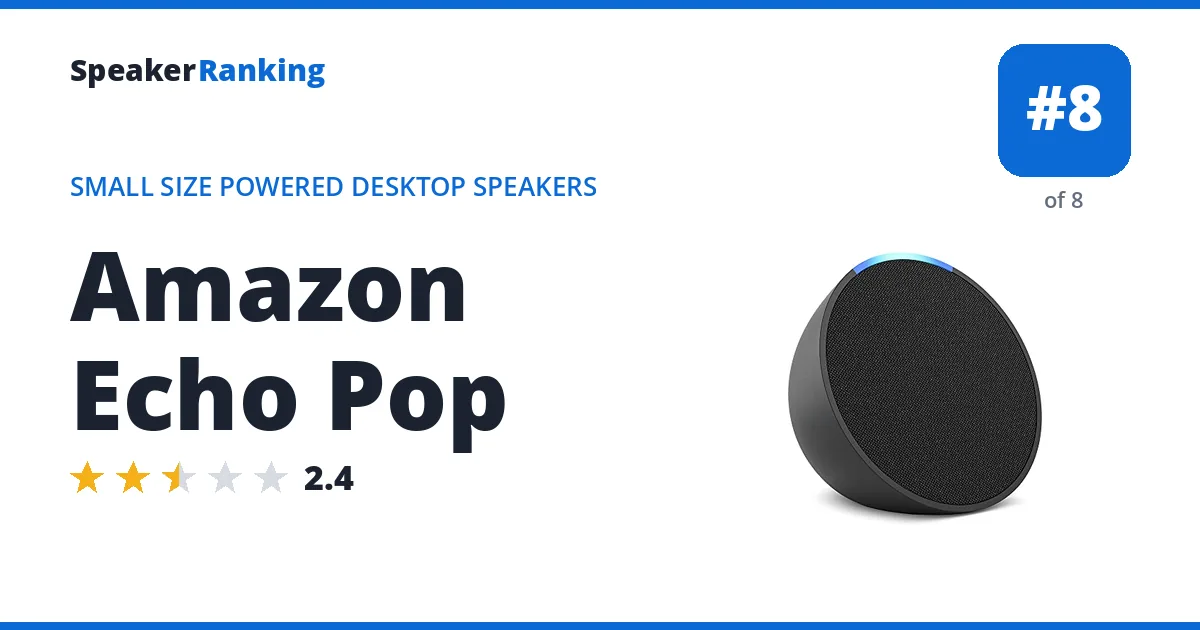
Pros: RTINGS’ 2026 testing found its Alexa performance rivals Amazon’s pricier speakers, easily understanding commands from a distance or in a noisy room, with a mic mute button and a balanced enough mid-range that voices sound true to life. The half-sphere design is compact and light at 195g, still gets the full Alexa feature set including Matter and Sidewalk support, and doubles as an eero Wi-Fi extender adding up to 1,000 square feet of mesh coverage.
Cons: PCWorld’s earlier review was blunt: despite a larger 1.95-inch driver on paper, it sounded flat and tinny with only a hint of bass next to the smaller-driver Echo Dot, and called the value proposition a hard no; RTINGS’ more recent test agrees on the underlying tradeoff, noting it can’t reproduce as much low bass as the Echo Dot Max and doesn’t get very loud. It also drops the motion and temperature sensors the Echo Dot has, has no Zigbee hub, and feels cheaper in the hand, being mostly plastic apart from the front fabric. It is mono, has no 3.5mm output or battery, and currently costs the same as the better-reviewed Echo Dot rather than being meaningfully cheaper.
Full Amazon Echo Pop review and specifications →
| AES Input | No |
|---|---|
| App | Yes (Alexa) |
| Aux Input | No |
| Battery Life | No Battery |
| Bluetooth | Yes |
| Bluetooth Codecs | SBC, AAC |
| Built-in Microphone | Yes (mic mute switch; no motion or temperature sensor) |
| Coaxial Input | No |
| Dimensions | 3.8" x 4.1" x 3.6" (96 x 104 x 91 mm) (H x W x D) |
| Discontinued | No |
| Drivers | 1.95in driver |
| EQ | No |
| HDMI Input | No |
| IP Rating | None |
| Inputs | Wi-Fi, Bluetooth |
| Optical Input | No |
| Party Mode | Yes (Wi-Fi multi-room, Alexa) |
| Power Bank | No |
| Power Input | External AC adapter |
| RCA Input | No |
| Stereo | No |
| Streaming Services | Amazon Music, Spotify, Apple Music, Deezer, Pandora, iHeartRadio, SiriusXM, TuneIn |
| TRS Input | No |
| TWS | Yes (Wi-Fi stereo pairing via Alexa app) |
| USB Input | No |
| Voice Assistants | Amazon Alexa / Alexa+ |
| Weight | 0.4 lbs (195 g) |
| Wi-Fi | Yes |
| XLR Input | No |
- Links
- Reviews, Comparisons and Sound Samples
- Head-to-Head Comparisons
- Amazon Echo Pop vs Google Nest Mini 2nd Gen
- Amazon Echo Pop vs Google Home Speaker
- Amazon Echo Pop vs Amazon Echo Dot 5th Gen
- Amazon Echo Pop vs Google Nest Audio
- Amazon Echo Pop vs Amazon Echo Dot Max
- Amazon Echo Pop vs Amazon Echo Studio 2nd Gen
- Amazon Echo Pop vs B&O Beosound 2
- Amazon Echo Pop vs JBL Authentics 200
- See all 9 comparisons
 Google Home Max: $399 each Discontinued eBay
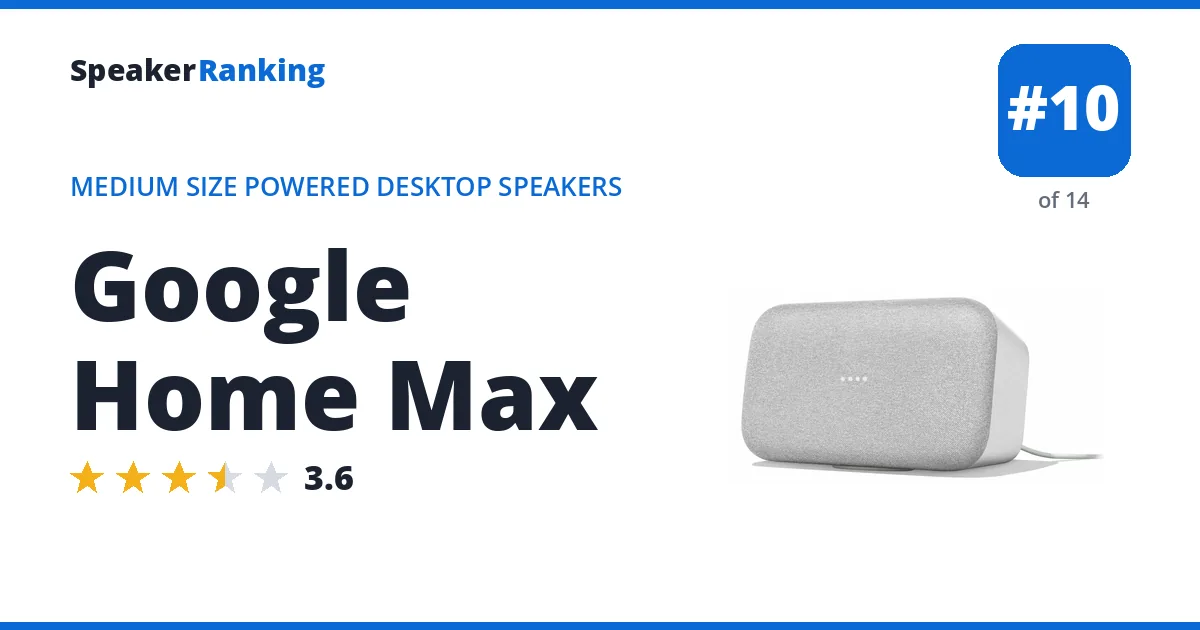
Pros: The most capable driver set of Google’s own smart speakers, with two 4.5-inch high-excursion woofers and two 0.7-inch tweeters across six Class-D amplifiers. Its Smart Sound feature uses six built-in microphones to measure the room and adjust the equalizer automatically. Owner reviews on Walmart consistently single out its bass depth and clarity, with one directly comparing it favorably to the Amazon Echo Studio and Apple HomePod. Two units can be wirelessly stereo-paired for left/right separation, and it can be grouped with other Google/Nest speakers for multi-room audio.
Cons: Discontinued by Google since 2020, so it can no longer be bought new; used and refurbished stock is what remains, and RTINGS calls its soundstage mediocre despite the driver count. It never gained Apple Music or Tidal support over Wi-Fi. At launch, voice commands could fail to register over loud music, and Bluetooth tops out at version 4.2 with no aptX. At 5.3kg it is heavy and needs real shelf space, and $399 was expensive even in 2017 next to the far cheaper Nest Audio. Discontinued.
Full Google Home Max review and specifications →
| AES Input | No |
|---|---|
| Amplifier Power | 6x Class-D amplifiers |
| App | Yes (Google Home) |
| Aux Input | Yes |
| Battery Life | No Battery |
| Bluetooth | Yes, 4.2 |
| Bluetooth Codecs | SBC, AAC |
| Built-in Microphone | Yes (6 far-field mics for Smart Sound room correction) |
| Coaxial Input | No |
| Dimensions | 7.5" x 13.2" x 6.1" (190 x 336 x 154 mm) (H x W x D) |
| Discontinued | Yes |
| Drivers | 2x 4.5in high-excursion woofers, 2x 0.7in tweeters |
| EQ | Yes (Media EQ + Room EQ, automatic via Smart Sound) |
| HDMI Input | No |
| IP Rating | None |
| Inputs | Wi-Fi, Bluetooth, Aux, USB-C |
| Optical Input | No |
| Party Mode | Yes (Wi-Fi multi-room, Chromecast built-in) |
| Power Bank | No |
| Power Input | AC power cord |
| RCA Input | No |
| Stereo | No |
| Streaming Services | Chromecast built-in, Spotify Connect, Pandora, TuneIn, iHeartRadio |
| TRS Input | Yes (3.5mm) |
| TWS | Yes (Wi-Fi stereo pairing via Google Home app) |
| USB Input | Yes |
| Voice Assistants | Google Assistant |
| Weight | 11.7 lbs (5.3 kg) |
| Wi-Fi | Yes (2.4GHz/5GHz) |
| XLR Input | No |
- Reviews, Comparisons and Sound Samples
- Head-to-Head Comparisons
- Google Home Max vs JBL Authentics 200
- Google Home Max vs Amazon Echo Dot 5th Gen
- Google Home Max vs Amazon Echo Dot Max
- Google Home Max vs Amazon Echo Studio 2nd Gen
- Google Home Max vs B&O Beosound 2
- Google Home Max vs Google Home Speaker
- Google Home Max vs Google Nest Audio
- Google Home Max vs Google Nest Mini 2nd Gen
- See all 9 comparisons