Coverage note. Speaker Ranking currently covers 11 AKG models across headphones. These are the products in our database, not a complete list of everything AKG makes.
What this page covers. The AKG models ranked here span headphones, including AKG N5005, AKG K371 and AKG K702. Use each model’s category position to compare it with alternatives of the same size and use case.
This page lists all 11 AKG speakers ranked on this site across headphones. Each model is shown in the category where it competes, with its current rank and the size of that ranking.
Use the category position rather than the brand name alone: speakers from the same manufacturer can perform very differently by size, price and product family.
Prices on this page were last checked October 10, 2026 at 5:37 PM UTC. Product prices and availability are accurate as of that date/time and are subject to change; the price and availability shown on Amazon at the time of purchase will apply to the purchase of this product.
As an eBay Partner, we may be compensated if you make a purchase.
Quick Navigation
Over-Ear Headphones
 Ranked #28 of 134 in Over-Ear Headphones - AKG K371: $144.95 Amazon eBay
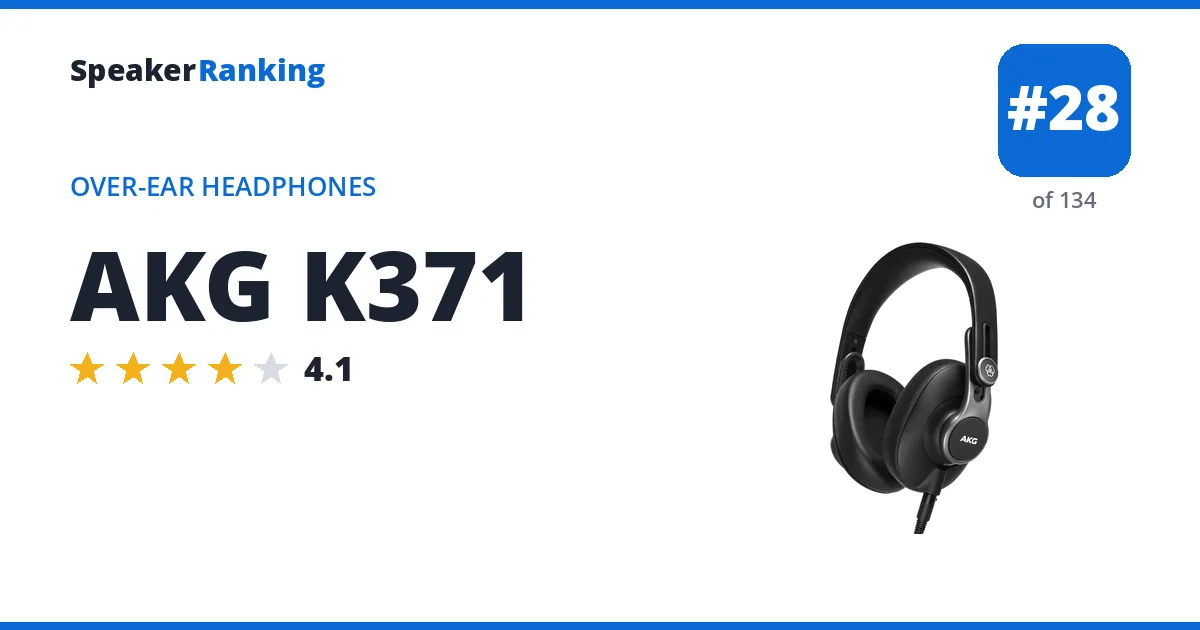
Pros: A preference score of 85 with only 1.66 dB of deviation makes it one of the smoother closed-back models, and sub-bass runs about 1.6 dB above target for a full, extended low end. At 32 ohms and 114 dB per volt it is easy to drive from a phone, and the closed design isolates reasonably well. The warm tilt suits listeners who want bass without harshness.
Cons: A 7 dB dip near 3.9 kHz and presence about 2.6 dB low push vocals and instrument detail back, while air above 10 kHz is roughly 3.5 dB low, so the sound is dark and lacks sparkle. Fans of a bright or highly detailed presentation will find it veiled.
Full AKG K371 review and specifications →
| Released | Aug 2019 (7 years ago) |
|---|---|
| Back | Closed |
| Connection | Wired |
| Deviation From Target | 1.66 dB standard deviation |
| Driver Type | Dynamic |
| Drivers | 1 x 50mm dynamic |
| Form Factor | Over-ear |
| Frequency Response | 5Hz - 40kHz (Manufacturer specified) |
| Harman Preference Score | 85 (measured by oratory1990, via AutoEQ) |
| Impedance | 32 ohms |
| Sensitivity | 114 dB SPL/V |
| Tonal Tilt | -0.57 (negative is warmer, positive brighter) |
| Weight | 0.6 lbs (255 g) |
EQ preset to match the Harman target
Set a preamp of -5.6 dB, then add these filters in any parametric equalizer (Wavelet, Equalizer APO, Peace, or a player with parametric EQ). Calculated by AutoEQ from its measured frequency response.
| Filter | Frequency | Gain | Q |
|---|---|---|---|
| Low shelf | 105 Hz | -2.7 dB | 0.70 |
| Peak | 182 Hz | -2.3 dB | 1.23 |
| Peak | 4,038 Hz | +5.0 dB | 3.60 |
| Peak | 67 Hz | +3.1 dB | 1.41 |
| Peak | 1,066 Hz | -0.8 dB | 2.57 |
| High shelf | 10,000 Hz | +2.4 dB | 0.70 |
| Peak | 5,564 Hz | -1.6 dB | 3.89 |
| Peak | 4,232 Hz | +0.9 dB | 5.03 |
| Peak | 524 Hz | +0.3 dB | 1.66 |
| Peak | 2,048 Hz | +0.5 dB | 4.67 |
- Reviews, Comparisons and Sound Samples
 Ranked #29 of 134 in Over-Ear Headphones - AKG K702: $259.99 Amazon eBay
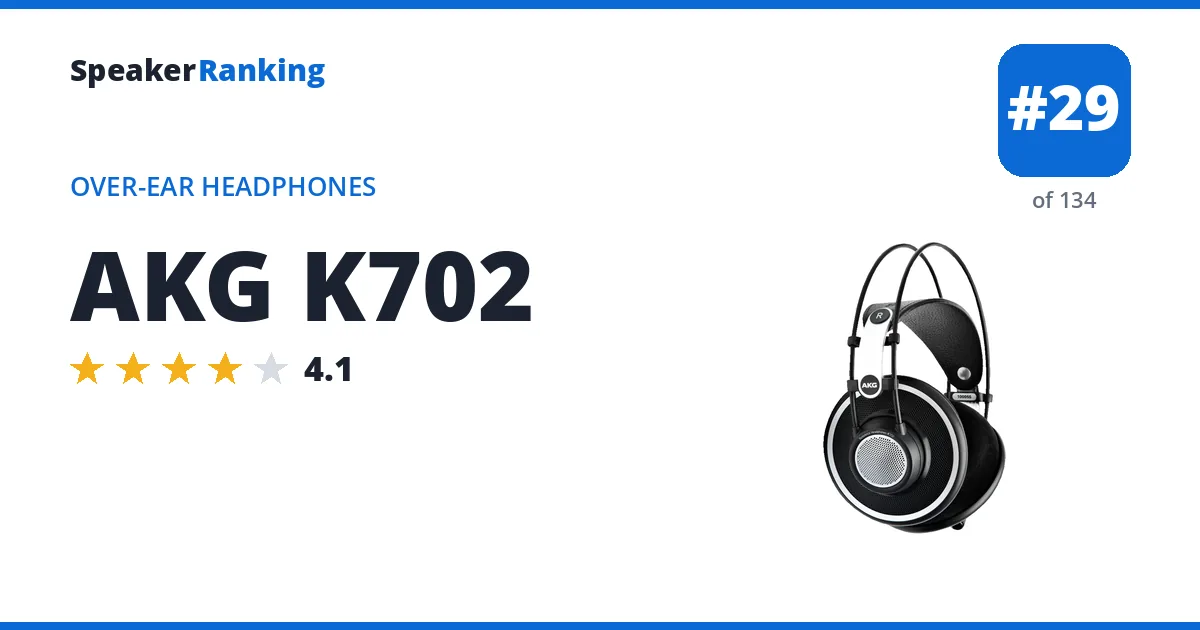
Pros: A preference score of 85 with a neutral to warm balance, with bass from 60 to 200 Hz essentially on target and low mids within 1 dB. At 235 g it is a light open-back design, and the 62 ohm impedance with 105 dB per volt sensitivity runs from most sources. It rates the same as the AKG K701.
Cons: A 7.3 dB dip near 9.5 kHz combined with a 4.3 dB peak near 5.6 kHz makes the treble uneven, so some sibilance and a slightly forward upper mid range are possible. Sub-bass is about 5 dB under target, limiting rumble. The open back leaks sound and offers no isolation.
Full AKG K702 review and specifications →
| Back | Open |
|---|---|
| Connection | Wired |
| Deviation From Target | 2.24 dB standard deviation |
| Driver Type | Dynamic |
| Drivers | 1 x 45mm dynamic |
| Form Factor | Over-ear |
| Frequency Response | 10Hz - 39.8kHz (Manufacturer specified) |
| Harman Preference Score | 85 (measured by oratory1990, via AutoEQ) |
| Impedance | 62 ohms |
| Sensitivity | 105 dB SPL/V |
| Tonal Tilt | +0.10 (negative is warmer, positive brighter) |
| Weight | 0.5 lbs (235 g) |
EQ preset to match the Harman target
Set a preamp of -6.1 dB, then add these filters in any parametric equalizer (Wavelet, Equalizer APO, Peace, or a player with parametric EQ). Calculated by AutoEQ from its measured frequency response.
| Filter | Frequency | Gain | Q |
|---|---|---|---|
| Low shelf | 105 Hz | +7.1 dB | 0.70 |
| Peak | 119 Hz | -2.7 dB | 0.23 |
| Peak | 9,459 Hz | +3.2 dB | 3.19 |
| Peak | 730 Hz | +3.2 dB | 1.22 |
| Peak | 2,241 Hz | -3.5 dB | 3.80 |
| High shelf | 10,000 Hz | -1.7 dB | 0.70 |
| Peak | 3,721 Hz | +3.4 dB | 2.02 |
| Peak | 5,483 Hz | -4.7 dB | 4.79 |
| Peak | 2,633 Hz | -2.0 dB | 5.29 |
| Peak | 56 Hz | -0.6 dB | 2.62 |
- Reviews, Comparisons and Sound Samples
- Head-to-Head Comparisons
 Ranked #35 of 134 in Over-Ear Headphones - AKG K701: $249.99 Amazon eBay
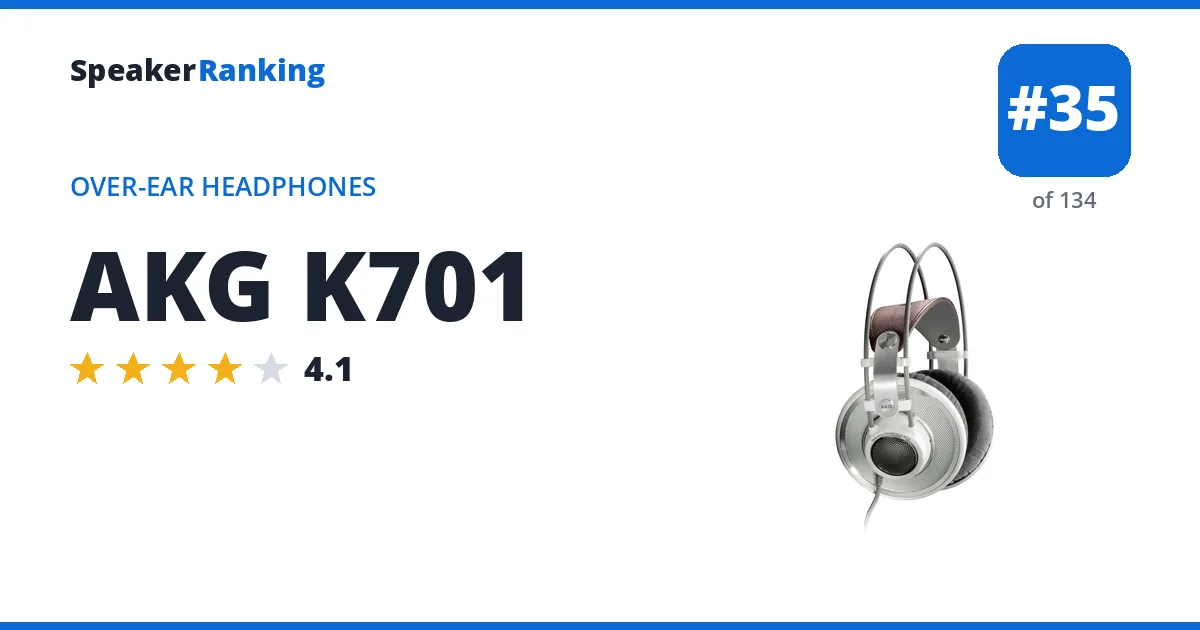
Pros: A preference score of 83 with a deviation of 2.14 dB shows a smooth response. Bass from 60 to 200 Hz is about 1.6 dB above target and low mids about 2.3 dB above, giving warm, full vocals and bass guitar, while treble from 6 to 10 kHz lands within 0.2 dB of target. At 62 ohms and 105 dB/mW sensitivity it runs fine from most sources, and 235 g is light. It costs less than the AKG K702 at the same rating.
Cons: A 4.2 dB peak near 5.9 kHz can add some edge to vocals and sibilants. Sub-bass is about 3.5 dB under target, and the low mids may sound slightly thick on busy mixes. The open back leaks sound and offers no isolation.
Full AKG K701 review and specifications →
| Back | Open |
|---|---|
| Connection | Wired |
| Deviation From Target | 2.14 dB standard deviation |
| Driver Type | Dynamic |
| Form Factor | Over-ear |
| Frequency Response | 10Hz - 39.8kHz (Manufacturer specified) |
| Harman Preference Score | 83 (measured by oratory1990, via AutoEQ) |
| Impedance | 62 ohms |
| Sensitivity | 105 dB/mW |
| Tonal Tilt | -0.31 (negative is warmer, positive brighter) |
| Weight | 0.5 lbs (235 g) |
EQ preset to match the Harman target
Set a preamp of -6.1 dB, then add these filters in any parametric equalizer (Wavelet, Equalizer APO, Peace, or a player with parametric EQ). Calculated by AutoEQ from its measured frequency response.
| Filter | Frequency | Gain | Q |
|---|---|---|---|
| Low shelf | 105 Hz | +7.5 dB | 0.70 |
| Peak | 131 Hz | -4.1 dB | 0.21 |
| Peak | 937 Hz | +3.7 dB | 0.65 |
| Peak | 2,378 Hz | -3.3 dB | 2.56 |
| Peak | 3,536 Hz | +3.6 dB | 3.04 |
| High shelf | 10,000 Hz | -0.6 dB | 0.70 |
| Peak | 5,837 Hz | -2.9 dB | 5.42 |
| Peak | 55 Hz | -0.9 dB | 1.90 |
| Peak | 116 Hz | +1.2 dB | 3.55 |
| Peak | 27 Hz | +0.7 dB | 3.27 |
- Reviews, Comparisons and Sound Samples
- Head-to-Head Comparisons
 Ranked #47 of 134 in Over-Ear Headphones - AKG K612 Pro: $209.95 Amazon eBay
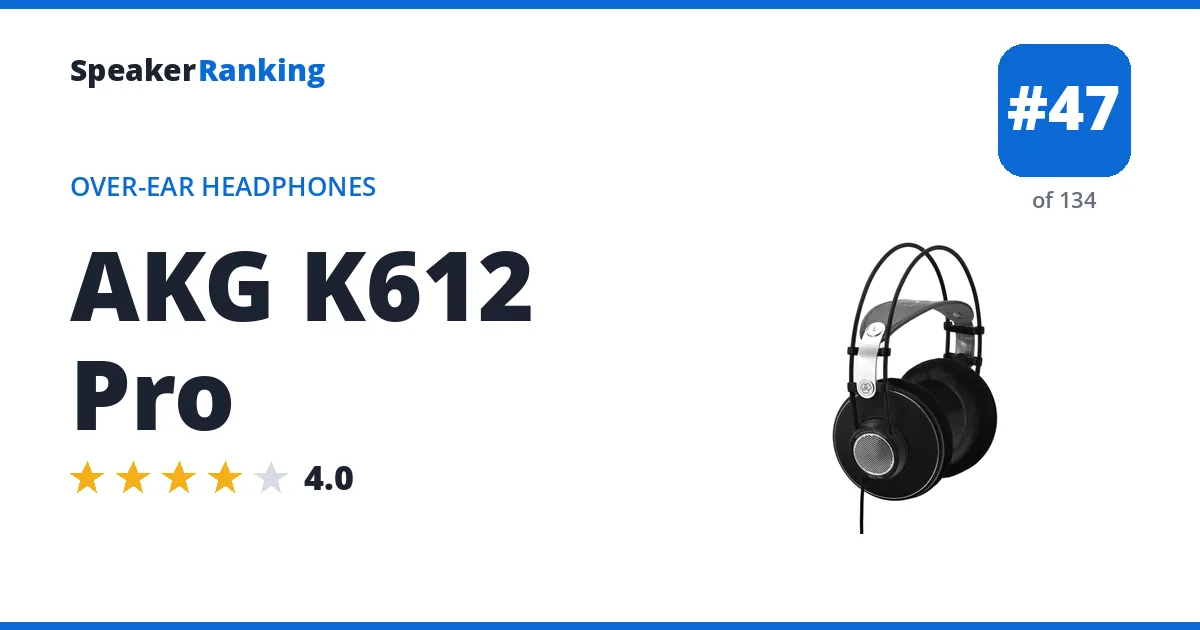
Pros: A preference score of 81 in crinacle’s measurement shows a response that sits reasonably close to the Harman target with a slightly bright tilt. The open back gives an airy, spacious presentation at 238 g. At 120 ohms and 101 dB SPL/V it is workable from a good source.
Cons: The open back leaks sound and gives no isolation, so it is best for quiet rooms. The 120 ohm impedance benefits from a dedicated headphone amp rather than a phone.
Full AKG K612 Pro review and specifications →
| Back | Open |
|---|---|
| Connection | Wired |
| Deviation From Target | 2.27 dB standard deviation |
| Driver Type | Dynamic |
| Drivers | 1 x 50mm dynamic |
| Form Factor | Over-ear |
| Frequency Response | 12Hz - 39.5kHz (Manufacturer specified) |
| Harman Preference Score | 81 (measured by crinacle, via AutoEQ) |
| Impedance | 120 ohms |
| Sensitivity | 101 dB SPL/V |
| Tonal Tilt | +0.33 (negative is warmer, positive brighter) |
| Weight | 0.5 lbs (238 g) |
EQ preset to match the Harman target
Set a preamp of -5.9 dB, then add these filters in any parametric equalizer (Wavelet, Equalizer APO, Peace, or a player with parametric EQ). Calculated by AutoEQ from its measured frequency response.
| Filter | Frequency | Gain | Q |
|---|---|---|---|
| Low shelf | 105 Hz | +6.0 dB | 0.70 |
| Peak | 175 Hz | -1.9 dB | 0.45 |
| Peak | 744 Hz | +2.9 dB | 1.70 |
| Peak | 2,519 Hz | -2.4 dB | 3.07 |
| Peak | 5,923 Hz | -2.8 dB | 6.00 |
| High shelf | 10,000 Hz | +1.1 dB | 0.70 |
| Peak | 67 Hz | -1.2 dB | 2.17 |
| Peak | 85 Hz | +2.2 dB | 6.00 |
| Peak | 1,518 Hz | +0.7 dB | 4.54 |
| Peak | 4,342 Hz | +0.9 dB | 6.00 |
- Reviews, Comparisons and Sound Samples
- Head-to-Head Comparisons
 Ranked #64 of 134 in Over-Ear Headphones - AKG K712: $469.99 Amazon eBay
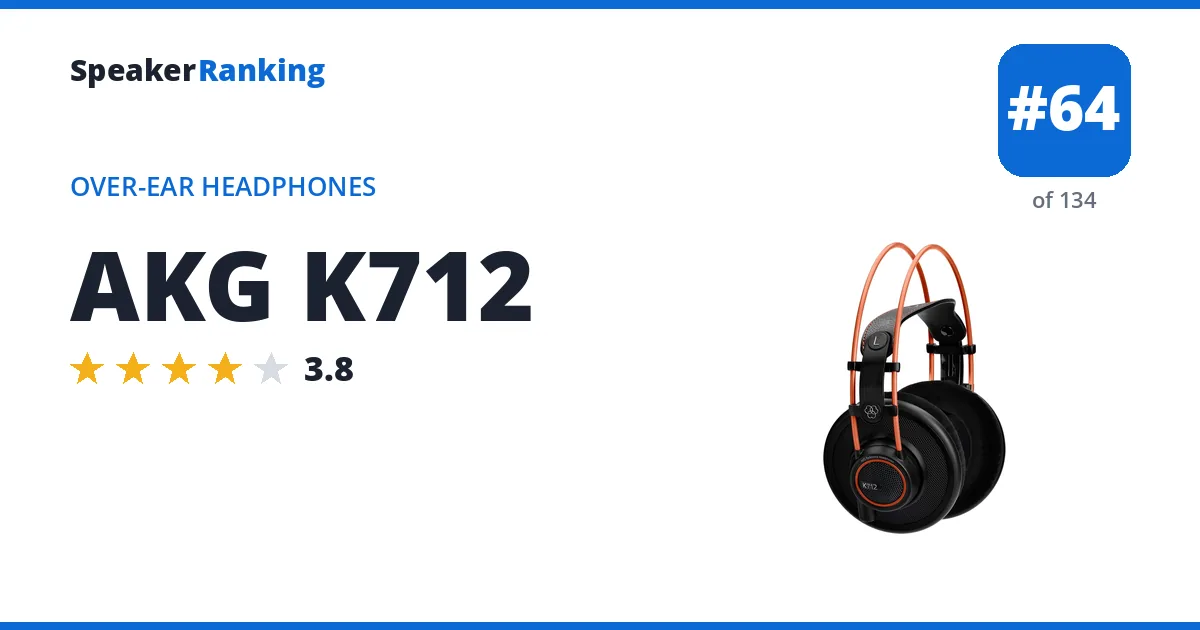
Pros: The open back gives a wide, airy presentation with a flat midrange, presence and treble within about 0.3 dB of the target between 3 and 10 kHz. Bass from 60 to 200 Hz is about 1.4 dB warm, which adds a little body. At 235 g it is light, and 105 dB/mW sensitivity is high for a 62 ohm design.
Cons: Sub-bass is about 3.7 dB under target and the low mids are about 3 dB hot, so music sounds a touch thick in the midrange while the deepest bass lacks rumble. A 6 dB dip near 9.4 kHz and a 3.8 dB peak near 5.9 kHz make treble slightly uneven. The open design leaks sound and offers no isolation, and the Austrian Audio Hi-X65 matches its rating for a lower price.
Full AKG K712 review and specifications →
| Back | Open |
|---|---|
| Connection | Wired |
| Deviation From Target | 2.51 dB standard deviation |
| Driver Type | Dynamic |
| Form Factor | Over-ear |
| Frequency Response | 10Hz - 39.8kHz |
| Harman Preference Score | 77 (measured by oratory1990, via AutoEQ) |
| Impedance | 62 ohms |
| Sensitivity | 105 dB/mW |
| Tonal Tilt | -0.40 (negative is warmer, positive brighter) |
| Weight | 0.5 lbs (235 g) |
EQ preset to match the Harman target
Set a preamp of -5.8 dB, then add these filters in any parametric equalizer (Wavelet, Equalizer APO, Peace, or a player with parametric EQ). Calculated by AutoEQ from its measured frequency response.
| Filter | Frequency | Gain | Q |
|---|---|---|---|
| Low shelf | 105 Hz | +6.9 dB | 0.70 |
| Peak | 143 Hz | -3.6 dB | 0.23 |
| Peak | 1,217 Hz | +5.0 dB | 1.43 |
| Peak | 3,049 Hz | +4.8 dB | 3.18 |
| Peak | 2,178 Hz | -3.4 dB | 3.30 |
| High shelf | 10,000 Hz | -0.3 dB | 0.70 |
| Peak | 5,868 Hz | -2.6 dB | 5.87 |
| Peak | 67 Hz | -0.6 dB | 1.75 |
| Peak | 157 Hz | +0.9 dB | 1.87 |
| Peak | 243 Hz | -0.5 dB | 2.27 |
- Reviews, Comparisons and Sound Samples
 Ranked #72 of 134 in Over-Ear Headphones - AKG K361: $119.99 Amazon eBay
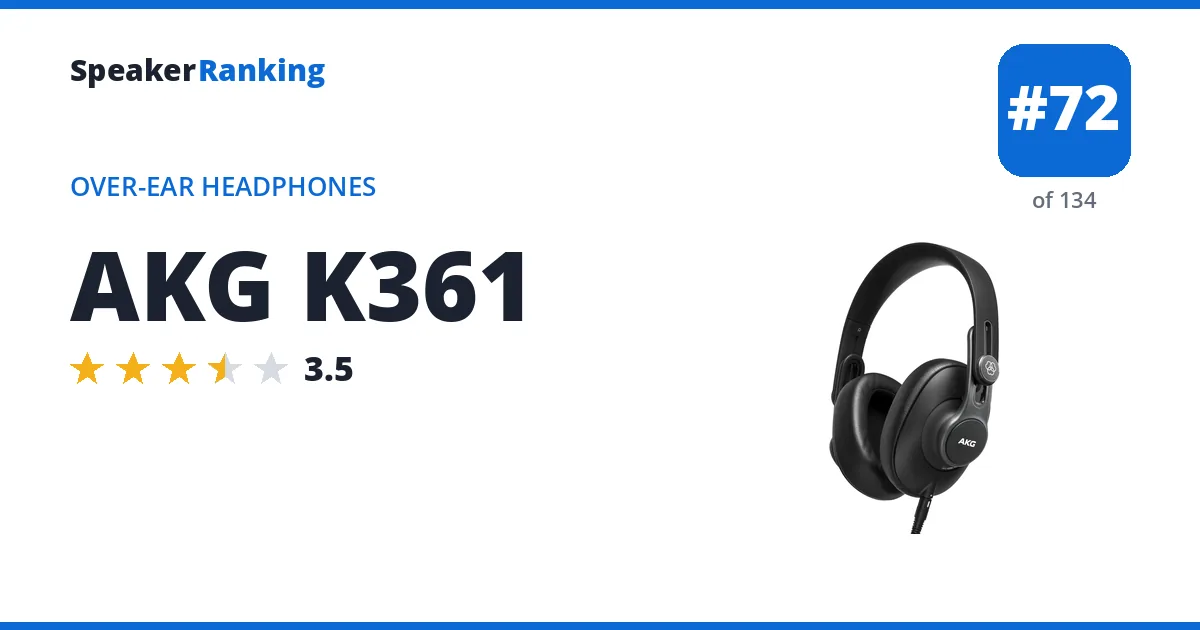
Pros: Bass is a little above target, about 2.6 dB in the sub-bass and 2.1 dB in the bass, so kick drums and bass lines have solid weight. Midrange from 200 Hz to 3 kHz tracks the target within a fraction of a dB, which keeps vocals natural. A 32 ohm impedance and 114 dB sensitivity let it run loudly from a phone, and the closed 219 g design isolates somewhat from surroundings.
Cons: Presence is about 3.8 dB low between 3 and 6 kHz and a 7.4 dB dip near 3.9 kHz pulls back vocal clarity and the bite of snares and guitars. A 2.4 dB peak near 8.8 kHz adds a touch of sharpness on top of the dull presence region. Treble overall is a bit soft, about 1.7 dB under target from 6 to 10 kHz.
Full AKG K361 review and specifications →
| Back | Closed |
|---|---|
| Connection | Wired |
| Deviation From Target | 2.19 dB standard deviation |
| Driver Type | Dynamic |
| Drivers | 1 x 50mm dynamic |
| Form Factor | Over-ear |
| Frequency Response | 15Hz - 28kHz (Manufacturer specified) |
| Harman Preference Score | 71 (measured by oratory1990, via AutoEQ) |
| Impedance | 32 ohms |
| Sensitivity | 114 dB SPL/V |
| Tonal Tilt | -0.99 (negative is warmer, positive brighter) |
| Weight | 0.5 lbs (219 g) |
EQ preset to match the Harman target
Set a preamp of -5.8 dB, then add these filters in any parametric equalizer (Wavelet, Equalizer APO, Peace, or a player with parametric EQ). Calculated by AutoEQ from its measured frequency response.
| Filter | Frequency | Gain | Q |
|---|---|---|---|
| Low shelf | 105 Hz | -2.3 dB | 0.70 |
| Peak | 149 Hz | -3.3 dB | 1.47 |
| Peak | 4,019 Hz | +5.9 dB | 2.87 |
| Peak | 75 Hz | +1.3 dB | 2.02 |
| Peak | 42 Hz | -1.4 dB | 1.64 |
| High shelf | 10,000 Hz | -1.2 dB | 0.70 |
| Peak | 2,560 Hz | -1.0 dB | 2.54 |
| Peak | 378 Hz | +0.7 dB | 1.79 |
| Peak | 7,330 Hz | +2.4 dB | 5.94 |
| Peak | 1,338 Hz | -1.0 dB | 2.72 |
- Reviews, Comparisons and Sound Samples
 Ranked #88 of 134 in Over-Ear Headphones - AKG K240 Studio: $54.95 Amazon eBay
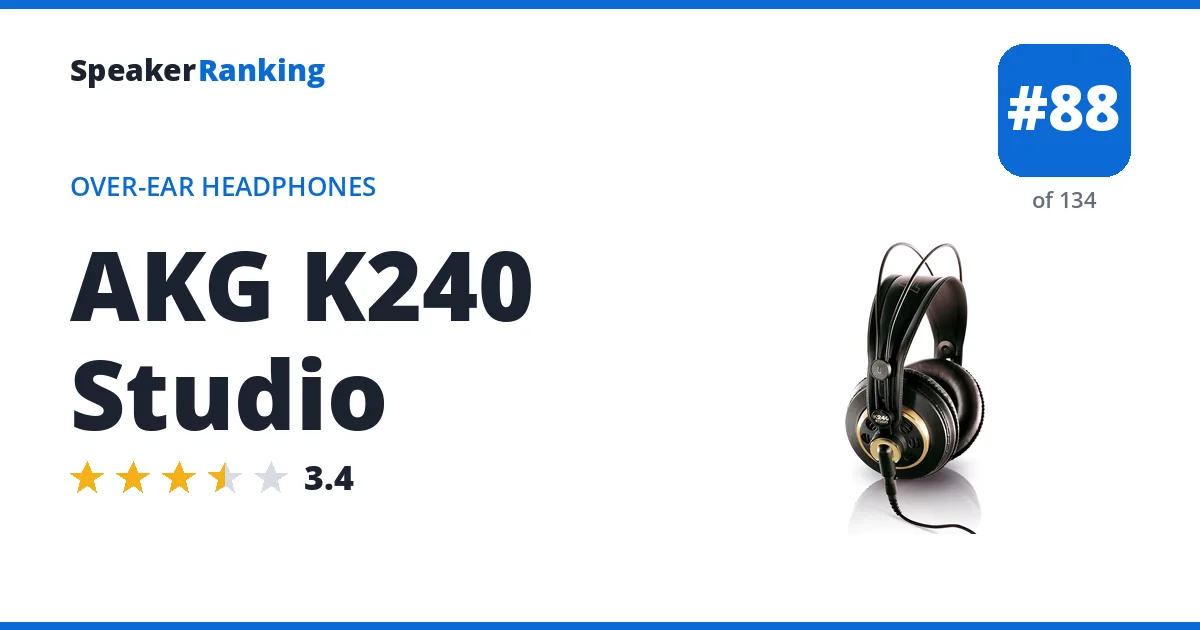
Pros: A preference score of 68 in oratory1990’s measurement puts it in the middle of the pack, with a fairly even tilt and bass within about 1.4 dB of target from 60 to 200 Hz. At 55 ohms and 104 dB sensitivity it runs fine from a phone or laptop without a dedicated amp. The semi-open design weighs 240 g and suits critical listening at home, and it is rated higher than the Sennheiser HD 280 Pro and the Sony WH-CH510.
Cons: Sub-bass from 20 to 60 Hz sits about 13.7 dB below target, so kick drums and synth bass lack rumble and weight. A 6.2 dB dip near 3.6 kHz pulls back vocal presence and detail, while a 3.7 dB peak near 7 kHz can add a touch of edge to cymbals. The semi-open back leaks sound and offers little isolation, and there is no microphone.
Full AKG K240 Studio review and specifications →
| Back | Semi-open |
|---|---|
| Built-in Microphone | No |
| Connection | Wired |
| Deviation From Target | 3.33 dB standard deviation |
| Driver Type | Dynamic |
| Drivers | 1 x 30mm dynamic |
| Form Factor | Over-ear |
| Frequency Response | 15Hz - 25kHz (Manufacturer specified) |
| Harman Preference Score | 68 (measured by oratory1990, via AutoEQ) |
| Impedance | 55 ohms |
| Sensitivity | 104 dB SPL/V |
| Tonal Tilt | +0.30 (negative is warmer, positive brighter) |
| Weight | 0.5 lbs (240 g) |
EQ preset to match the Harman target
Set a preamp of -6.2 dB, then add these filters in any parametric equalizer (Wavelet, Equalizer APO, Peace, or a player with parametric EQ). Calculated by AutoEQ from its measured frequency response.
| Filter | Frequency | Gain | Q |
|---|---|---|---|
| Low shelf | 105 Hz | +6.3 dB | 0.70 |
| Peak | 204 Hz | -3.2 dB | 0.33 |
| Peak | 4,207 Hz | +5.2 dB | 3.07 |
| Peak | 1,585 Hz | +5.4 dB | 3.15 |
| Peak | 75 Hz | +2.9 dB | 1.48 |
| High shelf | 10,000 Hz | +1.8 dB | 0.70 |
| Peak | 6,459 Hz | -2.3 dB | 2.56 |
| Peak | 5,428 Hz | +2.7 dB | 3.81 |
| Peak | 2,689 Hz | -1.7 dB | 4.63 |
| Peak | 9,322 Hz | -2.0 dB | 2.55 |
- Reviews, Comparisons and Sound Samples
 Ranked #124 of 134 in Over-Ear Headphones - AKG K271 MKII: $214.38 Amazon eBay
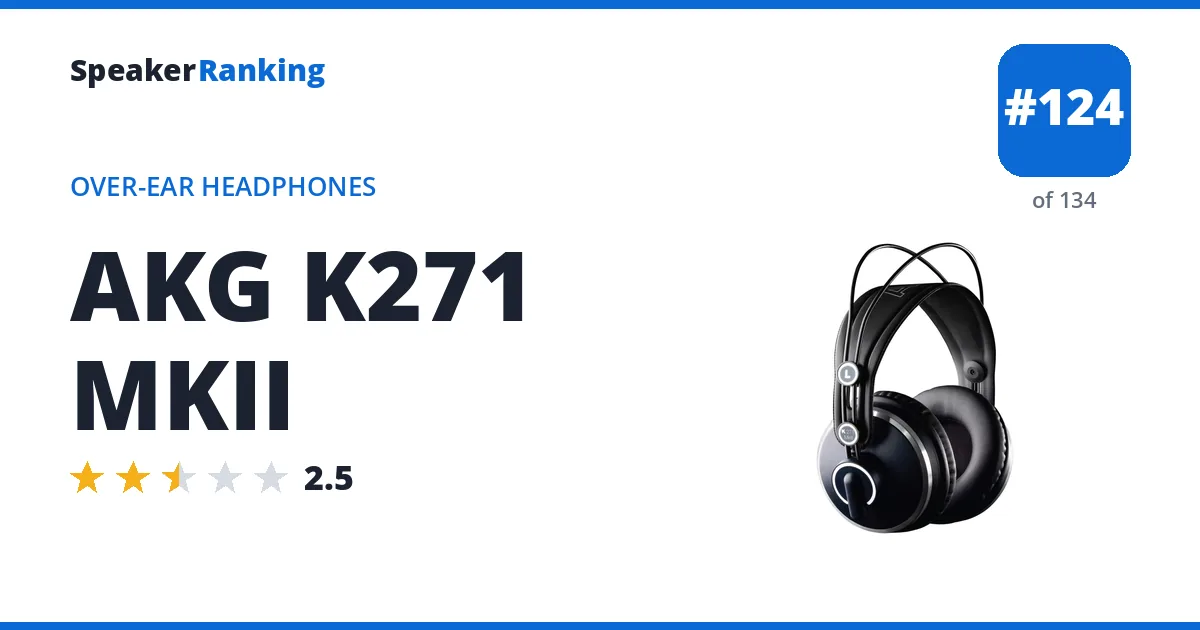
Pros: A closed-back studio design with 104 dB sensitivity at 55 ohms, so it plays loudly from a phone or laptop without an amp. Treble from 6 to 10 kHz and the lower mids land almost exactly on the Harman target in oratory1990’s measurement. A slightly bright tilt suits listeners who prefer a neutral to bright sound.
Cons: Bass is thin, with sub-bass about 15 dB and the 60 to 200 Hz region about 8 dB under target, so music lacks weight and punch. Presence from 3 to 6 kHz is down about 6 dB, with a 7.5 dB dip near 4 kHz that pulls vocals and guitars back. At 240 g with a preference score of 48, the Beats Studio3 Wireless is rated higher.
Full AKG K271 MKII review and specifications →
| Released | May 2008 (18 years ago) |
|---|---|
| Back | Closed |
| Connection | Wired |
| Deviation From Target | 3.85 dB standard deviation |
| Driver Type | Dynamic |
| Drivers | 1 x 30mm dynamic |
| Form Factor | Over-ear |
| Frequency Response | 16Hz - 28kHz (Manufacturer specified) |
| Harman Preference Score | 48 (measured by oratory1990, via AutoEQ) |
| Impedance | 55 ohms |
| Sensitivity | 104 dB SPL/V |
| Tonal Tilt | +1.16 (negative is warmer, positive brighter) |
| Weight | 0.5 lbs (240 g) |
EQ preset to match the Harman target
Set a preamp of -6.5 dB, then add these filters in any parametric equalizer (Wavelet, Equalizer APO, Peace, or a player with parametric EQ). Calculated by AutoEQ from its measured frequency response.
| Filter | Frequency | Gain | Q |
|---|---|---|---|
| Low shelf | 105 Hz | +6.2 dB | 0.70 |
| Peak | 812 Hz | -3.2 dB | 0.18 |
| Peak | 4,439 Hz | +8.0 dB | 1.08 |
| Peak | 145 Hz | +6.6 dB | 1.69 |
| Peak | 8,134 Hz | -4.5 dB | 0.99 |
| High shelf | 10,000 Hz | +2.3 dB | 0.70 |
| Peak | 1,771 Hz | -3.4 dB | 2.92 |
| Peak | 830 Hz | +3.3 dB | 2.86 |
| Peak | 2,453 Hz | +2.0 dB | 2.96 |
| Peak | 650 Hz | -2.9 dB | 5.06 |
- Reviews, Comparisons and Sound Samples
- Head-to-Head Comparisons
 Ranked #131 of 134 in Over-Ear Headphones - AKG K72: $61.86 Amazon eBay
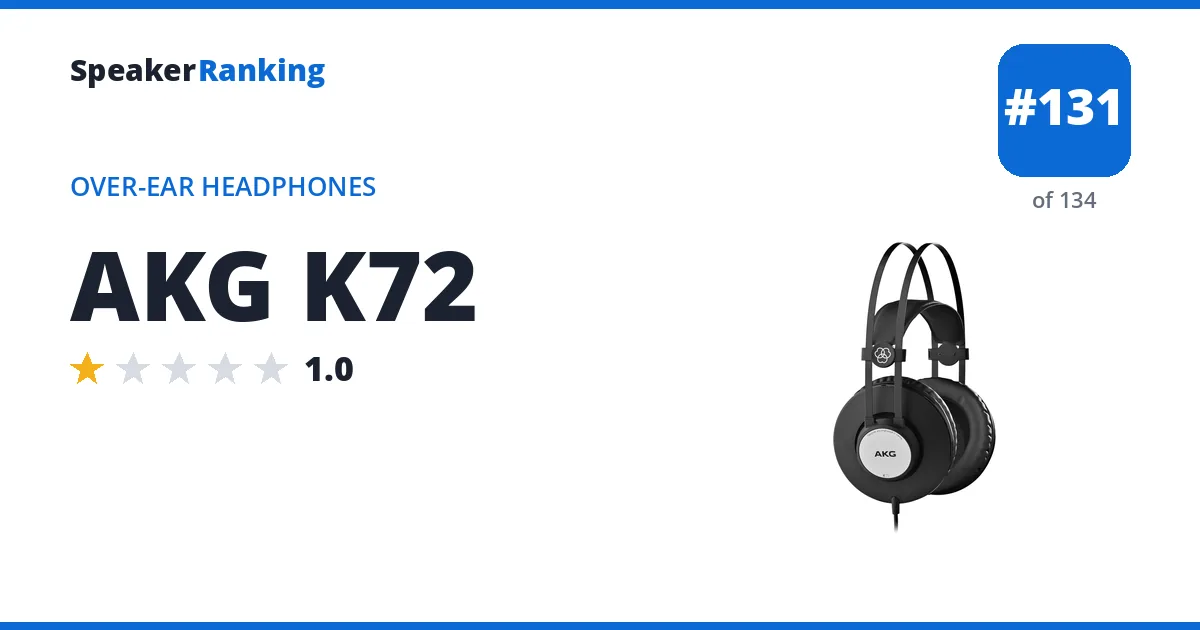
Pros: A budget closed-back wired headphone at 200 g, light for its size. The 32 ohm impedance and 112 dB sensitivity let any phone or laptop drive it. Bass is strongly boosted, about 7.6 dB from 60 to 200 Hz, for listeners who want maximum thump.
Cons: The response is very uneven, with a standard deviation of 5.9 dB and a preference score of 13. A 12.5 dB peak near 6.8 kHz makes cymbals and sibilance piercing, while the upper mids are 5 dB low and the low mids 6 dB high, so vocals sound boxy and distant. The Sennheiser HD 450BT is rated far higher at a similar price.
Full AKG K72 review and specifications →
| Back | Closed |
|---|---|
| Connection | Wired |
| Deviation From Target | 5.93 dB standard deviation |
| Driver Type | Dynamic |
| Drivers | 1 x 40mm dynamic |
| Form Factor | Over-ear |
| Frequency Response | 16Hz - 20kHz (Manufacturer specified) |
| Harman Preference Score | 13 (measured by oratory1990, via AutoEQ) |
| Impedance | 32 ohms |
| Sensitivity | 112 dB SPL/V |
| Tonal Tilt | -1.70 (negative is warmer, positive brighter) |
| Weight | 0.4 lbs (200 g) |
EQ preset to match the Harman target
Set a preamp of -6.8 dB, then add these filters in any parametric equalizer (Wavelet, Equalizer APO, Peace, or a player with parametric EQ). Calculated by AutoEQ from its measured frequency response.
| Filter | Frequency | Gain | Q |
|---|---|---|---|
| Low shelf | 105 Hz | -1.1 dB | 0.70 |
| Peak | 177 Hz | -8.6 dB | 1.25 |
| Peak | 1,488 Hz | +6.9 dB | 1.24 |
| Peak | 521 Hz | -3.1 dB | 1.21 |
| Peak | 2,817 Hz | +4.8 dB | 2.71 |
| High shelf | 10,000 Hz | +1.3 dB | 0.70 |
| Peak | 6,500 Hz | -8.9 dB | 4.44 |
| Peak | 73 Hz | +3.0 dB | 1.32 |
| Peak | 39 Hz | -1.6 dB | 0.85 |
| Peak | 123 Hz | -2.6 dB | 3.77 |
- Reviews, Comparisons and Sound Samples
- Head-to-Head Comparisons
 Ranked #133 of 134 in Over-Ear Headphones - AKG K92: $69.95 Amazon eBay
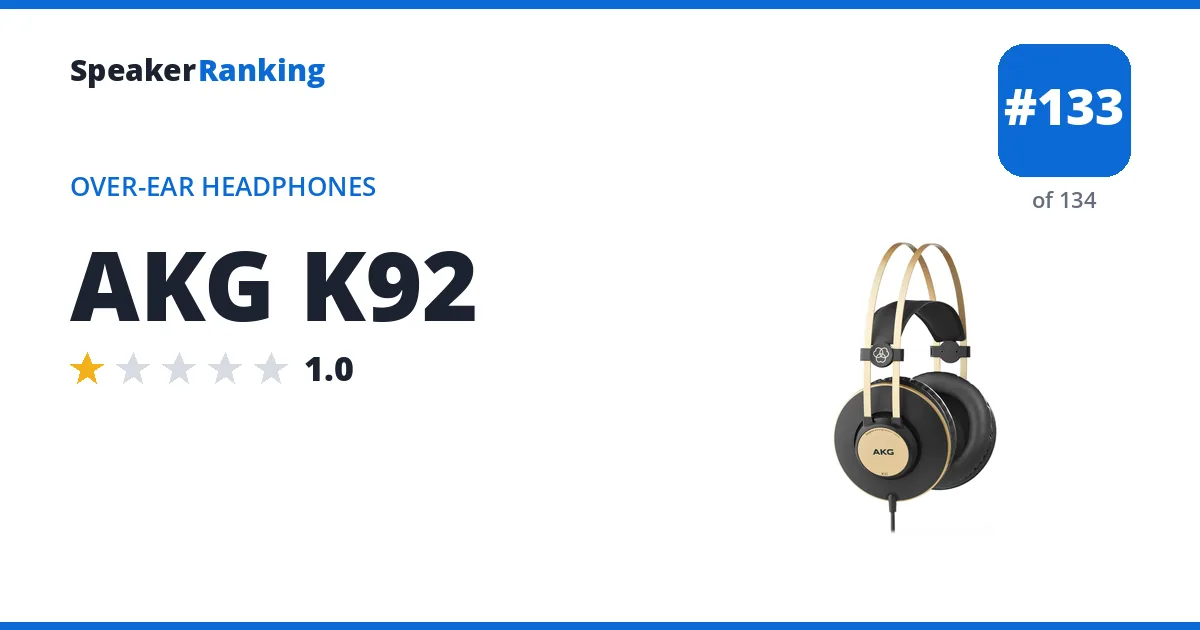
Pros: The closed-back design isolates noise at home or in the office, and the 32 ohm impedance with 113 dB sensitivity means a phone or laptop drives it to full volume without an amp. At 200 g it is light for a full-size headphone. It suits listeners who want a bass-heavy, warm tuning, since bass sits about 7.6 dB above the Harman target.
Cons: The response is far from the Harman target, with a preference score of only 3 and a very uneven 6.33 dB deviation. A 9 dB dip near 2.9 kHz pulls vocals and instrument body backward, while a 9.6 dB peak near 6.7 kHz makes cymbals and sibilants sharp. Bass and low mids are boosted by roughly 6 to 8 dB, so music sounds thick and boomy.
Full AKG K92 review and specifications →
| Back | Closed |
|---|---|
| Connection | Wired |
| Deviation From Target | 6.33 dB standard deviation |
| Driver Type | Dynamic |
| Drivers | 1 x 40mm dynamic |
| Form Factor | Over-ear |
| Frequency Response | 16Hz - 22kHz (Manufacturer specified) |
| Harman Preference Score | 3 (measured by oratory1990, via AutoEQ) |
| Impedance | 32 ohms |
| Sensitivity | 113 dB SPL/V |
| Tonal Tilt | -2.06 (negative is warmer, positive brighter) |
| Weight | 0.4 lbs (200 g) |
EQ preset to match the Harman target
Set a preamp of -7.1 dB, then add these filters in any parametric equalizer (Wavelet, Equalizer APO, Peace, or a player with parametric EQ). Calculated by AutoEQ from its measured frequency response.
| Filter | Frequency | Gain | Q |
|---|---|---|---|
| Low shelf | 105 Hz | -4.1 dB | 0.70 |
| Peak | 150 Hz | -11.1 dB | 0.73 |
| Peak | 1,874 Hz | +7.2 dB | 0.85 |
| Peak | 77 Hz | +10.4 dB | 1.43 |
| Peak | 508 Hz | -4.1 dB | 2.97 |
| High shelf | 10,000 Hz | +0.0 dB | 0.70 |
| Peak | 6,500 Hz | -6.8 dB | 5.23 |
| Peak | 3,179 Hz | +2.3 dB | 4.30 |
| Peak | 1,201 Hz | +2.1 dB | 4.75 |
| Peak | 864 Hz | -1.8 dB | 4.08 |
- Reviews, Comparisons and Sound Samples
- Head-to-Head Comparisons
In-Ear Headphones
 Ranked #2 of 68 in In-Ear Headphones - AKG N5005: $399.99 Amazon eBay
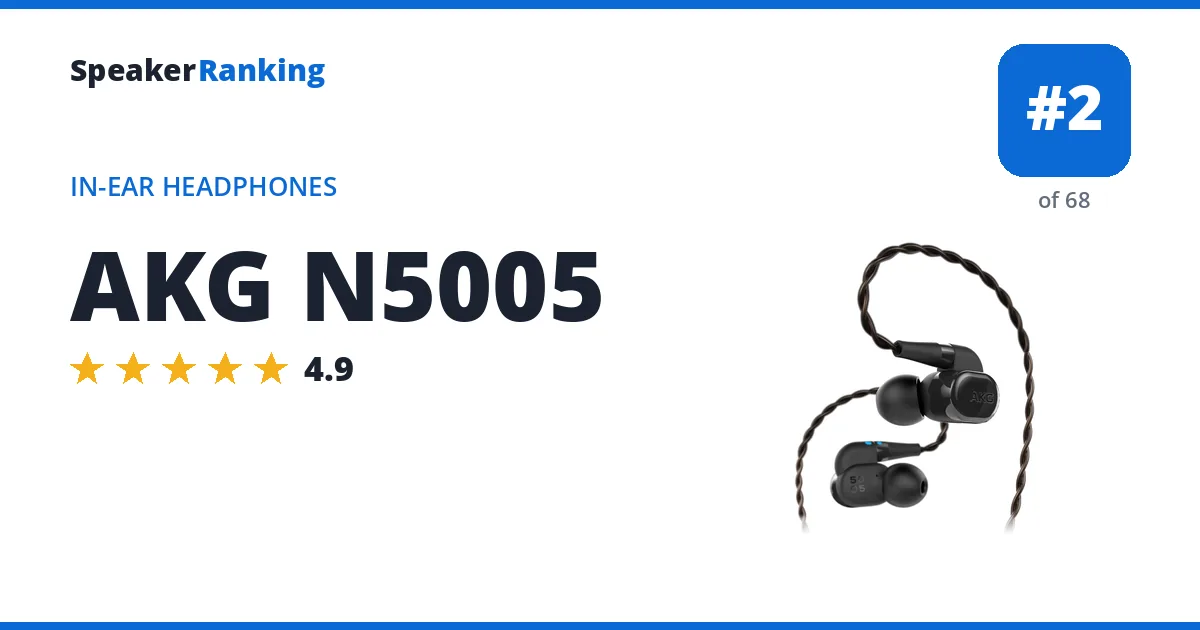
Pros: Bass, mids and presence all land within about 0.6 dB of the Harman target, giving a Harman score of 87 and a very smooth 1.11 dB deviation. Sub-bass is essentially on target at 0.1 dB below, so kick drums and bass lines have natural weight without bloat. The five-driver hybrid layout and 18 ohm impedance with 116 dB per volt sensitivity run fine from a phone. At 11.4 g per earbud it is light in the ear.
Cons: A 5.8 dB dip near 10 kHz and a 3.4 dB peak near 7.8 kHz leave the top end slightly uneven, taking some sparkle off cymbals and air. Treble from 6 to 10 kHz runs about 0.6 dB under target, so it can sound a touch laid back. It costs far more than the Truthear x Crinacle Zero RED, which has the same rating, so the premium buys refinement rather than a better rating.
Full AKG N5005 review and specifications →
| Back | Closed |
|---|---|
| Connection | Wired |
| Deviation From Target | 1.11 dB standard deviation |
| Driver Type | Hybrid (1 dynamic + 4 balanced armature) |
| Drivers | 1 x 9.2mm dynamic + 4 x balanced armature |
| Form Factor | In-ear |
| Frequency Response | 10Hz - 40kHz (Manufacturer specified) |
| Harman Preference Score | 87 (measured by oratory1990, via AutoEQ) |
| Impedance | 18 ohms |
| Sensitivity | 116 dB SPL/V |
| Tonal Tilt | -0.09 (negative is warmer, positive brighter) |
| Weight | 0 lbs (11.4 g) per earbud |
EQ preset to match the Harman target
Set a preamp of -1.8 dB, then add these filters in any parametric equalizer (Wavelet, Equalizer APO, Peace, or a player with parametric EQ). Calculated by AutoEQ from its measured frequency response.
| Filter | Frequency | Gain | Q |
|---|---|---|---|
| Low shelf | 105 Hz | -0.8 dB | 0.70 |
| Peak | 9,406 Hz | +3.0 dB | 1.31 |
| Peak | 892 Hz | +2.7 dB | 1.01 |
| Peak | 1,593 Hz | -1.4 dB | 0.18 |
| Peak | 77 Hz | +1.4 dB | 1.19 |
| High shelf | 10,000 Hz | -3.6 dB | 0.70 |
| Peak | 4,702 Hz | -2.0 dB | 5.51 |
| Peak | 3,571 Hz | +1.3 dB | 2.99 |
| Peak | 6,150 Hz | +2.2 dB | 5.73 |
| Peak | 4,894 Hz | -0.7 dB | 4.27 |
- Reviews, Comparisons and Sound Samples